 By admin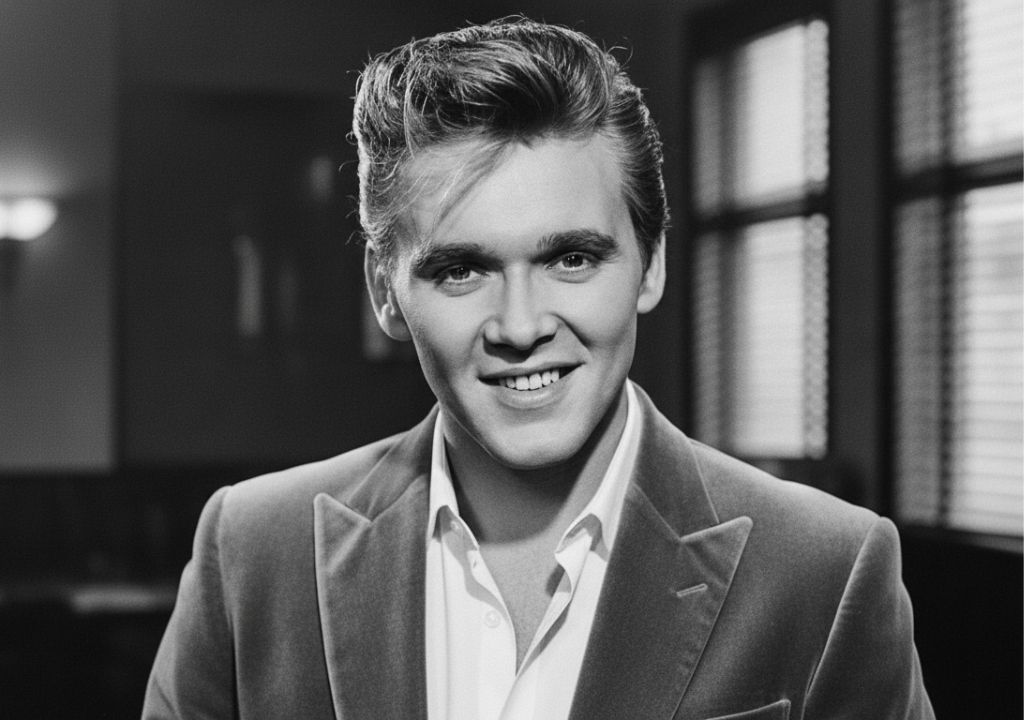

Introduction
Beneath the meticulously sculpted pompadour and the gold lamé suits of Ronald Wycherley lay a physiological ticking clock that would eventually define his legacy as much as his baritone. In the late 1950s, the British music industry was a frantic machinery of artifice, yet Fury emerged not as a mere imitation of American archetypes, but as a figure of genuine, brooding vulnerability. His 1998 documentary, Halfway to Paradise, serves as a somber retrospective, stripping away the varnish of 1960s pop stardom to reveal a man whose physical endurance was perpetually at odds with his meteoric rise. While his contemporaries chased the thunder of the Merseybeat, Fury existed in a nuanced space between the raw aggression of rockabilly and the sophisticated ache of the ballad.
THE DETAILED STORY

The narrative of Billy Fury is one of profound biological irony. Born in Liverpool on 04/17/1940, Wycherley’s childhood was punctuated by bouts of rheumatic fever that left his heart permanently compromised. When he stepped into the orbit of impresario Larry Parnes in 1958, he was rebranded with a name that suggested a tempestuous nature he did not naturally possess. Parnes, a man who traded in masculine archetypes, recognized that Fury’s true power lay in his “diffident” charisma—a term often used by his peers to describe a man who seemed almost apologetic for his own magnetism.
By 1960, Fury achieved a feat largely unprecedented for a British pop idol of the era: he composed every track on his debut 10-inch LP, The Sound of Fury. The album remains a paradigm of the genre, recorded with a lean, percussive intensity that predated the Beatles’ arrival. However, the meticulous demands of touring and the “inevitable” hysteria of the “Fury-ettes” placed an unsustainable strain on his cardiac health. Halfway to Paradise documents this tension through archival footage that shows a performer who was, quite literally, dying for his art. His 24 hits in the 1960s, including the hauntingly beautiful title track of the documentary, secured his status as a commercial titan, yet he remained a solitary figure, often preferring the company of his birds on a quiet farm to the roar of the London Palladium.

The documentary, narrated with grit by Ian Dury, avoids the pitfalls of sentimentalism. It instead explores the “paradox” of a man who auditioned the fledgling Beatles to be his backing band—and rejected them—only to see the musical landscape shift toward a collective energy he could not match. As the 1970s arrived, Fury retreated into a semi-retirement dictated by a series of heart surgeries, his wealth estimated in the hundreds of thousands of dollars but his vitality diminishing. His final recordings in 1982 were a sophisticated return to form, yet they served as a swan song. When he passed on 01/28/1983, at the age of 42, the industry lost more than a singer; it lost the architect of British rock’s emotional interiority. The film leaves us with the unsettling realization that Fury’s “paradise” was always a precarious destination, reachable only through a performance that his body could no longer afford.