 By admin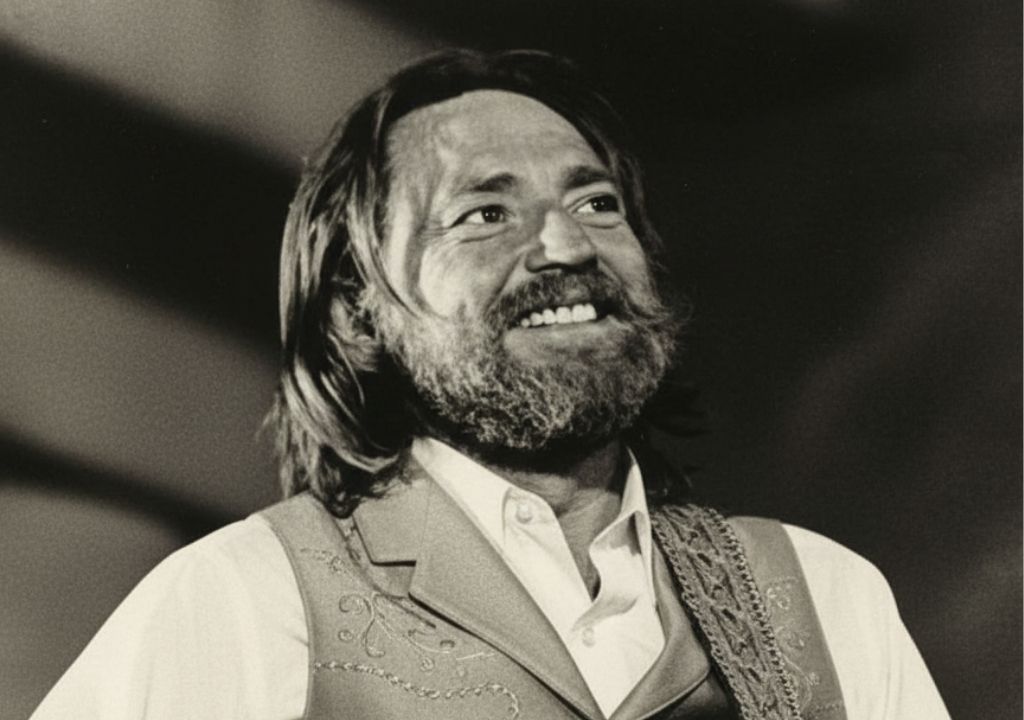

INTRODUCTION
In the relentless, shimmering heat of a Central Texas afternoon in the mid-1950s, a young man adjusted his tie and checked the weight of an encyclopedia set in his grip. This was not a rehearsal for the Grand Ole Opry; it was a grueling, door-to-door exercise in psychological endurance. For Willie Nelson, long before he became the “Red Headed Stranger,” the road was not a stage but a series of suburban porches where the barrier between a sale and a rejection was as thin as the humid 100°F air. These early years, defined by the utilitarian grind of manual labor and traveling sales, were the invisible scaffolding upon which one of the most resilient careers in American music would eventually be built.
THE DETAILED STORY

The list of Nelson’s pre-fame occupations reads like a meticulously curated index of the mid-century working class. He picked cotton under the bruising sun, worked as a janitor, labored as a saddle maker, and most notably, served as a “commissary” for household needs—selling vacuum cleaners, Bibles, and encyclopedias to families whose financial margins were as tight as his own. This was a paradigm of necessity that stripped away any veneer of artistic pretension. In the investigative reality of the “hard sell,” Nelson was forced to master the nuance of human interaction, learning to read the subtle shifts in a stranger’s posture or the weariness in their voice. This experience was essentially a masterclass in the narrative architecture of the human condition; he wasn’t just selling Kirby vacuums, he was observing the quiet desperations and humble aspirations of the American Heartland.
This mercantile rigor directly informed the structural integrity of his songwriting. When Nelson eventually moved to Nashville in 1960, he arrived with a professional grit that his more sheltered contemporaries lacked. He viewed the music industry not as an ephemeral dream, but as a business of persuasion. The inevitable rejection he faced early on in Tennessee was merely another “no” from a reluctant housewife on a porch in Waco. He understood that every song is a transaction—an exchange of emotional truth for the listener’s attention. By transmuting the stamina of the door-to-door peddler into the vulnerability of the songwriter, he created a body of work that remains intellectually magnetic. The callouses on his fingers were not just from the nylon strings of his guitar, “Trigger,” but from years of honest, physical toil that anchored his music in a concrete reality.

Ultimately, Nelson’s journey from the cotton fields to the prestigious status of a global icon serves as a definitive testament to the value of the “apprenticeship of the struggle.” He proved that the most profound acts of creative genius are often underpinned by a deeply ingrained understanding of labor. He did not succeed in spite of his years as a salesman and cleaner, but because of them. These roles provided him with the authoritative voice of the “everyman,” ensuring that his melodies would always resonate with the weight of lived experience. His legacy stands as a reminder that before one can lead a movement, one must first learn to navigate the humble terrain of the everyday grind.