 By admin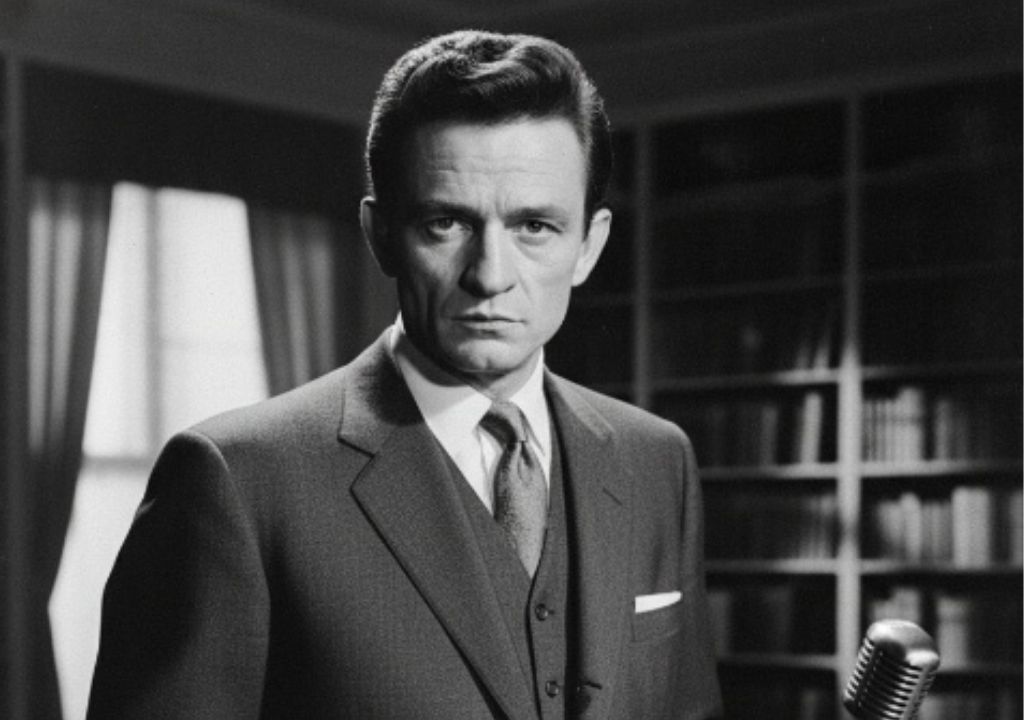

Introduction
On September 12, 2003, the airwaves of NBC Nightly News carried a somber weight as anchor Brian Williams delivered news that many had dreaded but felt was inevitable: the passing of Johnny Cash. At the age of 71, the “Man in Black” had finally laid down his guitar, leaving behind a legacy that transcended the boundaries of country music to become a permanent fixture of the American soul.
The broadcast painted a vivid picture of a man whose physical presence was as rugged as the life he led. Williams described Cash’s “chiseled face” and “rough voice,” noting that his songs were often dedicated to those who “had it even worse than he did.” This empathy for the downtrodden was not an act; it was born from a life of extreme highs and devastating lows.
Cash’s journey began in the dirt of Arkansas as a sharecropper’s son. Armed with little more than a high school diploma and a deep-seated passion for storytelling, he walked into the legendary Sun Records in Memphis. There, he forged a sound that resonated deeply with the common man. By 1969, his stardom had reached such a stratospheric level that he was actually outselling The Beatles—a testament to his universal appeal during one of the most transformative eras in music history.

However, the path to greatness was fraught with personal demons. As the NBC report highlighted, Cash’s life was “never easy.” He struggled with severe addiction and was arrested seven times. These experiences allowed him to connect with the disenfranchised on a level few other artists could. His fascination with the plight of others led to the creation of masterpieces like “Folsom Prison Blues,” a song inspired by a film about the prison and solidified by his legendary live performances behind bars.
The broadcast also touched upon the profound influence of his wife, June Carter Cash. Her death in May 2003, just months before his own, was a blow from which many believed Johnny would never fully recover. Their partnership was the bedrock of his later years, providing the stability he needed to continue his artistic evolution.
In his final years, Cash enjoyed a remarkable career resurgence, bridging the gap between generations. He influenced a vast array of contemporary musicians, including the industrial rock group Nine Inch Nails. The report concluded with a poignant mention of the music video for “Hurt,” a Nine Inch Nails cover that served as Cash’s final “epitaph.” The haunting imagery of the aging legend looking back at his life through a lens of frailty and faith remains one of the most powerful visual statements in music history.

Johnny Cash was more than just a singer; he was a symbol of resilience and redemption. As Brian Williams noted, he started at the very bottom and climbed to the very top, yet he never forgot the people he left behind. His passing marked the end of an era, but as the 2003 broadcast suggested, his voice would continue to echo through the halls of American culture forever.