 By admin

INTRODUCTION
The transition from a Rhodes Scholar and Captain in the U.S. Army to a janitor at Columbia Recording Studios in Nashville is a narrative trajectory that defies standard logic. For Kris Kristofferson, this was not merely a career change, but a profound ideological divorce. The gravity of his decision was solidified not by the uncertainty of the music industry, but by a scathing letter from his parents—an ultimatum that effectively disowned him for abandoning a prestigious military lineage. This moment of personal fracture served as the crucible for a new kind of American songwriting, one born from the genuine loss of a predetermined future.
THE DETAILED STORY
In the mid-1960s, the Kristofferson name was synonymous with military distinction. His father was a retired Air Force Major General, and the expectation of Kris following that high-altitude path was treated as an absolute. When Kris declined a teaching position at West Point to pursue the “lowly” life of a songwriter in Nashville, the familial response was swift and surgical. The letter he received stated that they would no longer acknowledge his existence, a rejection that would have crushed a lesser resolve. Yet, for Kristofferson, this ostracization provided a rare, albeit painful, freedom. Without a safety net or a family to please, the stakes of his creative output became existential.
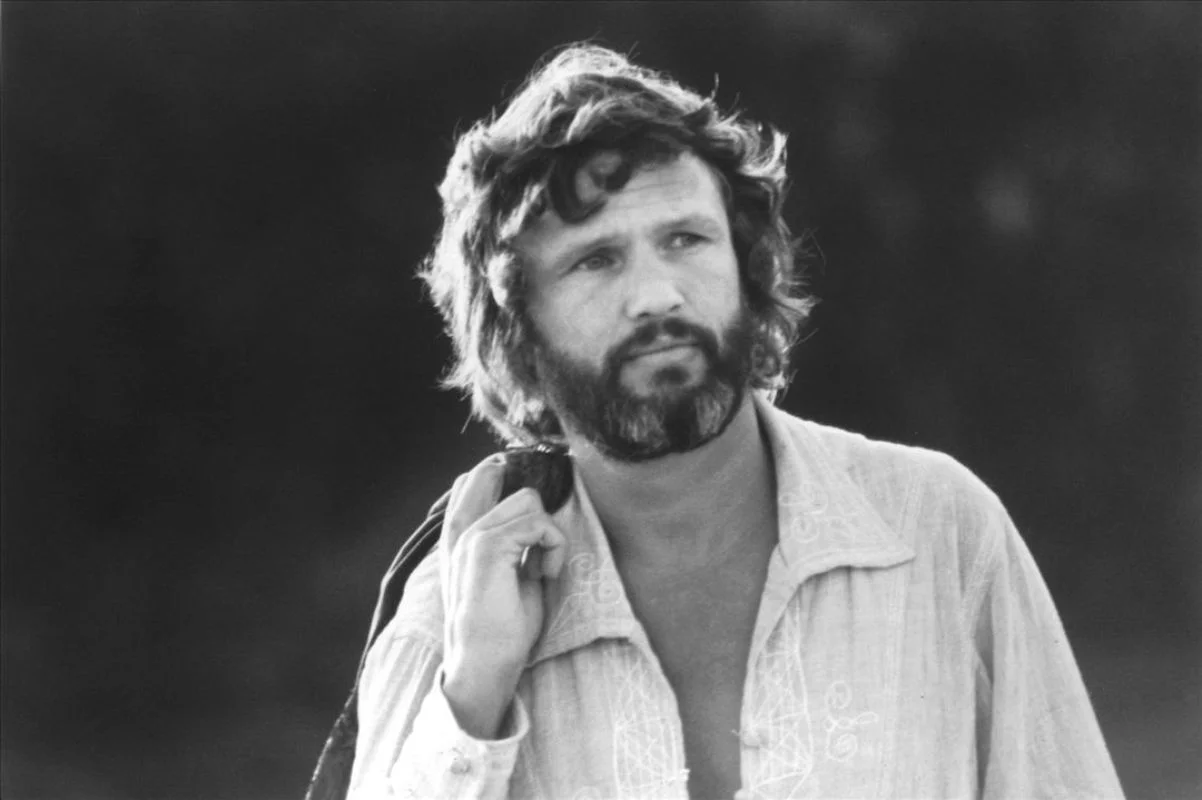
This rejection forced a meticulous refinement of his lyrical voice. The grit found in masterpieces like “Sunday Mornin’ Comin’ Down” was not a stylistic choice; it was a reflection of a man who had traded the security of a general’s son for the reality of the working class. Kristofferson’s presence in Nashville introduced a sophisticated literacy to country music, merging the romanticism of William Blake with the raw honesty of the barroom. His peers quickly realized that his songs carried a unique authority precisely because they were written by someone who had sacrificed everything—status, wealth, and kin—to write them.
The paradox of Kristofferson’s life is that by leaning into his “disgrace,” he eventually achieved a level of cultural immortality that far eclipsed any military rank. He redefined the archetype of the American troubadour as a man of intellect who chose the vulnerability of the arts over the rigidity of the institution. While he eventually reconciled with his mother years later, the scar of that initial letter remained a foundational element of his narrative architecture. It serves as a lingering, authoritative reminder that the most enduring art often requires a person to stand entirely alone, stripped of their past, to find their true frequency.