 By admin

INTRODUCTION
The image of Billy Fury on stage was one of raw, kinetic energy—the quintessential British rocker draped in leather and moving with a fluidity that rivaled his American contemporaries. However, the high stakes of his public persona were fundamentally at odds with his private medical reality. Behind the smoldering gaze was a man operating under a constant, looming threat: a heart severely damaged by childhood rheumatic fever. While the public saw a tireless performer, secret medical records and later biographical accounts reveal a narrative architecture built on physical precarity, where every high-energy set was a calculated risk against a terminal diagnosis.
THE DETAILED STORY
The gravity of Fury’s condition began in the mid-1940s, an era when the bacterial infections leading to rheumatic fever were not yet treatable with modern antibiotics. For Ronald Wycherley, the result was a permanent deformity of the heart valves, specifically a condition known as aortic stenosis. This pathology forces the heart to work with a meticulous, exhausting intensity to pump blood through a narrowed valve, eventually leading to cardiac enlargement. By the time he reached the height of his fame in the early 1960s, Fury was already living on borrowed time; he had reportedly overheard a doctor telling his mother that he would likely not survive past the age of thirty.
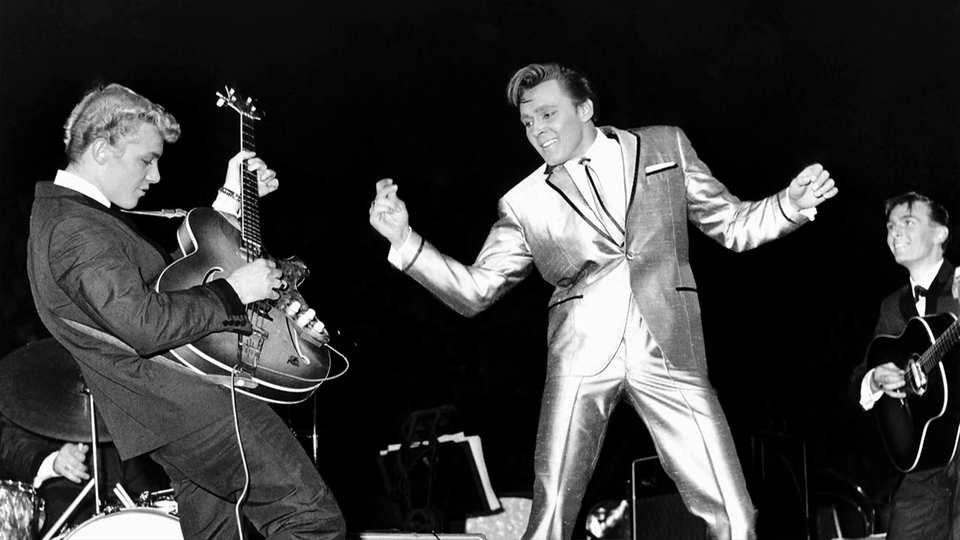
This medical secrecy was a professional necessity in the competitive landscape of the Merseybeat era. While his peers were celebrated for their stamina, Fury’s management often had to construct elaborate excuses for his sudden absences, citing “exhaustion” or “flu” to mask the reality of his failing heart. In truth, the stage was a crucible. The sophisticated choreographies that defined his act were performed while he struggled with shortness of breath and fainting spells—the classic symptoms of valvular malfunction. This creates a compelling paradox: the very “awayness” and vulnerability that fans found so attractive in his performance were often the literal physical manifestations of his body’s struggle to maintain consciousness.
By the 1970s, the paradigm of concealment was no longer sustainable. Fury underwent two major, high-stakes heart operations to replace damaged valves—pioneering procedures for the time that left him thin and visibly weakened. Yet, even as his physical frame diminished, his commitment to the “Fury” persona remained inevitable. His death at the age of 42 in 1983 was the final, tragic resolution of a forty-year medical battle. It raises a lingering, authoritative thought: was the emotional depth of his music a direct result of his proximity to mortality? Billy Fury did not just sing about the fleeting nature of paradise; he lived every day as if it were halfway there.