 By admin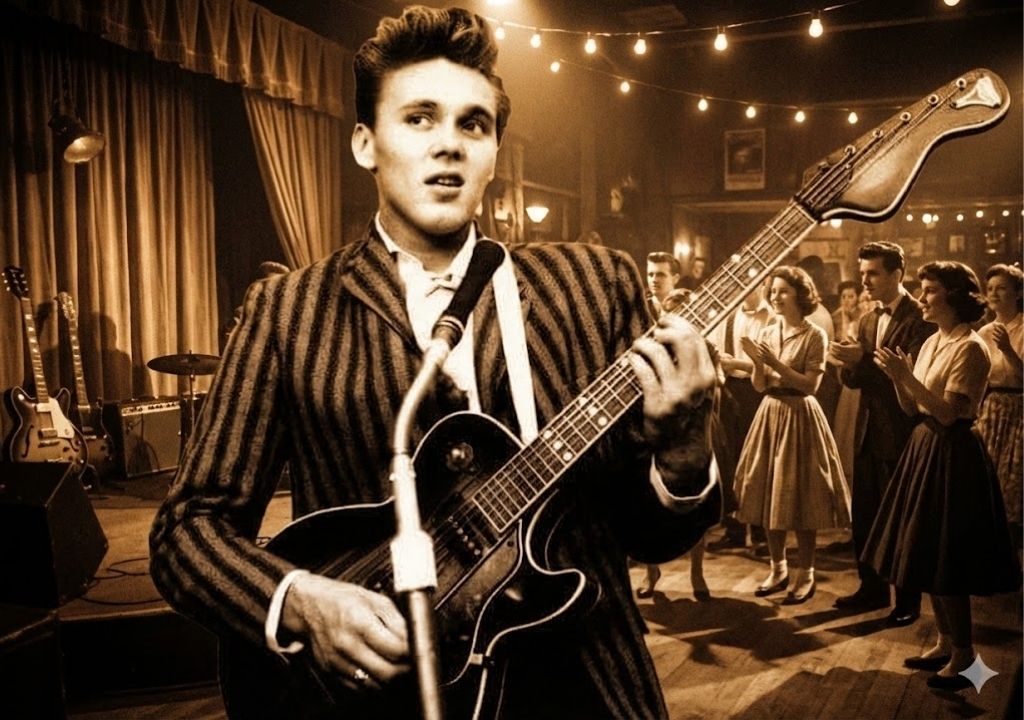

INTRODUCTION
The stone arches of St Peter’s by the Waterfront in Ipswich possess a gravitas that few modern venues can emulate, standing as a silent sentinel over centuries of cultural shift. On March 14, 2026, this former ecclesiastical space will transform into a theater of high-fidelity nostalgia as the “Billy Fury Meets Elvis” production arrives to explore a pivotal intersection of 20th-century music. For the residents of East Anglia, the event is more than a simple tribute; it is a meticulous investigation into the “British Elvis” phenomenon—a period where the raw, American vitality of Memphis was filtered through the rain-slicked streets of Liverpool. The stakes are uniquely high, as the performance seeks to bridge the gap between two icons whose lives, while geographically disparate, followed a strikingly similar trajectory of meteoric rise and premature stillness.
THE DETAILED STORY
The narrative architecture of the evening rests upon the shoulders of two seasoned specialists: Alan Wilcox, embodying the brooding vulnerability of Billy Fury, and Ivan Brady, assuming the mantle of Elvis Presley. This is not a competitive duel, but a study in cultural synthesis. Billy Fury was, in many ways, the first British performer to grasp the meticulous nuance required of a rock and roll idol—a paradigm of leather-clad sensitivity that preceded the Beatles. By pairing his repertoire with that of the “King,” the production raises a compelling question: how much of the British identity in the late 1950s was an original rebellion, and how much was a sophisticated reflection of the American South? As the setlist moves from the yearning “Halfway to Paradise” to the defiant “Don’t Be Cruel,” the inevitable conclusion is that both men were architects of a shared global language.
Wilcox’s portrayal of Fury is informed by a deep, archival respect, having maintained a personal connection with the Fury family to ensure factual and emotional integrity. This commitment to detail is mirrored in Brady’s Elvis, whose performance avoids the late-career caricatures in favor of the athletic, high-stakes energy of the early 1960s. At a price point of $18 (£14), the event democratizes access to this historical inquiry, allowing the audience to witness the collision of two distinct musical empires. The venue, St Peter’s, provides the perfect acoustic vessel for this dialogue, its high ceilings catching the reverb of a Fender Stratocaster in a way that feels both timeless and urgent.
Ultimately, “Billy Fury Meets Elvis” is a testament to the endurance of the mid-century rebel. As the lights dim in Ipswich on 03/14/2026, the evening will serve as a definitive reaffirmation that the influence of these two men remains a permanent fixture of our cultural landscape. They did not just write songs; they constructed the very blueprint of modern celebrity. In the final analysis, the show is a lingering thought on the nature of influence—a reminder that while the performers may fade, the resonance of their rebellion is, quite simply, inevitable.