 By admin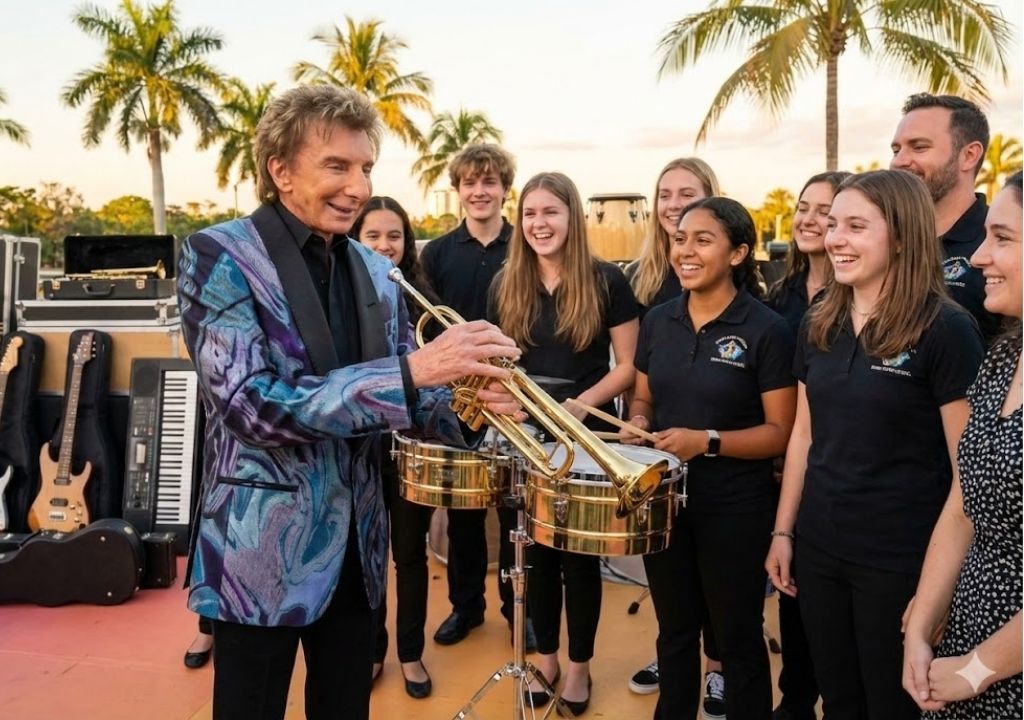

INTRODUCTION
On the morning of 02/20/2026, the Manilow Music Project officially codified its commitment to the Sunshine State, unveiling a curated roster of ten Florida high schools set to receive a transformative infusion of musical resources. Valued at a collective $100,000, this allocation of high-grade brass, woodwind, and percussion instruments is scheduled for delivery next week—a logistical feat designed to coincide with the artist’s upcoming Florida tour dates. For Barry Manilow, whose own career was forged in the public school music rooms of New York, this initiative represents a meticulous effort to counteract the systemic erosion of arts funding in the American educational landscape.
THE DETAILED STORY
The selection of these ten institutions was the result of a rigorous evaluation process that balanced academic need with the demonstrated excellence of local music educators. By directing $100,000 toward physical instrumentation, the foundation addresses a critical paradigm: the “instrument gap” that often prevents gifted students from low-income districts from achieving technical parity with their peers. This gesture is not merely charitable; it is a strategic investment in the preservation of live performance standards. Each school will receive a customized suite of equipment, ranging from professional-grade tubas to concert-level violins, effectively modernizing entire sections of their orchestral and marching bands.

This Florida-centric expansion of the Manilow Music Project highlights a broader philosophy of “artistic sustainability.” Manilow has frequently posited that music education is an essential pillar of cognitive development and social cohesion. By providing the hardware necessary for these programs to flourish, he is ensuring that the technical lineage of the Great American Songbook remains accessible. The timing of the delivery, synchronized with his arrival in markets like Tampa and Orlando, serves to amplify the narrative of the tour—transforming a series of concerts into a statewide cultural intervention. It raises an inevitable question regarding the role of the legacy artist: in an era of diminishing public resources, does the responsibility for nurturing future talent fall squarely on the shoulders of those who have already reached the summit?
The impact of this $100,000 grant will be felt far beyond the initial unboxing of the instruments. It provides a foundation for years of curriculum development, allowing directors to expand their repertoires and challenge their students with more complex arrangements. As the trucks arrive at these ten campuses next week, they carry more than just brass and wood; they carry the physical manifestation of an artist’s gratitude. For Manilow, the project is a full-circle narrative, a way to ensure that the “miracle” of music remains a tangible reality for the students of Florida, proving that while voices may age, the instruments of inspiration must always be kept in tune.