 By admin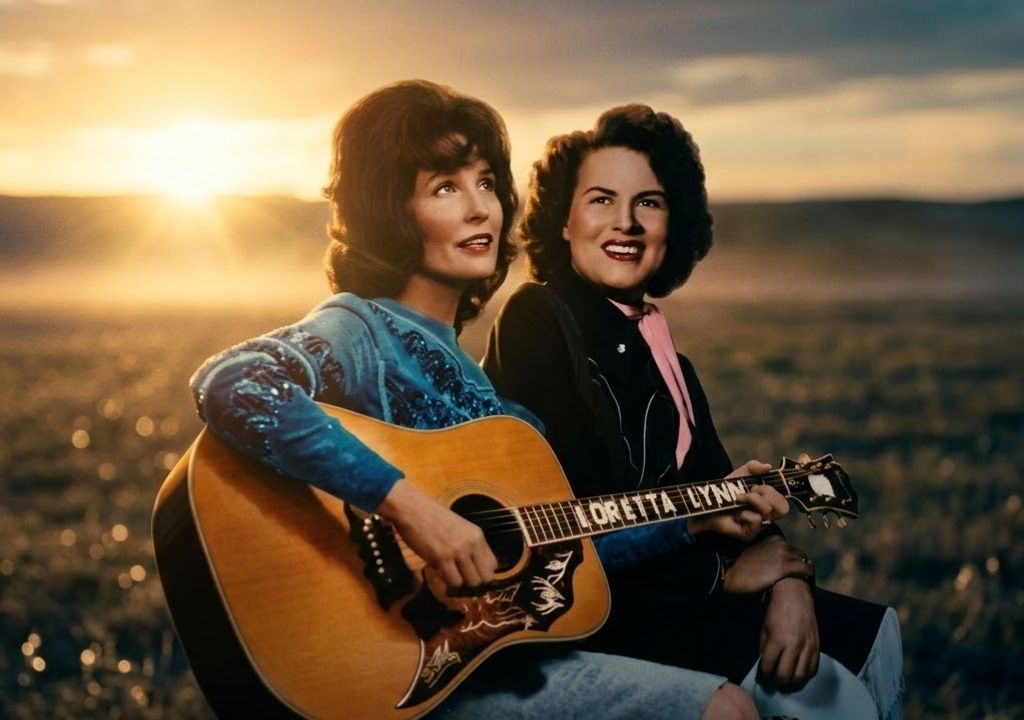
INTRODUCTION
The backstage draft of the Grand Ole Opry in 1961 was as unforgiving as the industry itself, a place where professional survival often demanded a calculated isolation. Loretta Lynn, an outsider possessing little more than a transfixing Appalachian vibrato and a singular $17 guitar, stood as a stark contrast to the polished artifice of the “Nashville Sound.” Her arrival was marked by a palpable scarcity; she lacked the sartorial armor required to navigate the high-stakes optics of mid-century stardom. However, the trajectory of American music shifted not through a boardroom decree, but through the opening of a closet door. Patsy Cline, the undisputed sovereign of the genre, looked at the destitute newcomer and chose a paradigm of radical generosity over the era’s standard of defensive rivalry.
THE DETAILED STORY
The relationship between Cline and Lynn was a meticulous study in cultural stewardship. When Cline summoned Lynn to her bedside following a near-fatal car accident in June 1961, she did not offer platitudes; she offered a blueprint for survival. The mentorship was comprehensive, encompassing the aesthetic, the financial, and the psychological. Cline’s gift of silk performance gowns and personal effects was a strategic intervention, providing Lynn with the visual authority necessary to be taken seriously by male executives and audiences alike. In an era where a female artist’s presentation was as scrutinized as her pitch, these garments functioned as a borrowed prestige, shielding Lynn from the dismissive labels often applied to “rural” talent.

Beyond the physical gifts, Cline acted as a sophisticated navigator through the industry’s treacherous social landscape. She taught Lynn the nuance of “stage face”—the meticulous application of makeup that served as a warrior’s mask—and, more crucially, how to maintain individual agency within a system designed to commodify vulnerability. This “big sister” dynamic provided Lynn with a psychological fortress; the knowledge that the industry’s most powerful voice was her primary advocate allowed her to maintain her stylistic integrity when others pressured her to conform. Cline’s frequent assertion that Lynn was the only artist whose talent she truly feared was not an admission of weakness, but a profound validation that granted Lynn the permission to be exceptional.
The tragic conclusion of Cline’s life in 1963 did not terminate this influence; rather, it codified it. Lynn spent the subsequent decades operating as the living extension of Cline’s trailblazing spirit, carrying the lessons of professional autonomy into a new era of feminist songwriting. This friendship dismantled the myth that female success is a finite resource, proving instead that legacy is most effectively preserved through the elevation of one’s peers. The bond between the two women remains the definitive counter-narrative to the “diva” archetype, suggesting that the most enduring structures in music are built not on the vanity of the individual, but on the unshakeable foundation of a shared, defiant sisterhood.