 By admin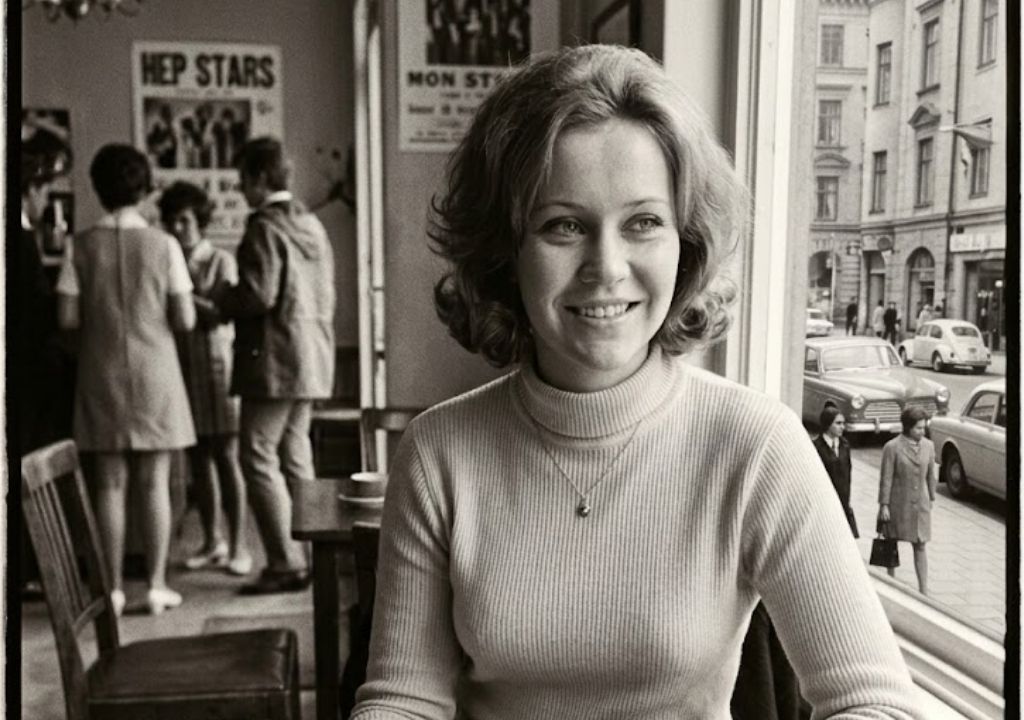
INTRODUCTION
In May 1969, the air in Linköping, Sweden, was thick with the scent of roasted coffee and the quiet anticipation of a television production. Agnetha Fältskog, a nineteen-year-old solo star with a crystalline voice, sat in a local café during a break from filming a tribute to composer Jules Sylvain. Across the table sat Björn Ulvaeus, the charismatic leader of the Hootenanny Singers. While the cameras were off, the chemistry was undeniably electric. This wasn’t merely a meeting of two rising musicians; it was the alignment of two distinct musical universes. The “thunderbolt”—or blixtnedslag—was instantaneous and profound. Within this mundane setting of porcelain cups and Swedish pastries, the blueprint for a decade of pop dominance was drafted, transforming a casual introduction into a cultural pivot point that would eventually birth ABBA.
THE DETAILED STORY
The magnitude of that afternoon in Linköping cannot be overstated. Before the global phenomenon of ABBA, there was simply a shared gaze over a café table. Both Agnetha and Björn were already established entities in the Swedish music industry, yet their professional paths had functioned like parallel lines that finally converged in 1969. Björn later recounted that he fell in love with her the moment he saw her, a sentiment echoed by Agnetha’s own recollections of an immediate, visceral connection. This was the quintessential “lightning strike” moment that novelists strive to capture, but for these two, it was a literal catalyst for both creative and romantic synergy.

Their conversation quickly moved beyond industry pleasantries into the very architecture of song. They discovered a shared obsession with melody and harmony that would eventually merge with the talents of Benny Andersson and Anni-Frid Lyngstad. However, the engine of this future empire was fueled by the genuine affection sparked in that quiet Swedish café. By the time they married in July 1971, they were not just a couple, but a formidable creative unit. The industry had never seen anything like it: a partnership where the emotional stakes of a relationship were mirrored in the soaring, often melancholic harmonies of their compositions.
Financial analysts often look at the $2 billion impact of the ABBA legacy, but the true value was minted in that initial encounter. It was a fusion of Agnetha’s emotive soprano and Björn’s rhythmic sensibilities. The “meeting at the café” remains the most vital chapter in the group’s hagiography because it humanizes the machine. It reminds the audience that behind the multi-platinum records and the grueling world tours lay a simple, unyielding attraction. This moment changed the trajectory of European pop music forever, proving that sometimes, a single cup of coffee can brew a revolution that lasts for generations.