 By admin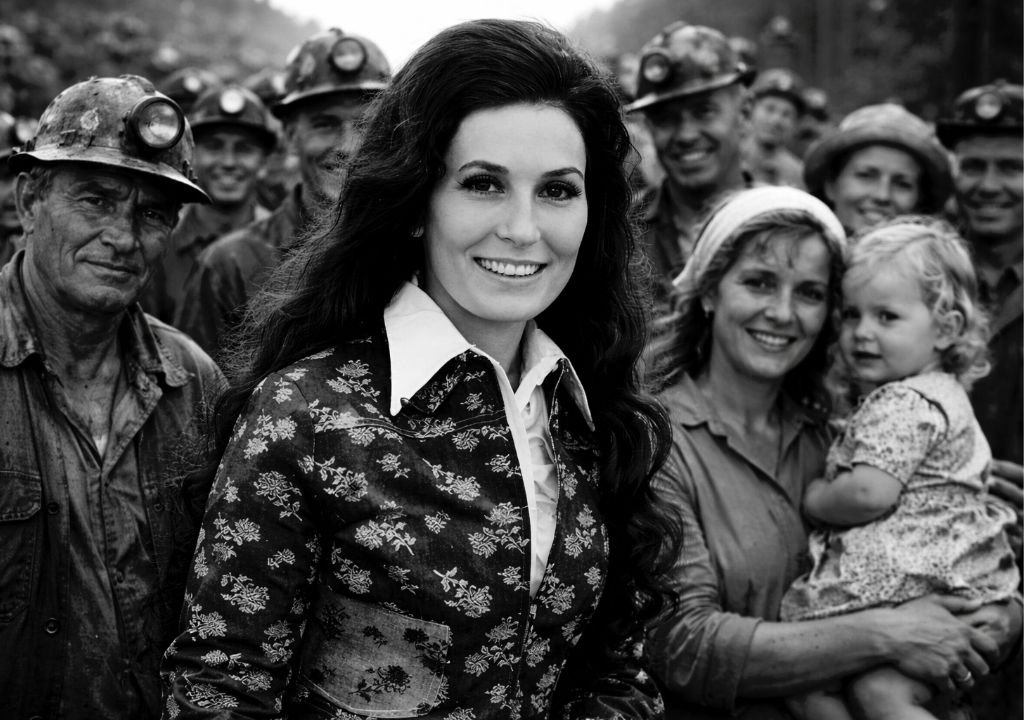

INTRODUCTION
In the sterile, controlled environment of a Nashville recording studio in 1970, Loretta Lynn reached back across decades and mountain ranges to the isolated dirt roads of Butcher Hollow, Kentucky. Armed with a simple acoustic guitar melody and a narrative as sharp as a coal-cutter’s blade, she composed “Coal Miner’s Daughter”—a track that would transcend the boundaries of country music to become a sociological landmark. This was not a work of pastoral fiction; it was an evidentiary record of survival. Lynn’s voice, steeped in the unyielding heritage of Appalachia, chronicled a life defined by “no money” but “a lot of love,” meticulously detailing the labor of a father who shoveled coal for a living and a mother whose hands were calloused by the washboard. In doing so, she transformed her personal history into a universal liturgy for the disenfranchised.
THE DETAILED STORY
“Coal Miner’s Daughter” remains the most potent distillation of the American Dream ever committed to vinyl. Released on 10/05/1970, the single moved with an unstoppable momentum, ultimately peaking at number one on the Billboard Hot Country Singles chart on 12/19/1970. While Nashville often leaned into the “rhinestone” aesthetic of the era, Lynn leaned into the mud. The song’s brilliance lies in its granular focus: the “well water,” the “kerosene lamp,” and the “shoes” ordered from a catalog once a year. These were not merely props; they were artifacts of a working-class reality that had been largely ignored by the cultural elite of the time.

Produced by the legendary Owen Bradley, the track achieved a sonic intimacy that forced the listener to confront the dignity of the laborer. It was a $1.00 investment in truth that yielded a cultural fortune. The song’s impact was so profound that it spawned an autobiography in 1976 and a major motion picture in 1980, which earned Sissy Spacek an Academy Award. More importantly, it established Lynn as the voice of the “silent majority” long before the term was co-opted by political machinery. She wasn’t just singing for the charts; she was reporting from the front lines of rural poverty, documenting the grit required to move from a cabin in the woods to the Grand Ole Opry.
The legacy of the track is cemented in its refusal to apologize for its origins. By the time it was inducted into the National Recording Registry by the Library of Congress, “Coal Miner’s Daughter” had become more than a hit—it was an American psalm. It provided a sense of class consciousness in a country that often pretends to be classless. Lynn’s narrative architecture proved that the most specific stories are often the most universal. By honoring her father’s meager daily toil and her mother’s tireless devotion, she ensured that the invisible backbone of the American workforce would forever have a place in the pantheon of high art.