 By admin
INTRODUCTION
In the mid-1970s, as Barry Manilow stood before thousands of screaming fans, he would often pivot from his chart-topping ballads to a medley of 30-second tunes that every person in the arena knew by heart. It was a surreal moment of collective consciousness. Long before “Mandy” or “Copacabana” redefined the adult contemporary landscape, Manilow was a struggling musician in New York City, crafting the sonic wallpaper of American consumerism. From the infectious optimism of McDonald’s to the comforting reliability of State Farm, his early work did not just sell products; it established a rhythmic intimacy with millions of households. These were not mere advertisements; they were sophisticated pop miniatures that proved a compelling hook could transcend the medium of television and embed itself permanently in the cultural psyche.
THE DETAILED STORY
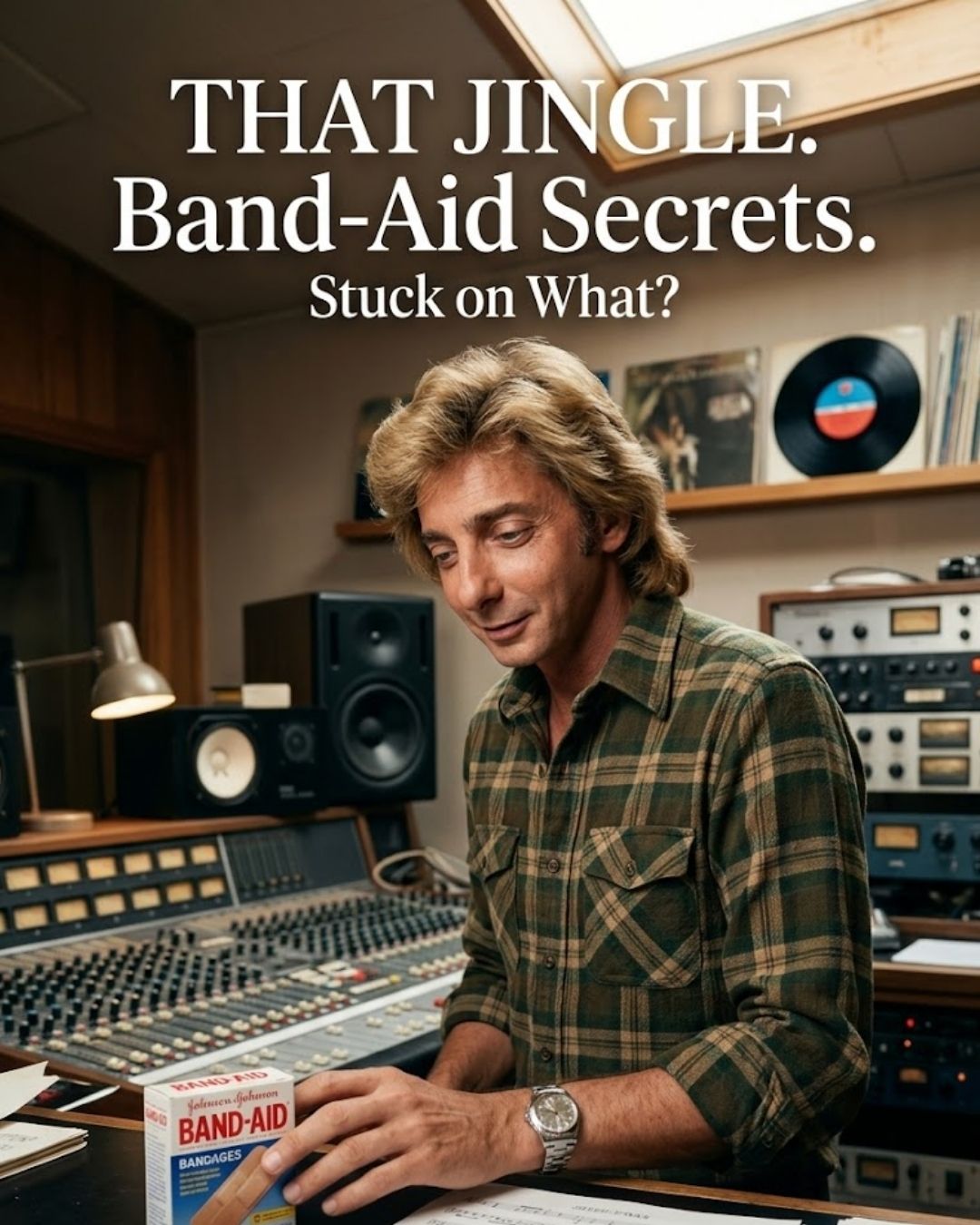
The transition from the commercial recording booth to the global stage was not an accident of fate, but the result of a rigorous apprenticeship in melodic efficiency. During the late 1960s and early 1970s, Manilow worked as a jingle singer and composer, a role that demanded he convey profound emotion or irresistible energy in precisely 30 or 60 seconds. In 1971, he composed the “Like a Good Neighbor” theme for State Farm, a melody so enduring it remains a cornerstone of the company’s branding over fifty years later. His work on the “Stuck on Band-Aid” campaign in 1975 demonstrated an uncanny ability to pair simple lyrical concepts with sophisticated harmonic structures. While his peers often viewed commercial work as a necessary evil, Manilow treated it with the same respect as a Broadway score.
This period of “mercenary” musicianship sharpened his ability to identify “the hook”—that elusive, undeniable sequence of notes that bridges the gap between a listener’s ear and their memory. This skill became his greatest asset when he finally stepped into the spotlight. Even as he achieved multi-platinum success, Manilow never distanced himself from his commercial roots. Instead, he embraced them, recognizing that the ability to unify a nation through a 15-second refrain about a bandage was the ultimate proof of musical potency. His jingles served as the foundational architecture for the “Manilow sound”: grand, unapologetically melodic, and structurally flawless. By the time he was inducted into the Songwriters Hall of Fame, the industry acknowledged a fundamental truth: before he was the king of the ballad, he was the master of the American moment. He proved that in the realm of high-stakes marketing, the right melody is worth more than a billion-dollar ad buy, turning transient commercials into permanent pieces of the American songbook.