 By admin
 The full video is at the end of the article.
Introduction
The Last Word: Linda Ronstadt on Fame, the LA Heyday, and Navigating a “Different” Life with Parkinson’s
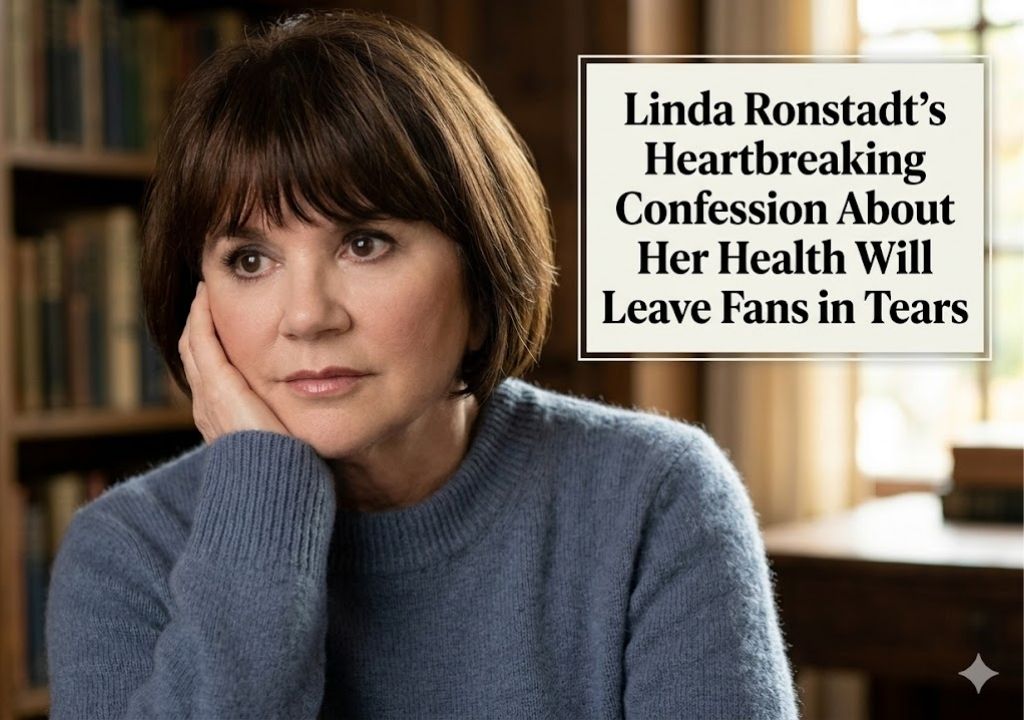
Linda Ronstadt’s luminous, arena-filling voice defined American music for four decades. With 11 Grammy Awards, 30 studio albums, and a legacy built on effortless genre-defying versatility, she remains undisputed music royalty. Yet, at 67, the legendary singer is staring down a starkly different reality. After retiring from the stage in 2009 and announcing her Parkinson’s disease diagnosis, Ronstadt is opening up about her journey, her musical manifesto, and why she is finally reclaiming her own narrative.
A Simple Dream Built on Hard Work
For Ronstadt, the goal was never the glitz of Hollywood or the titles of superstardom. Her ambition was profoundly pure.
“I didn’t want to be famous. I didn’t want to be a star,” Ronstadt reveals. “I just wanted to sing. I wanted to have a job singing so I didn’t have to have a job doing something else.”
That dedication required immense sacrifice. Ronstadt dispels the myth of the overnight sensation, noting that mastering an instrument—vocal or physical—demands six to eight hours of daily practice, year after year. In fact, she admits it took her 10 full years after turning professional to finally feel in complete control of her iconic voice.
During the legendary 1970s LA music scene, she wasn’t rubbing elbows with intimidating icons; she was just hanging out with her friends. Before they became household names, visionaries like Jackson Browne, J.D. Souther, and Warren Zevon were simply her buddies, jamming in living rooms and sharing a raw passion for songwriting.
Setting the Record Straight with “Simple Dreams”
After decades of others speculating about her thoughts, feelings, and private life, Ronstadt decided it was time to write her own story. Her musical memoir, Simple Dreams, wasn’t born out of a desire for a tabloid pay-day. When publishers promised she didn’t have to write a trashy “kiss-and-tell” book, she eagerly signed on.
The memoir serves as her definitive statement. Because so much of what had been written about her over the years was entirely inaccurate, Ronstadt wanted one clear thing: the last word.
Crucially, the book does not cover her battle with Parkinson’s disease. The omission wasn’t intentional—the official diagnosis from her neurologist came so late in the process that she was already writing the book’s acknowledgments.
“Life is Different”
When asked how she copes with a condition that has permanently stolen her ability to sing, Ronstadt displays a grounded, fearless perspective on aging.
-
The Reality: “It’s a very different process,” she notes calmly.
-
The Acceptance: “You just figure out someone’s going to get you. I’m 67… that I got this far, I think I’m lucky and I’ve had a good long life.”
A Manifesto for the Next Generation
Though her professional singing days are behind her, Ronstadt’s fiercely passionate philosophy on art remains fully intact. She firmly believes modern society has made a mistake by outsourcing music and dance entirely to professionals. To Ronstadt, music is a vital human utility designed to help regular people process deep emotions and navigate the hardships of life. Her ultimate recommendation? “Get in a choir. I preach choirs.”
For the young artists hoping to follow in her footsteps, her blueprint for creative excellence is simple: absorb the world around you.
-
Read as widely as possible.
-
Visit museums and study visual art.
-
Listen to every single genre of music available.
“Everything you listen to, everything you see, everything you hear,” Ronstadt insists, “is going to affect what your art is.”