 By admin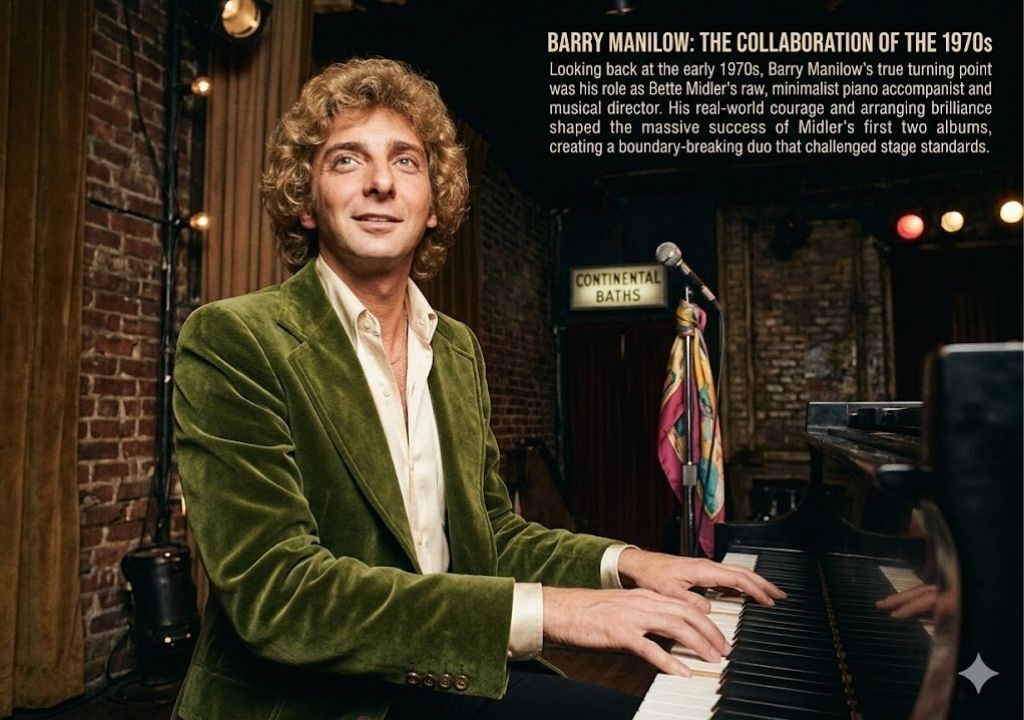
INTRODUCTION
The smoky, subterranean atmosphere of New York City’s Continental Baths in the early 1970s was an unlikely crucible for mainstream music history. There, amidst the steam and countercultural energy, a young, classically trained Brooklyn musician sat behind a weathered upright piano. He was anchoring the theatrical whirlwind of a then-rising Bette Midler. That focused accompanist was Barry Manilow. Long before filling global arenas with his own multi-million dollar anthems, Manilow served as the foundational architect behind Midler’s early sonic identity. This crucial professional crucible did not just launch his career into the relentless glare of the American entertainment industry; it reshaped the parameters of mid-century pop vocal performance. By stripping away commercial artifice, this bohemian partnership established a raw, direct connection with audiences that forever disrupted the rigid conventions of New York’s traditional theater circuit.
THE DETAILED STORY
Billboard and Variety document the early 1970s as a period where overproduced pop orchestras collided with a demand for raw authenticity. Manilow’s role as Midler’s music director and accompanist became a masterclass in minimalism. Tasked with translating Midler’s explosive energy onto vinyl, Manilow approached the arrangements for her landmark debut album, The Divine Miss M (November 1972), and her self-titled 1973 follow-up with deliberate restraint. Instead of burying her vocal range beneath dense instrumentation, he weaponized the acoustic piano as a driving counterpoint. His sophisticated harmonic choices provided a secure structural launchpad for her theatrical interpretations, turning tracks like “Do You Want to Dance?” into historic commercial triumphs that earned millions of dollars.
Behind the closed doors of Atlantic Records’ studios, the creative synergy between the two artists was notoriously intense. Manilow’s classical training allowed him to systematically dismantle and rebuild traditional standards, infusing them with a bohemian spirit that defied contemporary radio formatting. Industry insiders noted that Manilow’s real-life instinct for arrangement was the invisible engine driving Midler’s rapid ascent. He possessed a rare ability to anchor her chaotic charisma with precise, uncluttered orchestration, ensuring the emotional core of each song remained uncompromised.
This intense artistic alliance fundamentally shattered the cutthroat theatrical norms of the era. At a time when solo artists were strictly segregated from their musicians, Manilow and Midler operated as an inseparable sonic unit, proving that an organic collaboration could outshine expensive studio productions. This early chapter did more than establish Midler as a cultural icon; it provided Manilow with the structural blueprint for his own legendary solo career. The profound understanding of melodic clarity and emotional timing he refined while driving Midler’s early masterpieces would ultimately define his future catalog, cementing his status as an enduring force in American pop history.