 By admin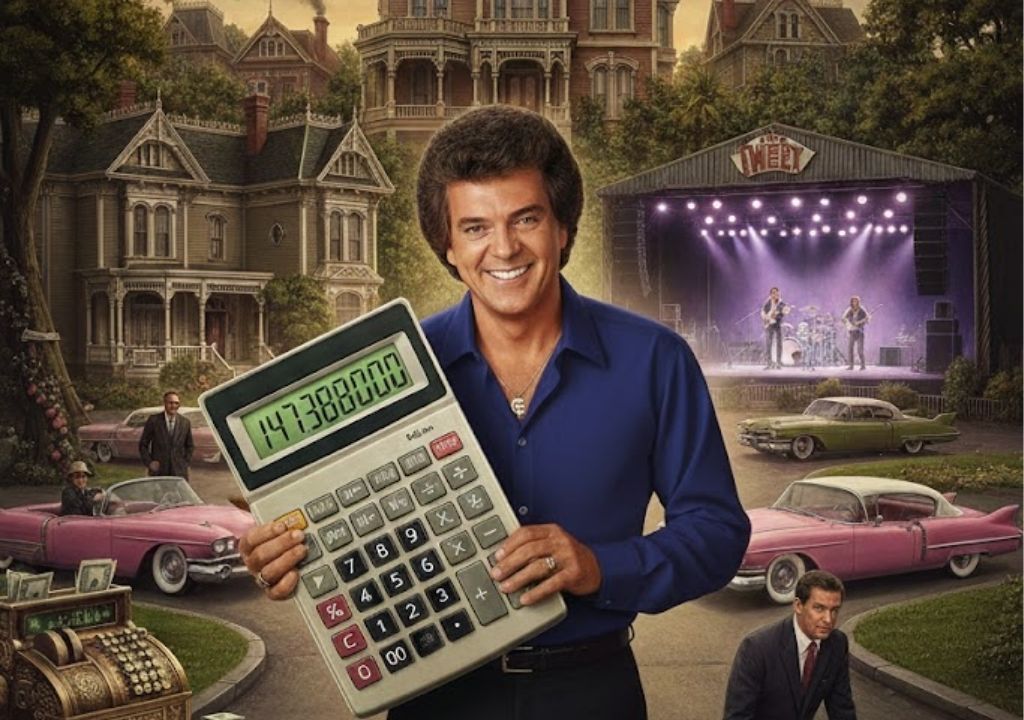

Introduction
In the pantheon of country music excess, Elvis Presley had Graceland, but Conway Twitty had something far more ambitious, far more expensive, and infinitely more bizarre: Twitty City. While other stars bought mansions, Twitty built an entire municipal district dedicated to his own glory. Located in Hendersonville, Tennessee, this wasn’t just a home; it was a nine-acre fortified compound, a sovereign state of honky-tonk opulence that stood as a towering monument to the specific brand of mania that defined the 1980s. But beneath the glittering surface of the millions of Christmas lights and the meticulously manicured gardens lay a financial leviathan that required a staggering, almost grotesque amount of capital to keep breathing.

Imagine the sheer logistical nightmare of living inside a tourist attraction. This was a “home” that required a payroll rivaling a mid-sized corporation just to unlock the doors in the morning. We are talking about an operational burn rate that would make a Wall Street banker sweat. The utility bills alone were rumored to be astronomical—enough to power a small town—fueled by the millions of bulbs that turned the compound into a blinding beacon visible from space during the holidays. There was the security detail, the groundskeepers, the gift shop employees, and the maintenance crews for the “homes” within the complex where his mother and children also lived. It was a feudal system where Twitty was the King, the Mayor, and the primary financier.
The tragedy of Twitty City wasn’t its aesthetic—which was a glorious clash of colonial architecture and neon kitsch—but its appetite. It was a beast that ate money. Twitty had to tour relentlessly, churning out hits and playing hundreds of dates a year, simply to feed the operational costs of his “kingdom.” He was a prisoner in a gilded cage of his own design. While fans saw a generous star opening his gates to the public (for a fee), the financial reality was a high-wire act of liquidity. He wasn’t just singing for applause; he was singing to keep the lights on in a personal Disneyland that had no “off” switch.

This complex represents the ultimate cautionary tale of celebrity real estate. It blurs the line between privacy and commerce until they are indistinguishable. Twitty lived in a fishbowl where the water was made of dollars, and the drain was always open. When he passed away, the “City” couldn’t sustain itself without the King’s constant income, proving that this massive, concrete legacy was, in reality, a fragile house of cards held together by one man’s exhaustion.