 By admin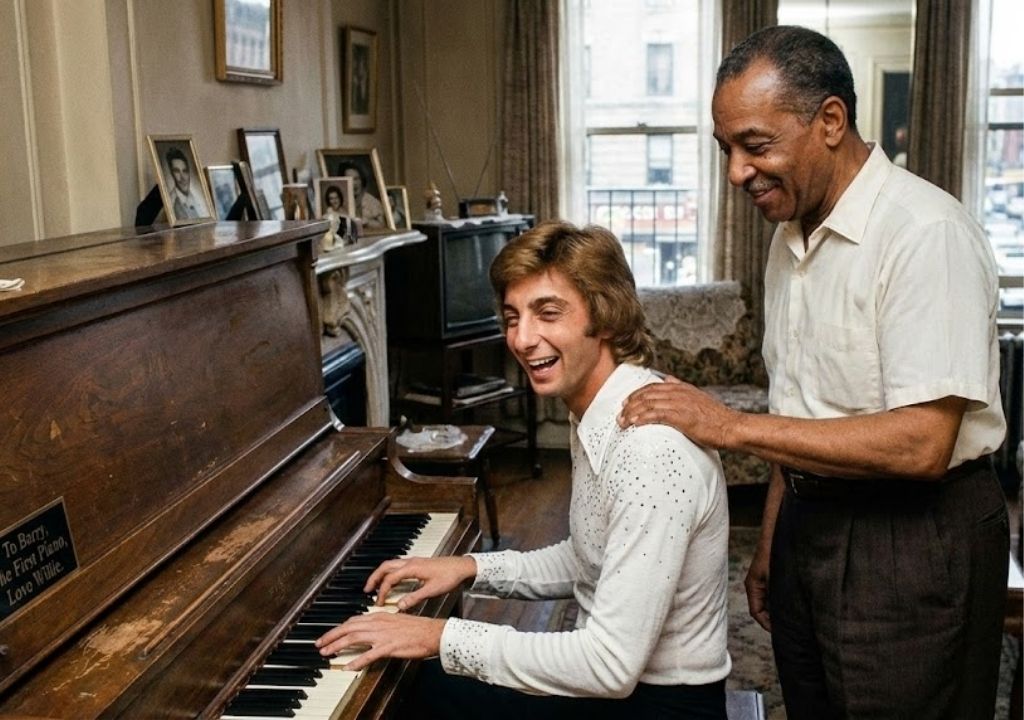

Introduction
The apartment in Williamsburg was suffocating. It was a place defined by what was missing—missing money, missing space, and missing a father. Into this vacuum stepped a man who didn’t belong in a concert hall: Willie Murphy. He wasn’t a maestro; he was a truck driver. He smelled of diesel and hard labor, not sheet music and rosin. But this rough-edged man committed an act of financial insanity that would rewrite the history of American music.

Imagine the scene: A tiny, cramped walk-up where every inch of floor space was a battleground. Then, the door swings open. Willie Murphy isn’t carrying groceries. He isn’t carrying a paycheck. He is wrestling a spinet piano through a door frame that was never designed to accommodate luxury.
To the neighbors, this was madness. Why would a truck driver spend a fortune—money they didn’t have—on a musical instrument for a moody, silent stepson? It was the equivalent of parking a Rolls Royce in a kitchen. That piano was a monstrosity. It was a wooden beast that ate up the living room, a constant, looming physical presence that demanded attention. It was an alien object in a house of poverty.
But Willie didn’t just bring the wood and wire; he brought the soul. Along with that towering instrument, he smuggled in a stack of jazz records—Gerry Mulligan, Chet Baker, the sounds of a smoky, sophisticated world miles away from the grit of Brooklyn. He sat the young Barry down, not with a lecture, but with a challenge. Listen.
This was the pivotal betrayal of Barry’s biological destiny. His blood father, Harold, had left him with nothing but a void. Willie, the “replacement,” the man who drove trucks for a living, handed the boy the keys to the universe. That piano wasn’t furniture. It was a time machine. It was a weapon. When Barry’s fingers first touched those ivory keys, the truck driver’s gamble paid off instantly. The shy boy didn’t just play; he escaped.

The scandal here is beautiful and terrifying: The world’s greatest showman was created not by a conservatory professor, but by a blue-collar stepfather who sacrificed his savings on a hunch. That piano was the third parent Barry never knew he needed. Without Willie Murphy forcing that 500-pound beast into their tiny home, Barry Manilow remains Barry Pincus—a lonely kid in Brooklyn staring at a blank wall, with a song stuck in his throat that would never, ever be sung.