 By admin

Introduction
Halfway to Paradise: The Untold Story of Billy Fury Through the Granada Lens
Before the Beatles conquered the world, Liverpool gave us a different kind of fire: Ronald Wycherley, better known to the world as Billy Fury. A rare archive of a Granada TV news report—featuring both edited and unedited footage—provides a poignant, deep-dive into the life of the man who was arguably Britain’s first genuine rock and roll superstar.
From the Dingle to the Spotlight

The report takes us back to Billy’s roots in the Dingle area of Liverpool. His mother, Jean, and brother, Albert, paint a picture of a “sickly” but immensely talented child. Stricken with rheumatic fever at age six, Billy’s life was forever shadowed by a heart condition. Yet, his health struggles couldn’t dampen his artistry. As Albert notes, Billy was a polymath: he drew, sang, and played the piano, drums, guitar, and harmonica.
His discovery is the stuff of legend. After sending a tape and a photograph to impresario Larry Parnes, Billy was invited to a theater in Birkenhead. In a whirlwind moment, he was pushed onto the stage to perform his own songs, “Maybe Tomorrow” and “Margo.” He “brought the house down” and went from Ronnie Wycherley to Billy Fury overnight.
Sex Appeal and Controversy
Billy’s stage presence was electric—and, for the time, scandalous. Fan Maureen Bowden recalls an act so dynamic that adults found it “suggestive,” while the audience was utterly enthralled. This “sexy” persona famously led to him being banned in Ireland. During a tour, his performance was so captivating that female fans would rush to the stage door after his set, leaving the headlining act to perform to an empty theater. The management’s excuse? Billy was “too sexy.”
The Man Behind the “British Elvis”
Beyond the screams and the chart-topping hits like “Halfway to Paradise,” the Granada footage reveals a gentle, introverted soul. After two major heart operations, Billy sought peace in semi-retirement on a farm, surrounded by his beloved horses, sheep, and dogs. Jean describes him as a “lovable, caring person” who had a special affinity for children and the elderly.
Tragically, Billy’s heart finally gave out in 1983. His family recalls the shock of his passing, especially as he was planning a 1983 comeback tour. Albert, who also performed under the name Jason Eddie, shares the chilling reality of suffering from the same symptoms as his brother, admitting, “Worry will kill you… I try to put it to the back of my mind.”
An Enduring Legacy
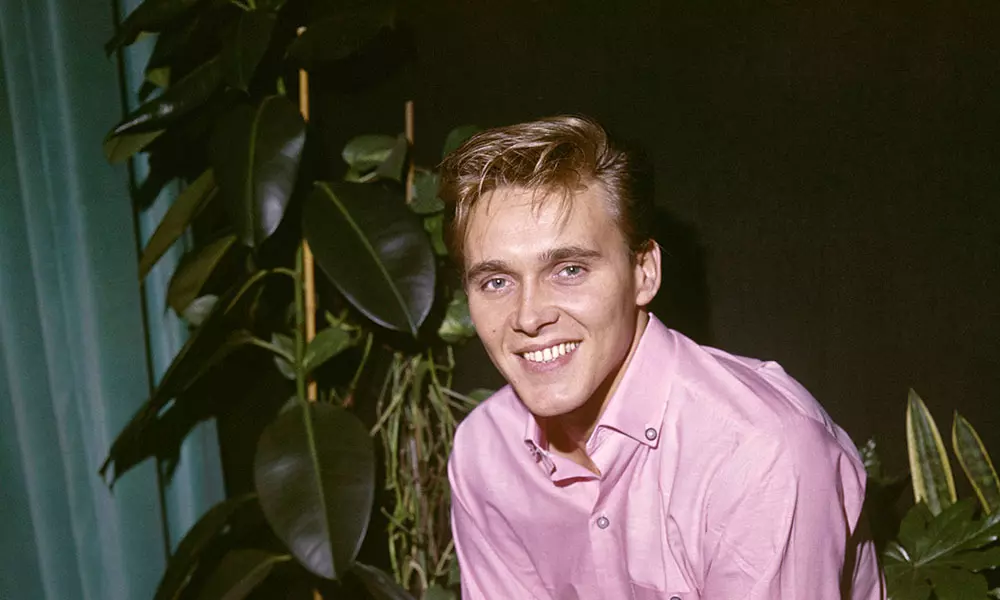
Today, Billy Fury’s home remains a “shrine” to his memory, filled with records and photographs. For his mother, Jean, he never truly left. “I feel like he’s here… it’s hard to believe they’re gone when you can turn on the radio and hear the music.”
With thousands of fans still making pilgrimages to his grave three times a year, Billy Fury’s contribution to British pop remains undeniable. He wasn’t just a “watered-down copy” of American stars; he was a unique, raw talent who brought his whole soul to the stage.