 By admin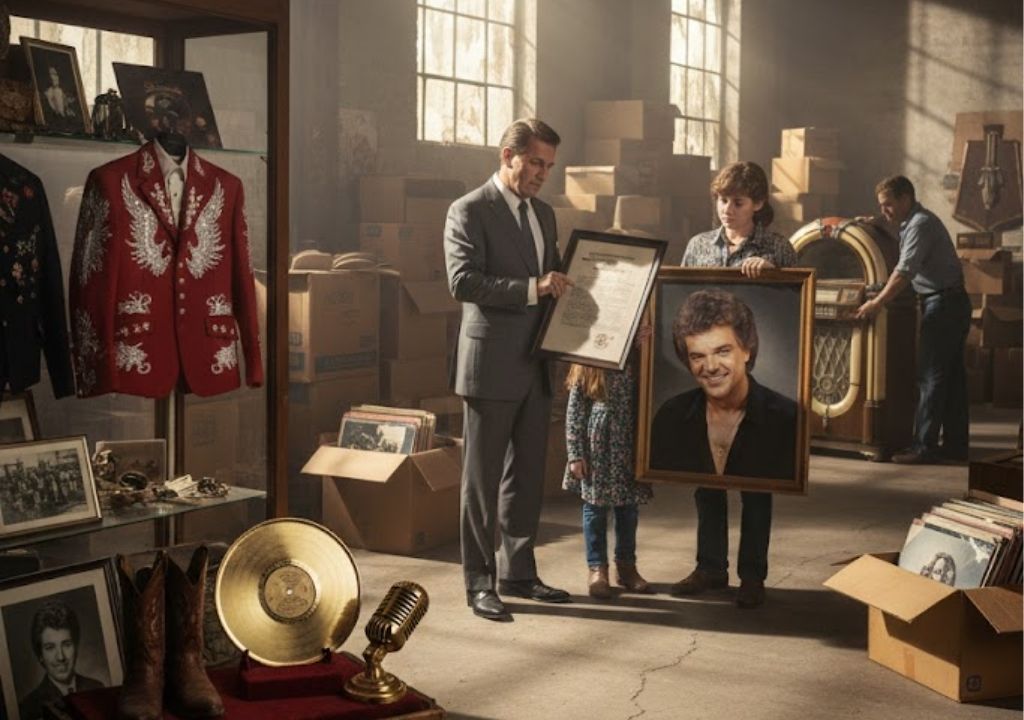

Introduction
The silence in Hendersonville, Tennessee, is deafening today. It is a hollow, manufactured quiet where once the heartbeat of country music throbbed with an intensity that rivaled Graceland. We aren’t talking about a simple estate sale. We aren’t talking about a polite auction of old suits and dusty guitars. We are talking about the systematic, ruthless dismantling of a man’s soul.
Twitty City was never just a tourist attraction; it was the physical manifestation of Conway Twitty’s love for his fans and his family. It was a nine-acre fortress of country music history, a pilgrimage site that drew millions who wanted to touch the hem of the High Priest of Country. But the moment the “Hello Darlin'” singer took his last breath in 1993, the sharks began to circle. What followed remains one of the most heartbreaking erasures in music history.

Where did it all go? That is the question that haunts the forums, the fan clubs, and the dark corners of eBay.
In 1994, the gavel fell at an auction that felt more like an execution. The sheer scale of the liquidation was staggering. We witnessed the scattering of a legacy—personal mementos, stage costumes that had soaked up the sweat of thousands of shows, the iconic “Tweety Bird” car, and the very bricks and mortar of his existence—sold off to the highest bidder with cold efficiency. But the public auction is only half the story. There are whispers of the items that didn’t make the catalog. The private treasures. The letters. The things that make a man, not a legend.
When the Trinity Broadcasting Network (TBN) purchased the property, the transformation was absolute. The majestic “Twitty City” sign was torn down, the specialized museums were gutted, and the spirit of Conway was scrubbed from the walls as if he were a stain to be removed rather than an icon to be revered.

For three decades, we have asked: Who holds the keys to the lost vault? Are these priceless artifacts sitting in the climate-controlled basement of a private collector in Tokyo? Are they gathering dust in a pawn shop in Nashville, unrecognized and unloved? Or were they destroyed, buried under the weight of corporate rebranding and family disputes?
The tragedy isn’t just that the items are gone. The tragedy is that the tangible history of a man who gave everything to his audience was treated as debris. This investigation dives into the dark aftermath of that liquidation, tracing the ghost of Twitty City to find out who really profited from the pillaging of a country king.