 By admin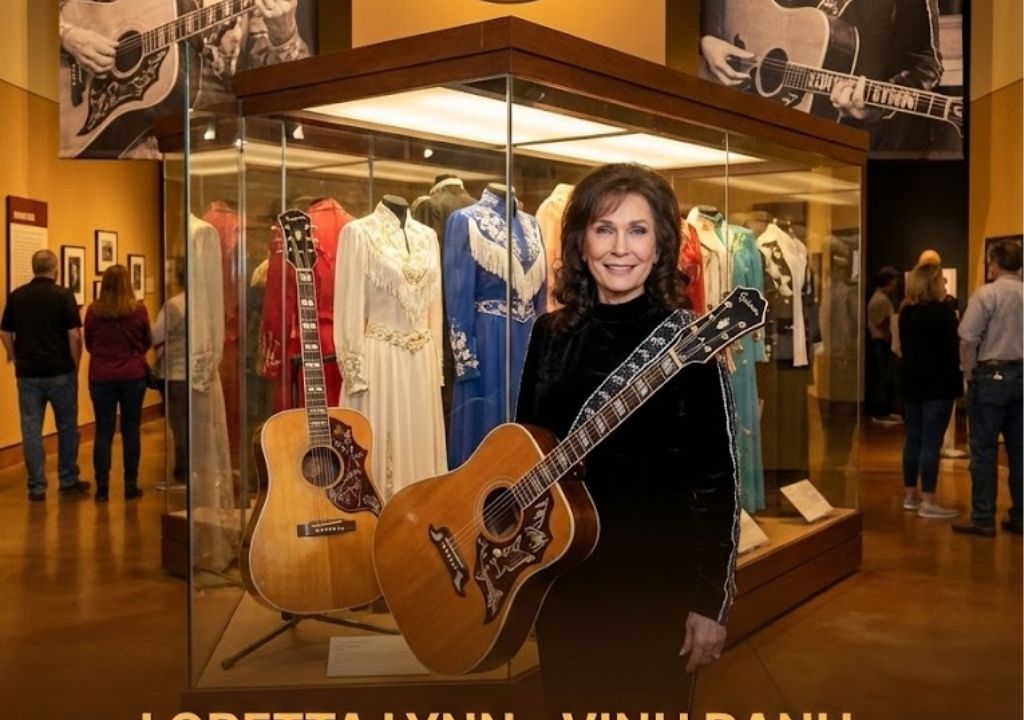

INTRODUCTION
The cold, clinical glow of a museum display case is a curious final destination for a voice that once vibrated with the raw, humid heat of a Kentucky porch. Yet, behind the reinforced glass of the Country Music Hall of Fame and Museum in Nashville, Tennessee, the 1956 Singer sewing machine used by Loretta Lynn to craft her own stage costumes remains a primary point of pilgrimage for thousands of travelers. As the institution formally announces that the “Loretta Lynn: Blue Kentucky Girl” exhibition will be extended through 07/31/2026, the stakes of historical preservation have shifted from mere nostalgia to a profound institutional mandate to anchor the genre in its working-class roots.
THE DETAILED STORY
The decision to prolong the residency of this retrospective through the summer of 2026 serves as a significant marker of Lynn’s enduring cultural gravity. Originally slated for a standard archival rotation, the extension is a direct response to an unprecedented surge in domestic and international tourism—a meticulous calibration by the museum to satisfy a global hunger for authentic narrative in an increasingly synthetic digital landscape. This administrative shift is an admission that the story of the “Coal Miner’s Daughter” is too vast for a traditional tenure, requiring a temporal space that matches the magnitude of her influence on the American social fabric.
The artifacts on display—ranging from the original handwritten manuscript of her 1970 hit to the emerald green chiffon gown she wore as the first female CMA Entertainer of the Year—provide more than just aesthetic pleasure. They represent a fundamental paradigm shift in how we interpret the Southern experience. Lynn’s lyrics were not merely songs; they were meticulous investigative reports on the female condition, addressing birth control and domestic agency with a directness that was both revolutionary and inevitable. The curation, which includes a $19.95 commemorative book featuring rare archival photography, meticulously traces this trajectory, showcasing the 1956 Singer sewing machine alongside her Presidential Medal of Freedom, bridging the immense distance between manual labor and the highest civilian honor in the United States.

Furthermore, the extension aligns with a broader strategy to solidify Nashville as a global destination for serious historical scholarship. As the Country Music Hall of Fame navigates a 2026 landscape where the “Nashville Sound” is frequently redefined by crossover pop, Loretta Lynn remains the necessary counterweight—a reminder of the genre’s foundational grit. The exhibition offers a nuance of perspective often lost in modern celebrity culture, emphasizing the labor-intensive nature of her self-creation. Each sequin on her handmade dresses tells a story of self-fashioning that preceded the age of the professional stylist.
As the 2026 summer tourism season reaches its peak, the “Blue Kentucky Girl” retrospective remains the definitive anchor of the Nashville experience. It ensures that the millions of visitors flocking to the city encounter the unvarnished truth of an artist who never sought to hide her provenance. This extended residency forces a lingering realization: while the artist has departed the earthly stage, her presence within these limestone walls has attained a permanent, crystalline authority. It is a legacy that does not just invite observation; it demands a profound, silent respect for a woman who transformed private struggle into a universal anthem.