 By admin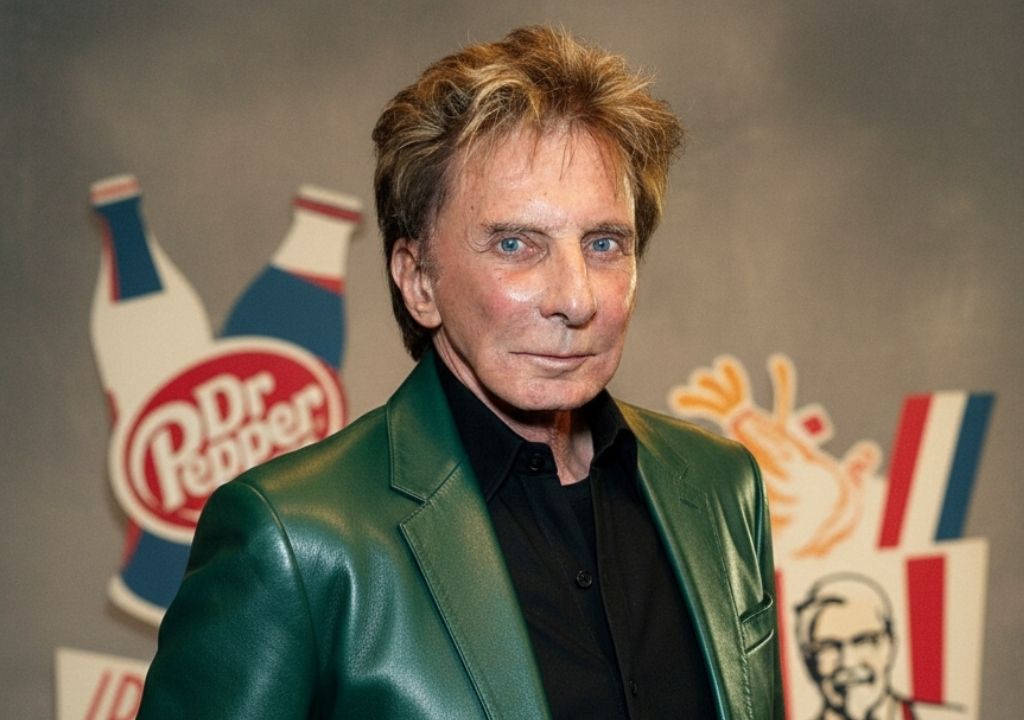
INTRODUCTION
Before he was the master of the four-minute emotional crescendo, Barry Manilow was the invisible hand shaping the subconscious cravings of the American public. In the late 1960s, a young Manilow—fresh from the rigors of Juilliard and the CBS mailroom—found himself navigating the high-pressure corridors of the advertising world, where a single misplaced beat could cost a client millions in lost revenue. He treated these commercial commissions not as secondary labor, but as a “musical college,” a brutal and efficient training ground where he learned to weaponize melody. The task was deceptively simple yet technically daunting: create an indelible emotional connection within the span of a single breath.
THE DETAILED STORY
The business of the jingle is a study in the paradox of intellectual property. For his composition of the State Farm anthem “Like a Good Neighbor,” Manilow received a one-time payment of $500 in 1971. While that nine-note melody has been broadcast billions of times over half a century, its creator saw none of the subsequent billions in insurance premiums it helped generate. This financial nuance highlights a critical trade secret of the era: in the jingle industry, the composer’s “buyout” was the norm, whereas the performer’s residuals were the gold mine. Consequently, Manilow began a strategic pivot, ensuring he was not only the architect behind the piano but also the voice behind the microphone.
This duality led him to the headquarters of Dr. Pepper and Kentucky Fried Chicken (KFC). For Dr. Pepper, Manilow lent his distinctive, bright tenor to the “Be a Pepper” campaign—a melody originally envisioned by Randy Newman. His vocal performance provided a rhythmic vitality that transformed a soda advertisement into a cultural phenomenon. For KFC, he took on the role of both composer and singer for the 1983 campaign “Grab a Bucket of Chicken.” He utilized a meticulous arrangement of upbeat, finger-snapping jazz influences to associate the brand with domestic celebration. Manilow understood that for a brand like KFC, the music didn’t just need to be catchy; it had to sound like a home-cooked invitation.
His portfolio expanded to include “I am stuck on Band-Aid,” for which he adopted a childlike vocal timbre to evoke vulnerability and trust, and the “You Deserve a Break Today” campaign for McDonald’s. In 2009, this body of work earned him an honorary Clio Award, acknowledging that his 15-second hooks were as structurally sound as any classical symphony. Manilow’s legacy is a testament to the fact that commercial viability and artistic integrity are not mutually exclusive. He managed to weave his DNA into the fabric of American life, proving that a truly great melody is an asset that never depreciates, even if the initial contract was signed for the price of a used television. One must ask: in a world of algorithmic marketing, has the industry lost the human touch that once made a bucket of chicken feel like a masterpiece?