 By admin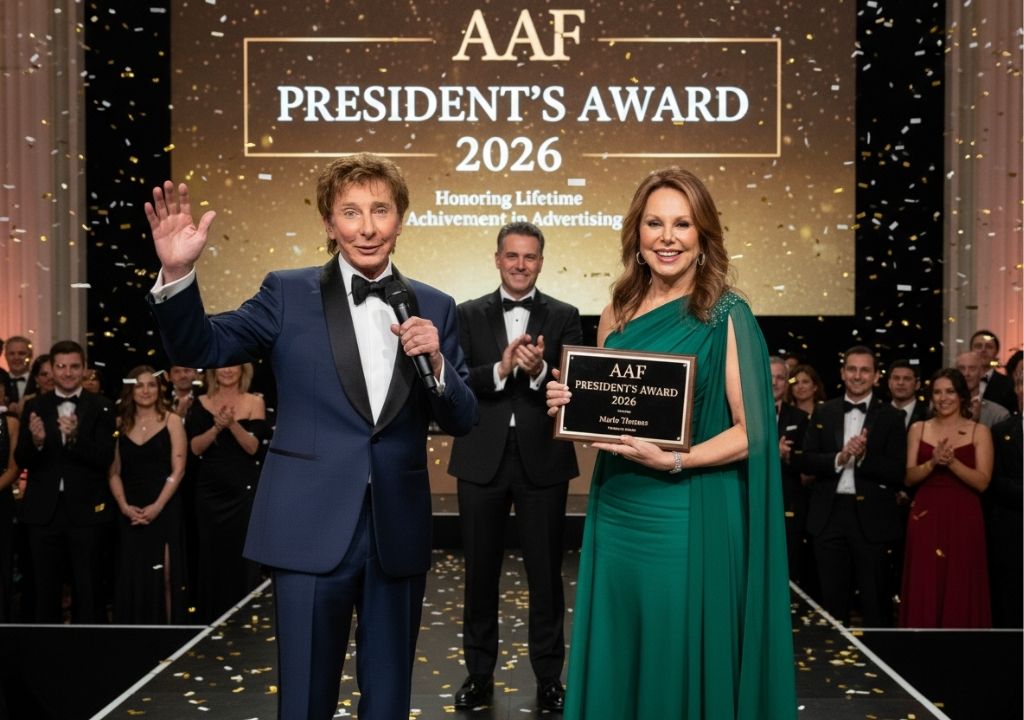
Introduction
In the early 1970s, a “starving musician” in New York accepted a flat fee of five hundred dollars to compose a melody for a local insurance firm. He received no residuals, no royalties, and no cover credit. Yet, five decades later, that fifteen-second sequence—“Like a good neighbor, State Farm is there”—remains more recognizable to the average American than the vast majority of Pulitzer-winning compositions. This paradox of the “disposable” becoming “eternal” lies at the heart of the American Advertising Federation’s decision to honor Barry Manilow with the President’s Award 2026.
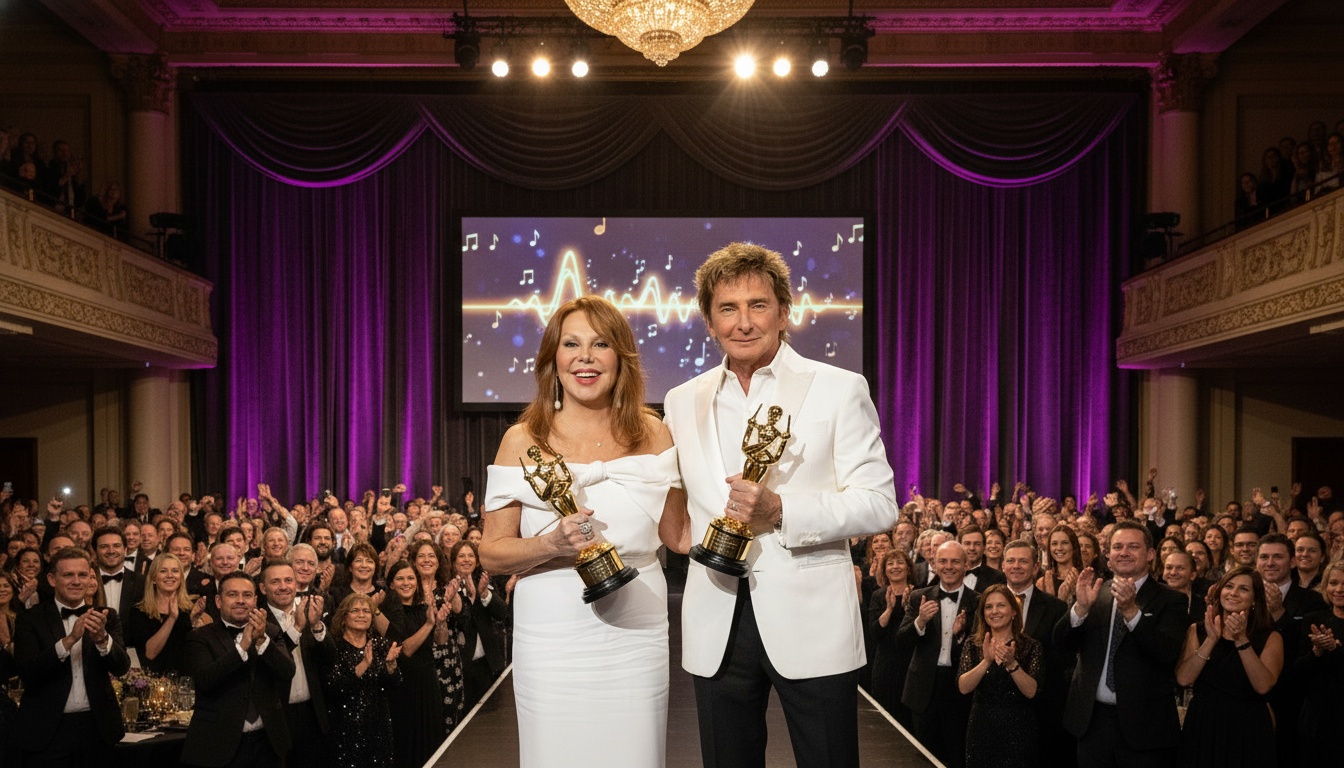
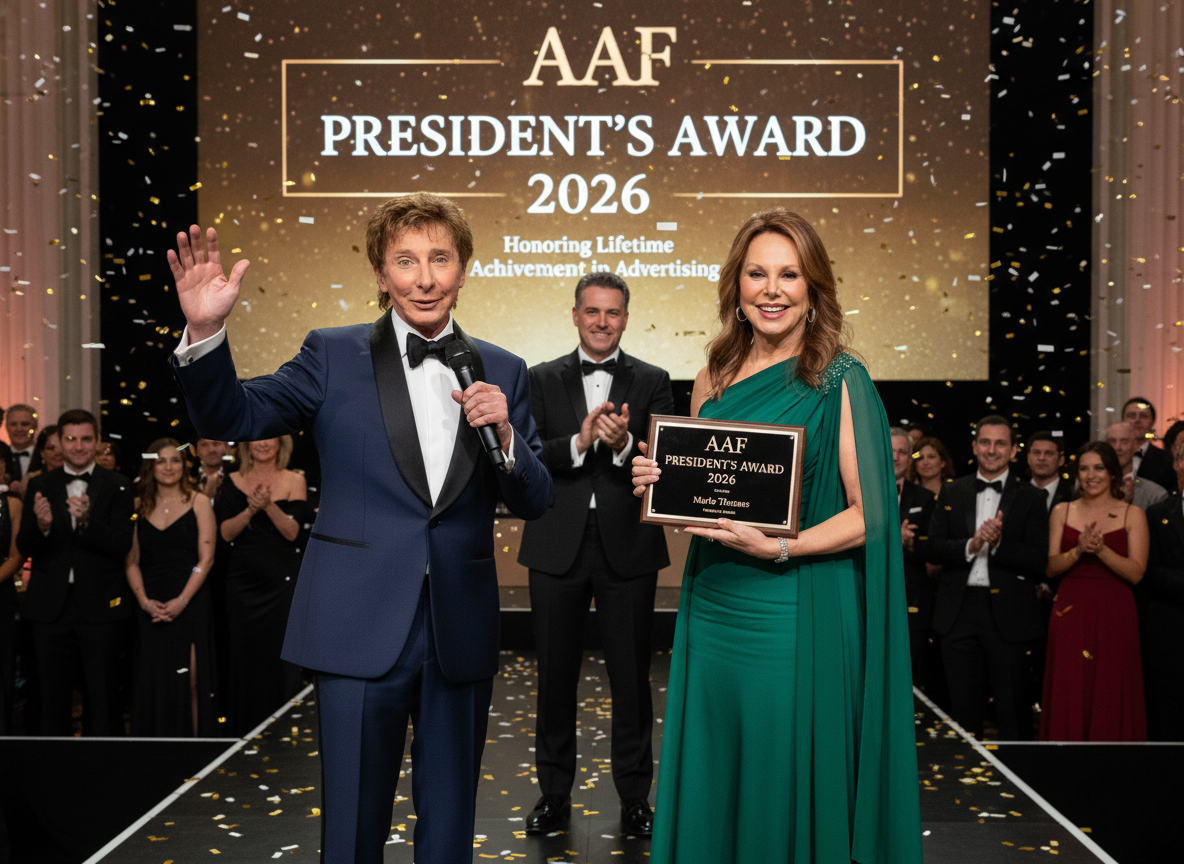
The award, which he will share with the equally formidable Marlo Thomas at the Cipriani Wall Street gala in April 2026, represents a prestigious reconciliation. It is a formal acknowledgment that the “King of the Jingles” did more than merely sell products; he engineered the harmonic infrastructure of the 20th-century marketplace. Before Manilow was a “Showman,” he was a meticulous craftsman within the high-pressure confines of the “Brill Building” ethos, where the “Golden Thread” of his career was spun. Every jingle for McDonald’s, Band-Aid, or Pepsi was a masterclass in narrative tension, requiring him to establish a premise, an emotional hook, and a resolution in the time it takes to draw a single breath.
This period was his “meticulous playground,” a laboratory where he learned the physics of the earworm. To Manilow, the distinction between a pop ballad and a commercial jingle was always a matter of degree, not of kind. Both require an intuitive grasp of human nature and the nuance of melody to forge an immediate, visceral connection with the listener. By elevating Manilow alongside Thomas—whose work with St. Jude Children’s Research Hospital redefined purpose-driven marketing—the AAF highlights a paradigm shift in how we value public influence. It is an admission that the cultural impact of a well-placed melody is an inevitable force of nature.
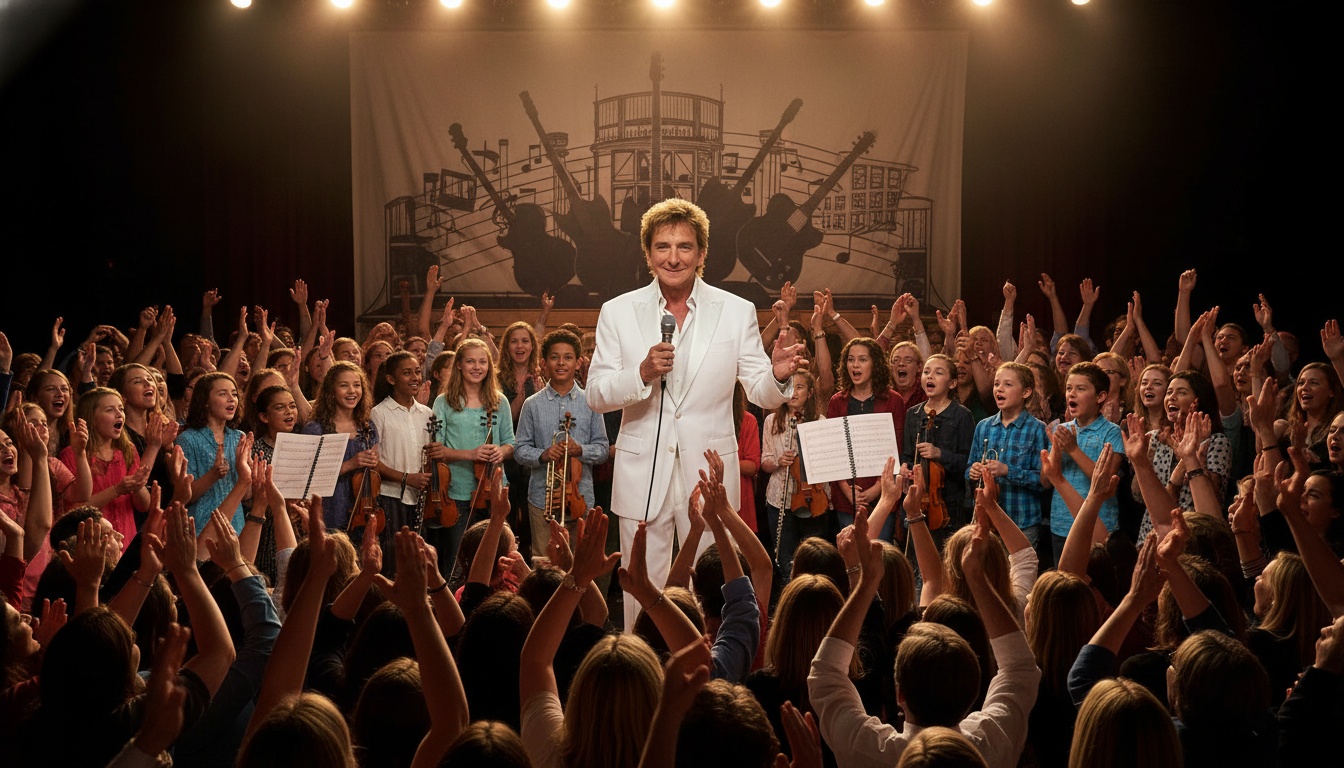
The investigative weight of this honor also rests on Manilow’s personal philanthropic legacy. Through the Manilow Music Project, the proceeds of this recognition will flow back into underfunded school music programs, ensuring that the next generation of architects has the tools to build their own symphonies. This creates a full-circle narrative: the man who once wrote jingles to “pay the rent” is now funding the very education that validates music as a vital social currency.
As we look toward the 2026 induction, the resolution of Manilow’s advertising arc offers a profound thought. We often dismiss commercial art as transient, yet Manilow’s “Very Strange Medley” of jingles remains a staple of his live performances because it triggers a collective memory that transcends the products themselves. He didn’t just write songs for brands; he wrote the soundtrack for a shared American experience, proving that even in the service of commerce, true craftsmanship possesses a gravity that never wears out its welcome.