 By admin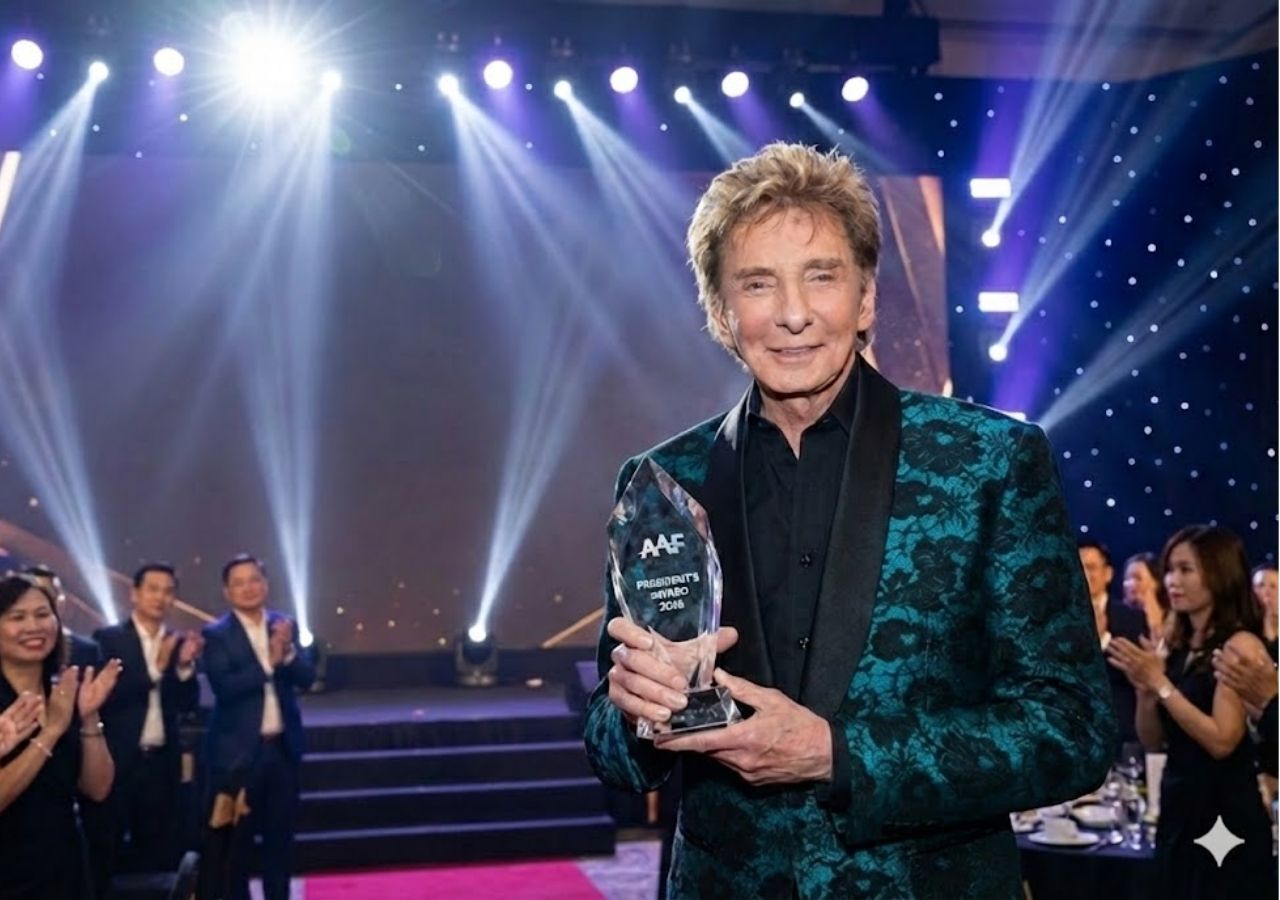

INTRODUCTION
Long before the stadium anthems and the glitter of Las Vegas residencies, the foundational resonance of Barry Manilow’s career was built in thirty-second increments within the high-pressure corridors of Madison Avenue. In 1971, a young Brooklyn-born musician accepted a flat USD $500 fee to compose a simple, melodic assurance for an insurance giant—a transaction that would ultimately produce “Like a good neighbor, State Farm is there,” perhaps the most durable piece of intellectual property in advertising history. On 04/23/2026, the American Advertising Federation (AAF) will formally recognize this extraordinary dual legacy at the Advertising Hall of Fame gala at Cipriani Wall Street, elevating Manilow to a tier of influence that transcends traditional pop stardom.
THE DETAILED STORY
The “AAF President’s Award 2026” is not merely a courtesy extended to a celebrity; it is a meticulous acknowledgment of Manilow as a pioneer of Narrative Architecture in commercial music. While the world knows him for “Mandy” and “Copacabana,” the advertising industry views him as the genius who engineered the “psychological itch” of the American consumer. From the childlike innocence of “I’m stuck on Band-Aid” to the aspirational energy of the “Pepsi Generation,” Manilow’s early work transformed corporate messaging into cultural folklore. His ability to distill complex brand promises into five-note motifs created a paradigm of “sonic branding” decades before the term was formalized by marketing theorists.

This recognition arrives at a significant crossroads for the 82-year-old icon. Following a successful recovery from a pulmonary health scare in late 2025, the industry’s focus has sharpened on the sheer endurance of his contributions. The AAF’s decision to honor him during the Hall of Fame’s 75th anniversary underscores the inevitable truth that great advertising is indistinguishable from great storytelling. Manilow himself has often described his jingle-writing years as his “true conservatory,” a period where he mastered the nuance of melody and the precision of sentiment. This discipline is precisely what allowed him to later bridge the gap between commercial efficiency and the emotional density of the Great American Songbook.
Beyond the trophies, the 2026 honor carries a philanthropic weight, as a portion of the gala’s proceeds will benefit the Manilow Music Project, ensuring that the next generation of composers has access to the instruments that defined his journey. As the industry prepares to gather in New York this April, the tribute serves as a reminder that the most “disposable” medium—the television commercial—can, in the hands of a meticulous craftsman, become a permanent fixture of the human experience. In a world of fleeting digital impressions, Manilow’s jingles remain an immovable pillar of brand loyalty. Is it possible that the “songs he wrote to pay the rent” were actually his most enduring masterpieces?