 By admin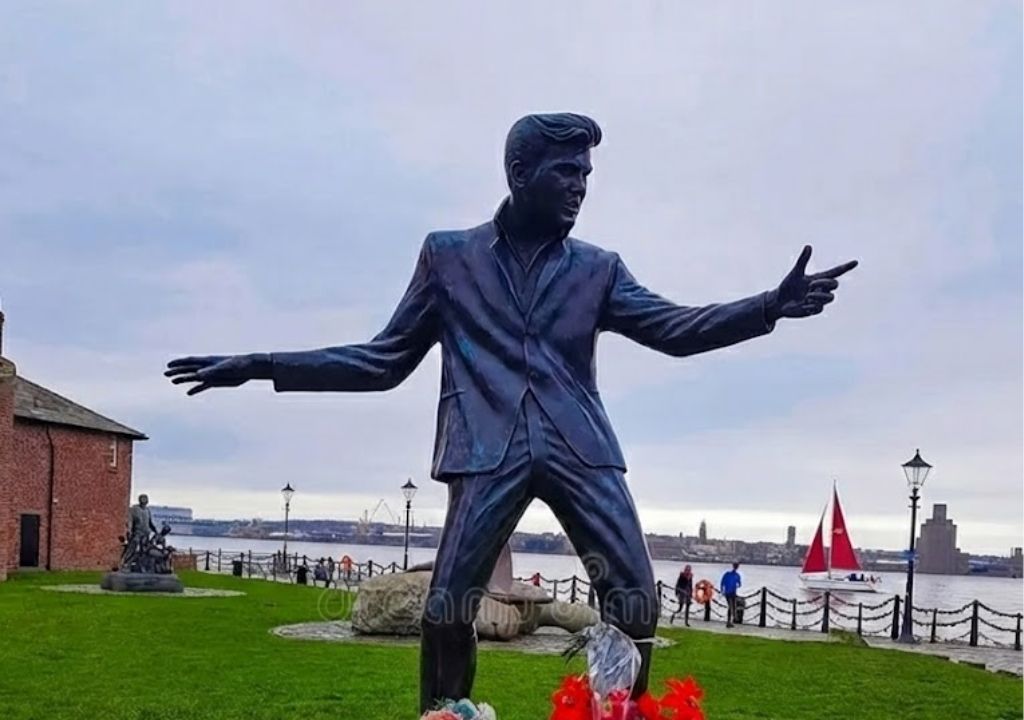

INTRODUCTION
The bronze hand of Billy Fury rests eternally on his microphone stand, forever angled toward the horizon where the Mersey meets the Irish Sea. This posture, immortalized by sculptor Tom Murphy, is not merely a pose of rock-and-roll bravado but a visual echo of a man who spent his childhood navigating the friction between internal fragility and external magnetism. As of February 2026, the conservation experts at National Museums Liverpool have concluded an exhaustive technical intervention at the Albert Dock Waterfront, ensuring that the physical embodiment of Ronald Wycherley remains defiant against the very environment that nurtured his working-class roots. The imperative was clear: to prevent the maritime atmosphere from silencing a legacy that has already outlasted the era of its inception.
THE DETAILED STORY
The conservation effort, finalized on 02/15/2026, represents a sophisticated marriage of chemistry and cultural stewardship. To the casual observer, the statue is a fixed point in the Liverpool landscape, yet to the archivist, it is a reactive surface constantly battling the “bronze disease” catalyzed by high salinity and humidity. Technicians utilized specialized microcrystalline waxes and non-abrasive cleaning agents to strip away years of atmospheric buildup, a process that cost the municipal heritage fund an estimated $12,500 USD. This meticulous maintenance is a paradigm of how modern cities protect their “emotional infrastructure,” treating a pop star’s monument with the same reverence afforded to classical marble.
There is a profound, albeit inevitable, irony in this preservation. Billy Fury was a man defined by his physical vulnerability; his career was a race against the ticking clock of a heart damaged by rheumatic fever. While his peers projected an image of indestructible youth, Fury’s power resided in his nuance—a soft, tremulous vocal delivery that betrayed his mortal struggle. By stabilizing the Waterfront statue, conservators are essentially granting Wycherley the permanence he was denied in life. The statue’s placement at the Waterfront is strategically significant, situating the artist at the gateway where he once worked as a deckhand, long before he became the “British Elvis.”
The broader theme here is the resilience of memory in an age of digital ephemera. In an era where music consumption is fleeting and algorithmic, the physical pilgrimage to the Albert Dock remains a vital ritual for fans. The statue does not just represent a singer; it represents a specific mid-century aspiration—the possibility of transcendence through art. As the sun sets over the docks, casting a long shadow from the newly polished bronze, the figure serves as a silent witness to the city’s evolution. It reminds us that while the human form is fragile, the cultural impact of a singular voice, when afforded the right stewardship, can remain effectively immortal.