 By admin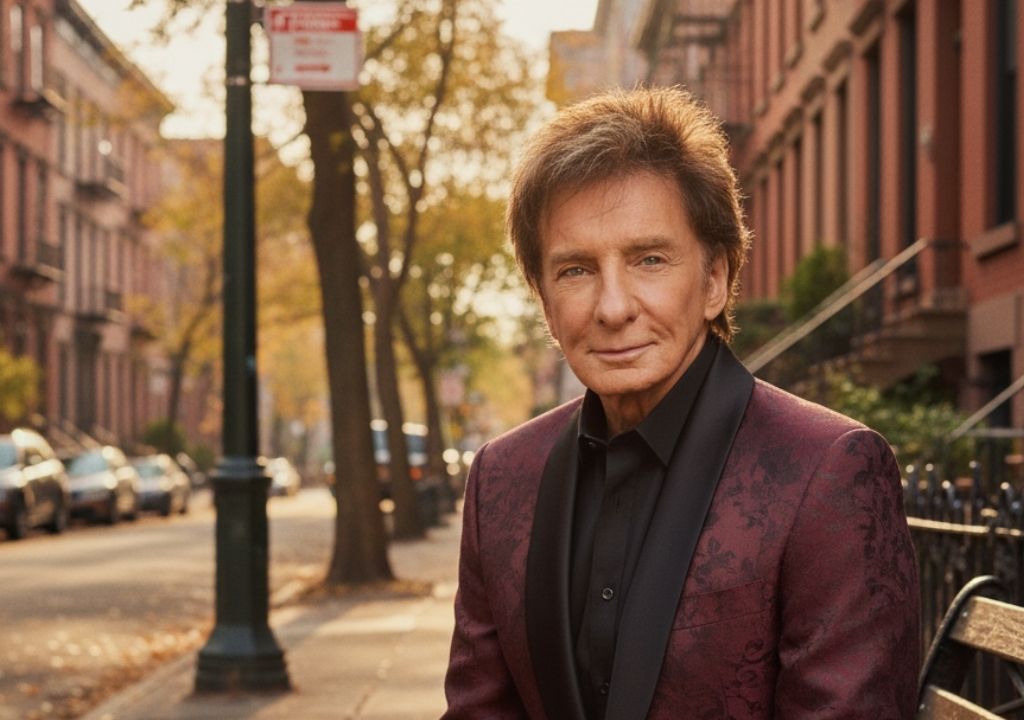
INTRODUCTION
The worn red bricks of Williamsburg, Brooklyn, have long served as the silent foundation of an American musical empire. Here, within the shadow of the Williamsburg Bridge, a young Barry Pincus once practiced his scales, unaware that his melodies would eventually command the global stage. On 03/12/2026, the New York City Council formally introduced a proposal to co-name a quiet thoroughfare near his childhood home as “Manilow Way.” This is not merely a bureaucratic gesture of civic pride; it is a high-stakes recognition of a cultural architect whose roots have remained anchored in the borough’s grit even as his name became synonymous with the high-gloss spectacle of Las Vegas and Broadway. The stakes are profoundly personal, as the eighty-two-year-old icon prepares for his final bow, seeking a permanent place in the very geography that birthed his ambition.
THE DETAILED STORY
The proposed legislation focuses on a section of the neighborhood adjacent to the historic Mayflower apartment building, a structure Manilow immortalized in his 2001 concept album. While the “Manilow Way” designation was previously bestowed upon a corner of Manhattan’s West 44th Street in 2013, the Brooklyn initiative carries a distinct structural weight. It represents a paradigm of full-circle legacy, acknowledging that the “Showman of Our Generation” is, at his core, a product of New York’s working-class tenacity. The timing is meticulous; as Manilow navigates the 2026 leg of “The Last Concerts” tour following a miraculous recovery from a 2025 health crisis, the city is racing to codify his influence before the final curtain falls.

The council’s debate highlights a fascinating tension between Manilow’s populist adoration and the borough’s evolving identity. In recent years, Williamsburg has transitioned from an industrial immigrant hub into a global center of “cool,” yet Manilow’s music—often dismissed by critics but cherished by millions—remains a constant, unyielding force. The naming of the street serves as an authoritative bridge between these eras, suggesting that true artistic permanence is not found in fleeing one’s origins, but in eventually returning to them with the nuance of experience. By placing his name on the Brooklyn grid, the city is ensuring that the man who “wrote the songs that make the whole world sing” will always have a literal home on the streets that first taught him the rhythm of the city.
Ultimately, the proposal raises a sophisticated question about the nature of the American icon: is a monument more powerful when it resides in the center of the world, or when it marks the humble beginning of the journey? For Manilow, the answer seems to lie in the soil of Brooklyn. As the council moves toward a final vote later this spring, the prospect of “Manilow Way” stands as a testament to a career built on the meticulous pursuit of the perfect hook and the unwavering resilience of a New York spirit. When the sign is eventually unveiled, it will not just mark a street; it will mark the inevitable destination of a legend who never truly left home.