 By admin
Introduction
In the gritty, salt-sprayed streets of 1950s Liverpool, the hierarchy of rock and roll was dictated by who owned the best records and who could master the most complex chords. Long before the “Fab Four” became a global phenomenon, George Harrison was just a teenager with a cheap acoustic guitar and a relentless hunger for technical perfection. But while most fans saw Billy Fury (born Ronald Wycherley) as a distant, leather-clad idol on the television, Harrison possessed a “golden ticket” into Fury’s world that history often overlooks: his best friend, Arthur Kelly, was Billy Fury’s cousin.
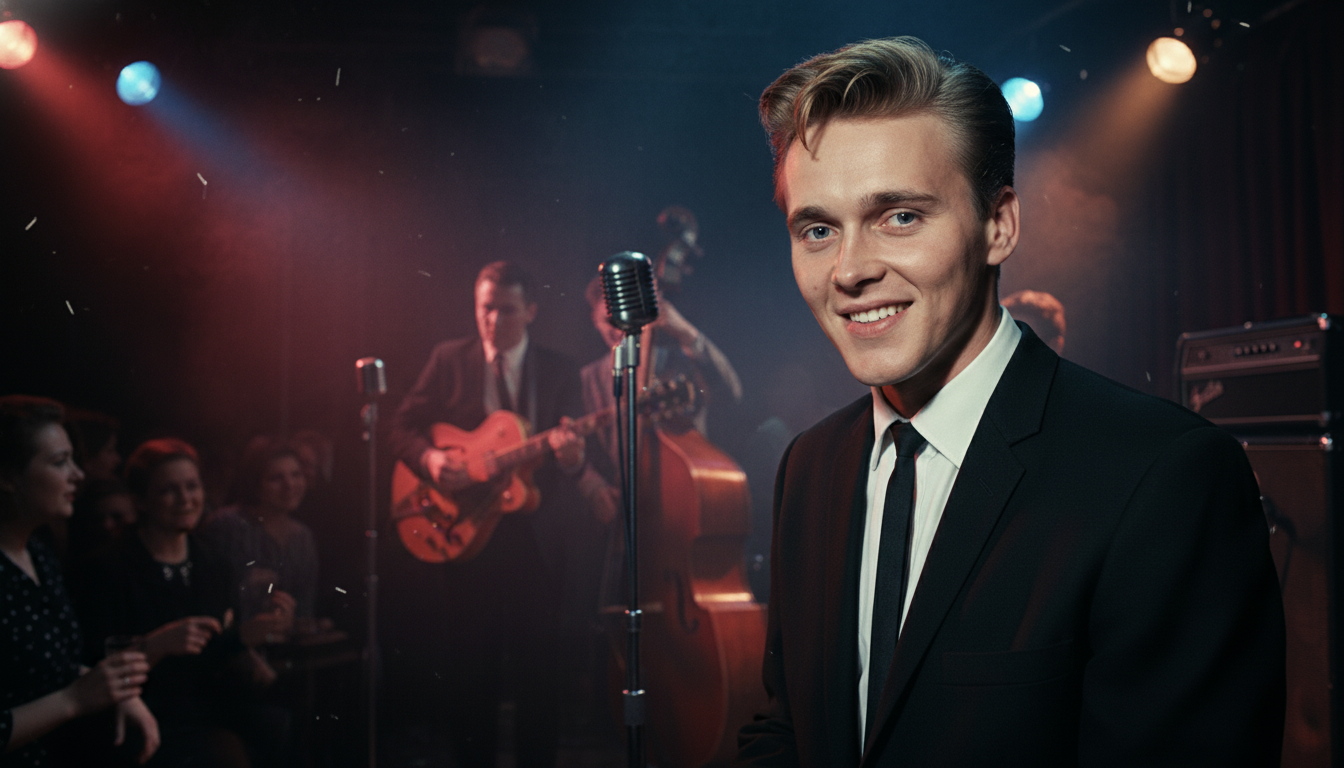
This wasn’t just a coincidence; it was a musical pipeline. Through Arthur, George gained an intimate, behind-the-scenes perspective on the man who would become Britain’s first authentic rockabilly star. While John Lennon was chasing the image of the rebel, George was surgically deconstructing the sound. The “sharing” between these two legends wasn’t always a formal sit-down; it was a transfer of energy and influence. George watched Fury’s meteoric rise with a local’s pride and a musician’s scrutiny, specifically focusing on the sophisticated guitar work of Fury’s session players, like the legendary Joe Brown. Brown’s lightning-fast rockabilly licks on the seminal album The Sound of Fury became the blueprint for George’s own lead guitar style.
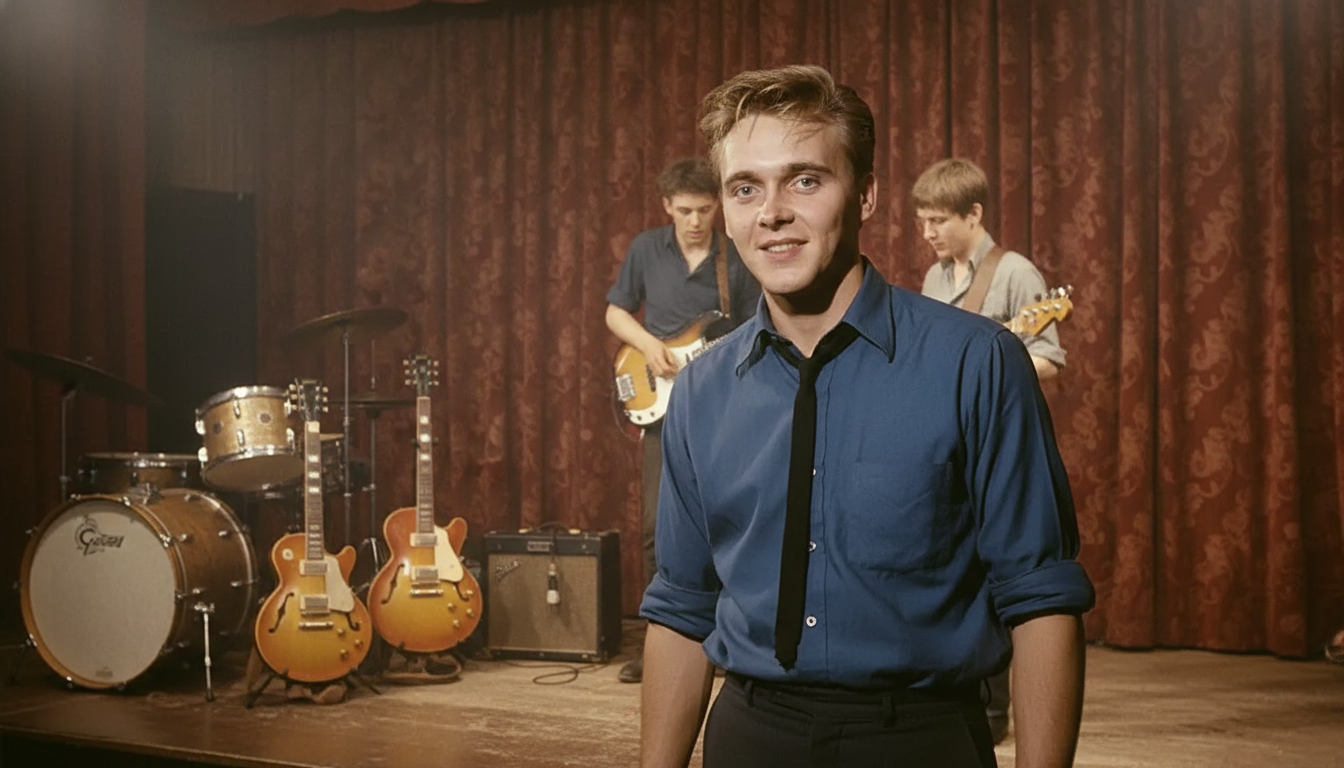
The climax of this connection occurred on May 10, 1960, at the Wyvern Social Club. The Silver Beetles—scruffy, nervous, and under-equipped—stood before Fury and his manager, Larry Parnes. While Lennon famously secured Fury’s autograph, George spent the afternoon analyzing the “vibe” and the gear of a man who had already conquered the charts. Though they failed the audition to be Billy’s backing band because of Stuart Sutcliffe’s rudimentary bass playing, the impact was permanent. Years later, the circle closed in the most poetic way possible: George Harrison became lifelong best friends with Joe Brown—the very man who had provided the “Fury Sound”—even gifting him a Rickenbacker for his 50th birthday. The “guitar sharing” between Harrison and Fury was a multi-decade dialogue of mutual respect, proving that the roots of the British Invasion were planted in the shared soil of Liverpool’s tight-knit musical families.