 By admin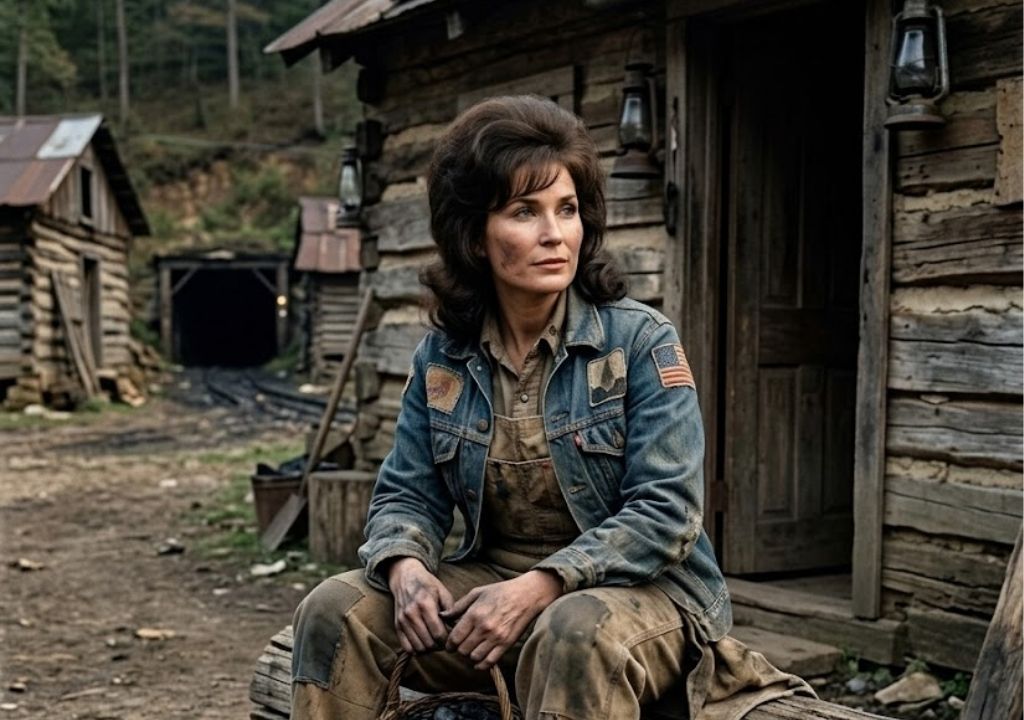
INTRODUCTION
To understand the sonic DNA of the American landscape, one must look toward the jagged, coal-rich silhouettes of Johnson County, Kentucky. Butcher Hollow was not merely a birthplace; it was a sensory immersion in the extremes of the Great Depression. Born on 04/14/1932, as the second of eight children to Melvin “Ted” Webb, Loretta Lynn grew up in a world defined by the scarcity of a $1.00 daily wage and the suffocating darkness of the Van Lear mines. There was no electricity, no running water, and very little hope for those who did not possess an iron will. This environment, often romanticized in song, was a brutal reality that stripped away pretense and left behind a raw, unyielding honesty. It was here, amidst the Appalachian fog and the rhythmic strike of the pickaxe, that the voice of a generation was quietly forged in the silence of survival.
THE DETAILED STORY
The narrative of the “Coal Miner’s Daughter” is frequently treated as folklore, yet the logistical reality of Butcher Hollow was a masterclass in endurance. Melvin Webb’s life was tethered to the fluctuating prices of the coal market, a precarious existence where the line between subsistence and starvation was as thin as the mountain air. In the 1930s and 1940s, the Webb family lived in a cabin that offered little protection against the biting Kentucky winters, where temperatures often plummeted below 20°F. Loretta’s early years were characterized by the heavy manual labor of “holler” life—washing clothes in the creek and canning food to survive the frost—long before she ever touched a guitar. This systemic deprivation was the catalyst for her radical lyrical directness; she did not need to invent metaphors for struggle because she had lived through its most literal form.
When Lynn eventually moved to Nashville, she carried the socioeconomic scars of Kentucky as her primary artistic currency. Her songs were dispatches from a forgotten demographic, translated through a voice that retained the sharp edges of the Appalachians. Variety has long noted that Lynn’s authenticity was her greatest market asset, a quality that resonated with a post-war America hungry for truth. The Butcher Hollow identity was her armor in a male-dominated industry that sought to polish her into something she was not. By refusing to abandon her origins, she transformed the poverty of her youth into a global brand that reshaped the Billboard charts forever.
Today, as the industry prepares to celebrate the 94th anniversary of her birth, the “Coal Miner’s Daughter” remains the definitive blueprint for narrative songwriting. The harshness of her beginnings did not just provide content; it provided the perspective required to speak for the voiceless. The grit of the hollow ensured that when she finally sang of heartbreak or defiance, the world believed her. Her life remains a powerful testament to the fact that the most profound art is often excavated from the deepest, darkest seams of human experience.