 By admin
INTRODUCTION
In the autumn of 1961, inside the sterile, high-ceilinged environment of Decca Studios in London, a 21-year-old Ronald Wycherley stood before a microphone to record a track that would define the emotional paradigm of his career. The song was “Jealousy,” a sweeping, orchestral ballad that required a vocal range and an emotional depth far beyond the standard rock ‘n’ roll fare of the era. As the opening strings surged, Fury didn’t merely sing; he channeled a specific, biting anguish that led many to believe the recording was a raw response to a personal heartbreak. While the song reached #2 on the British charts and cemented his status as a sophisticated balladeer, the question remained: was this a document of a real betrayal, or a masterpiece of narrative artifice?
THE DETAILED STORY
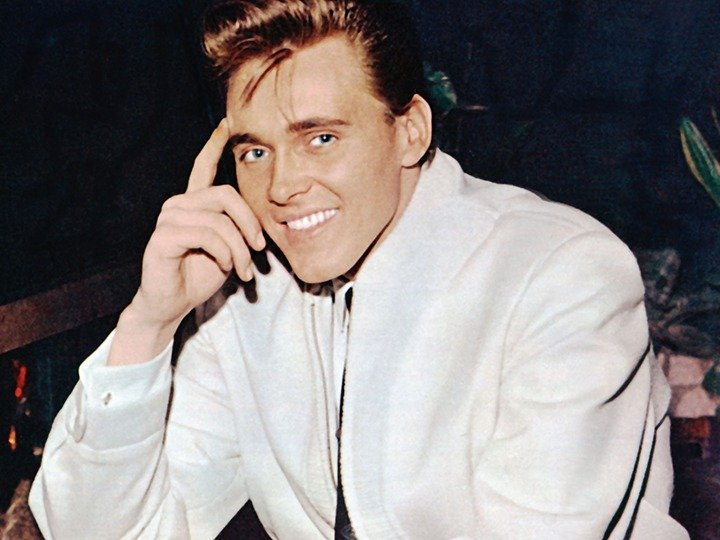
The pervasive myth surrounding “Jealousy” suggests it was a lyrical exorcism aimed at a specific woman who had wounded Fury’s pride. However, meticulous historical analysis reveals a different structural reality: Billy Fury did not write the song. The lyrics and melody were the work of Penny Kay (born Winifred Kay), a songwriter who had no direct connection to Fury’s romantic life. The paradox of the recording lies in Fury’s ability to inhabit another person’s words so completely that the distinction between the singer and the subject dissolved. To the listener, the “girl” who inspired the song was whoever had most recently crossed Fury’s volatile emotional path, yet the technical origin of the track was professional rather than autobiographical.
During this period, Fury’s romantic life was indeed a source of significant turbulence, characterized by his high-profile relationship with actress Margie Dunne. Their union was marked by the intense, possessive energy that the song “Jealousy” so accurately describes. Though the lyrics were not penned for her, Fury used his real-world experiences with Dunne—and later his profound connection with Lee Middleton—to infuse the performance with a sense of inevitable tragedy. He was a man who lived in a state of heightened emotional sensitivity, partly due to the physical limitations imposed by his heart condition. For Fury, love was never a casual pursuit; it was a high-stakes endeavor where the fear of loss was always present.

This ability to project personal suffering onto a commercial product is what elevated Fury above his contemporaries. While others sang of teenage romance, Fury offered a sophisticated, adult exploration of insecurity and envy. The “betrayal” in “Jealousy” may not have been a singular historical event involving a specific woman, but rather a reflection of Fury’s own internal architecture—a man who felt things with a nuance and intensity that his leather-clad exterior often masked. In the end, the song serves as a definitive testament to his genius: he didn’t need a specific girl to betray him to understand the weight of the emotion; he simply needed the silence of the studio to reveal the jealousy he already carried within.