 By admin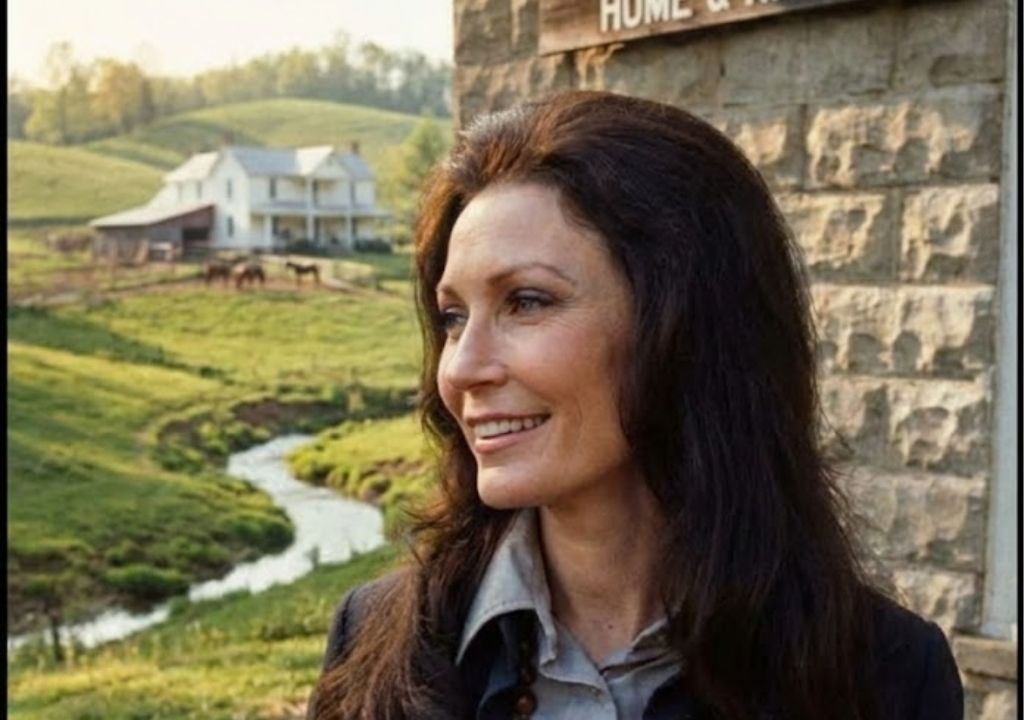
INTRODUCTION
The humidity of the Tennessee summer of 1966 was thick as a single vehicle wound its way through the forgotten backroads of Humphreys County. Loretta Lynn and her husband, Oliver “Doolittle” Lynn, were not searching for a town; they were searching for a home that matched the scale of her burgeoning stardom. When they crested the hill to see the antebellum mansion overlooking a crumbling grist mill and a quiet post office, the trajectory of country music geography was forever altered. Learning that the house was inseparable from the surrounding village, Lynn performed a maneuver of singular ambition: she purchased the entire town of Hurricane Mills, effectively becoming the sovereign matriarch of a 3,500-acre Tennessee landscape.
THE DETAILED STORY
The acquisition of Hurricane Mills was a meticulously timed psychological break from the suffocating poverty of Butcher Hollow, Kentucky. For the “Coal Miner’s Daughter,” the purchase of a 19th-century plantation was not an act of vanity, but a definitive assertion of autonomy. In 1966, she transitioned from a traveling performer to a proprietor, overseeing an estate that included a general store, a working grist mill, and a post office established in 1876. This land became the physical manifestation of her creative resilience—a sanctuary where the raw narratives of her songwriting could be processed away from the clinical pressure of Nashville’s Music Row.

Throughout the decades, Lynn’s relationship with Hurricane Mills evolved from private residency to public pilgrimage. Unlike contemporary stars who retreated behind impenetrable security gates, Lynn utilized the property’s acreage to create a “gravity well” for her demographic. She opened the gates to fans, establishing one of the first and most successful artist-owned tourist destinations in American history. The ranch became a curated ecosystem where listeners could walk through a replica of her childhood cabin or explore the “Coal Miner’s Daughter Museum,” a 18,000-square-foot facility completed in 2001. This openness served a dual purpose: it democratized her celebrity while simultaneously preserving the historical integrity of the Tennessee River Valley.
By 02/15/2026, the ranch has stood for sixty years as a testament to the enduring power of rural heritage. Even after the devastating hydrological impact of the 2021 flood, the estate’s restoration underscores a sophisticated commitment to legacy. The land is no longer just a collection of real estate; it is a meticulously preserved artifact of the American Dream. Loretta Lynn’s love for Hurricane Mills was rooted in the soil’s ability to offer both a refuge for her family and a stage for her history. As visitors walk across the bridge over Hurricane Creek, they are not merely tourists; they are witnesses to a narrative architecture that proves a woman from the coal mines can, indeed, build her own kingdom from the ground up.