 By admin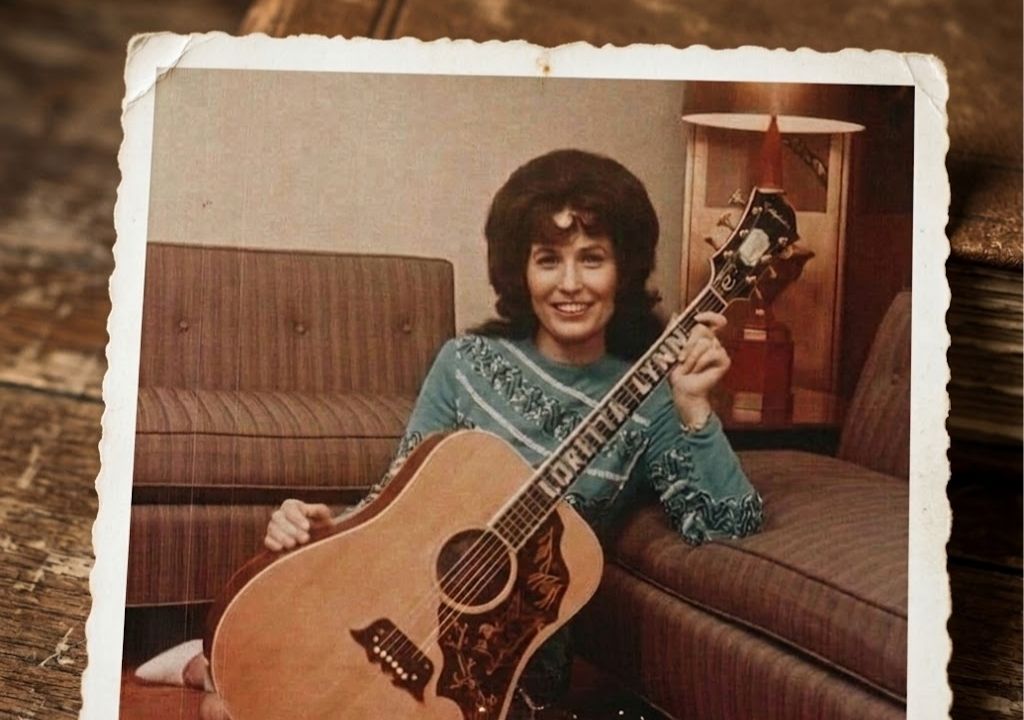
INTRODUCTION
In the dusty heat of 1953 Washington state, a $17 USD Harmony guitar became the most significant investment in the history of American music. It was purchased by Oliver “Doolittle” Lynn for his twenty-year-old wife, Loretta, a woman who had already borne him four children. To the casual observer influenced by the 1980 cinematic portrayal in Coal Miner’s Daughter, Doolittle is often cast as the mercurial force—a man whose infidelities and battles with the bottle provided the jagged edges of Loretta’s songwriting. Yet, to categorize him as a simple villain is to succumb to a reductive narrative. Doolittle was the friction that created the diamond. He was a complex, often misguided navigator of a life that transitioned from the coal mines of Kentucky to the pinnacle of Nashville’s elite, serving as the primary architect of a career that neither he nor Loretta fully understood at its inception.
THE DETAILED STORY
The narrative of Doolittle Lynn, as documented in the archives of Billboard and The Hollywood Reporter, is one of profound contradiction. He was undeniably a man of his time and place—an era of hard-living and stoic masculinity that often manifested in destructive ways. His struggles with alcoholism and the “honky-tonk” lifestyle were well-documented, yet these very flaws became the thematic bedrock of Loretta’s most revolutionary work.
“Doolittle was the only man I ever loved, and the only man I ever married. He was the backbone of my career,” Loretta once noted, framing their relationship as a partnership of necessity and survival.
To understand the Doolittle paradox, one must examine the duality of his influence:
-
The Provocateur: His personal failings provided the raw, honest material for hits like “Don’t Come Home A-Drinkin’ (With Lovin’ on Your Mind),” which challenged the patriarchal status quo of the 1960s.
-
The Strategist: He acted as her first manager, tirelessly driving her across the country to radio stations, often sleeping in their car to save USD for promotional materials.
-
The Protector: Despite his internal demons, he maintained a fierce loyalty to Loretta’s brand, ensuring she remained the primary focal point of the Lynn empire.
Doolittle was less a “villain” and more a man caught between the traditional expectations of the 1940s and the burgeoning female empowerment his wife came to symbolize. He was a man who, despite his personal failings, never sought to dim her light to brighten his own. Instead, he pushed her into the spotlight with a ferocity that bordered on the obsessive. Their forty-eight-year marriage was a crucible of 90-degree Fahrenheit summers and grueling Nashville winters. By the time of his passing on 08/22/1996, the consensus among those who knew them at Hurricane Mills was clear: Loretta was the voice, but Doolittle was the engine. He was a deeply flawed individual whose misguided actions were the result of an inability to articulate a devotion that was both possessive and protective. Ultimately, their story proves that greatness is rarely born from perfection; it is forged in the heat of an authentic partnership that prioritized the music above the ego.