 By admin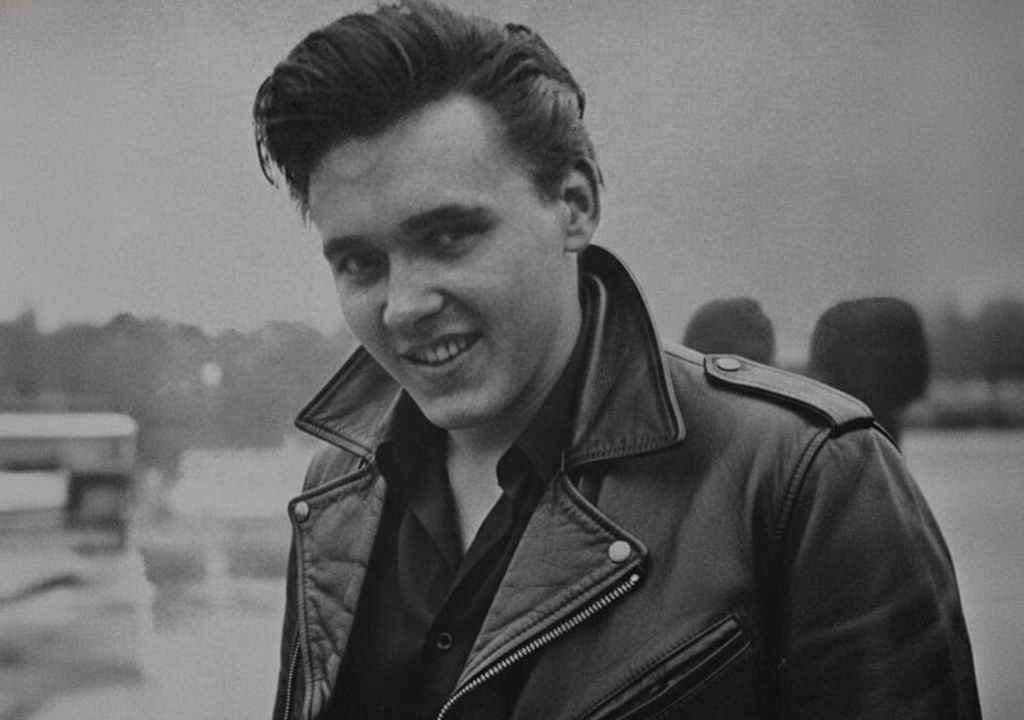

INTRODUCTION
In the sterile, post-war silence of a Liverpool infirmary in 1946, a six-year-old Ronald Wycherley listened to the irregular rhythm of his own struggling heart. This was not the typical restlessness of youth, but the onset of rheumatic fever, a condition that would leave his mitral valve permanently narrowed. Doctors offered a grim architectural assessment of his future, suggesting that a journey into adulthood was a statistical improbability. This early encounter with the finite nature of existence did not yield to despair; instead, it became the silent, rhythmic engine behind one of the most enigmatic careers in the history of British rock and roll.
THE DETAILED STORY
The paradox of Billy Fury lay in the juxtaposition of his smoldering exterior and the clinical reality of his physical fragility. While his contemporaries in the late 1950s projected an image of indestructible teenage rebellion, Fury’s charisma was rooted in a profound, albeit subconscious, vulnerability. Every high-energy hip-swivel and lung-bursting note was executed against the backdrop of medical advice that urged restraint. He chose, instead, a meticulous defiance. The “Sound of Fury” was less about sonic aggression and more about an exquisite, breathless urgency—a vocal quality that suggested he was singing not just for an audience, but against a ticking clock.

By the time he transitioned from Ronald Wycherley to the stage persona of Billy Fury under the management of Larry Parnes, the internalized lesson of his sixth year—that time is a non-renewable resource—had become his primary artistic filter. He treated the stage as a sanctuary where the limitations of his cardiovascular system were momentarily suspended by the sheer force of creative will. This resulted in a series of mid-century hits, such as “Halfway to Paradise,” where the yearning in his voice felt grounded in a lived understanding of life’s precariousness. His performances were never mere spectacles; they were declarations of presence.
Fury’s legacy remains a study in the resilience of the human spirit. He did not merely survive his childhood prognosis; he used it to inform a paradigm of performance that prioritized emotional truth over theatrical artifice. His eventual passing in January 1983, though premature by standard measures at age 42, followed a career defined by an absolute refusal to let a damaged heart dictate the scale of his ambitions. He remains a testament to the idea that the most enduring legacies are often forged in the crucible of early adversity, leaving a lingering question regarding the depth of our own resolve when faced with the inevitable.