 By admin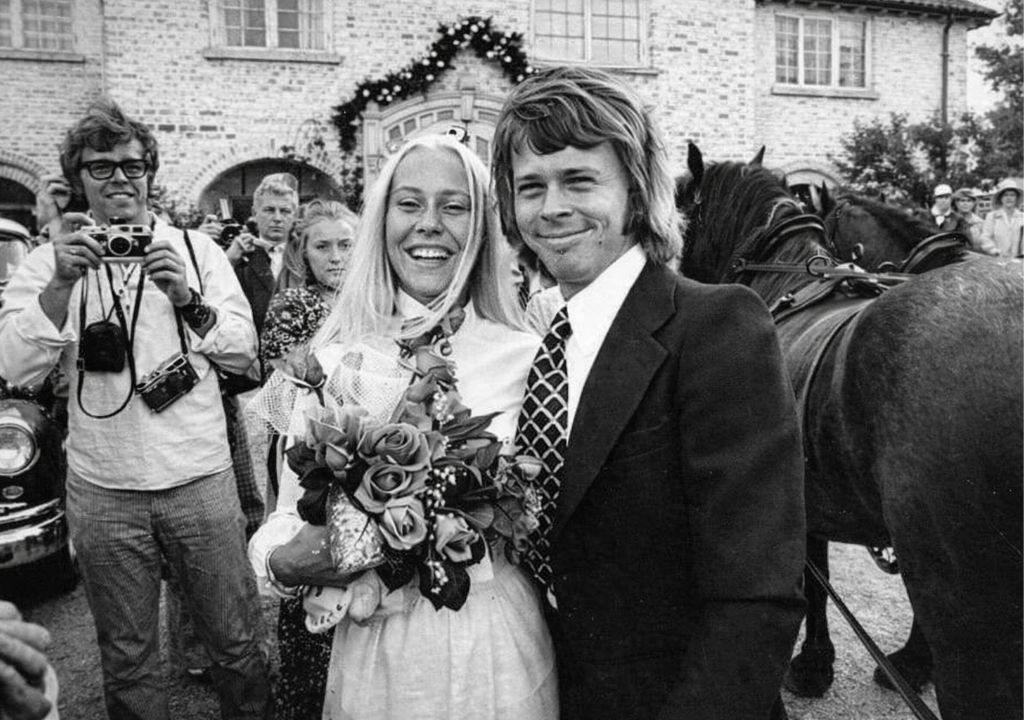
INTRODUCTION
On July 6, 1971, the quiet Swedish village of Verum became the unlikely epicenter of a global cultural earthquake. Under the warmth of a bright Nordic sun, over 3,000 spectators and a frantic international press corps converged on a small, medieval church to witness the union of Agnetha Fältskog and Björn Ulvaeus. The event was a study in profound juxtaposition: the solemnity of a traditional Lutheran ceremony colliding with the burgeoning chaos of modern celebrity. Fältskog, already a chart-topping solo ingenue, and Ulvaeus, a seasoned performer with the Hootenanny Singers, represented the absolute pinnacle of Swedish youth culture. This was far more than a domestic arrangement; it was the public forging of a creative partnership that would eventually provide the emotional and melodic backbone for the ABBA empire.
THE DETAILED STORY
The wedding of Fältskog and Ulvaeus remains one of the most meticulously documented social events in European music history. The sheer scale of the media presence necessitated a heavy police deployment—an extreme rarity for the rural Skåne province during that era. Reporters and photographers from across Scandinavia treated the nuptials with the gravity typically reserved for a coronation. Yet, beneath the relentless flashing of bulbs and the crush of the crowd, the ceremony was marked by a distinct, pastoral grace. In a detail that now feels like a scripted piece of pop mythology, Benny Andersson—their future bandmate—sat at the church organ to play the wedding march, signaling the symbiotic unity that would soon define their collective success.
The narrative power of this union lies in its perceived authenticity. Unlike the manufactured romances of the contemporary digital age, the Fältskog-Ulvaeus marriage was built on a shared intellectual and musical curiosity. This foundation allowed them to eventually translate personal intimacy into universal anthems that continue to generate millions of dollars in royalties annually. Industry analysts often retrospectively cite 1971 as the “Year Zero” for the Swedish music export industry, which today serves as a multi-billion dollar pillar of the global economy. At the time, however, the couple was simply navigating the transition from individual stardom to a unified creative front.
Their marriage provided the essential emotional vocabulary for the most iconic discography of the 20th century. The vulnerability in Fältskog’s soprano and the structural precision of Ulvaeus’s arrangements were born in the shared spaces of their early life together in Lidingö. To revisit the Verum wedding is to witness the prologue of a story that would result in over 380 million albums sold worldwide. It was a day when a private promise between two young artists became a public legend, setting the definitive standard for the “power couple” dynamic in a $100 billion industry. Decades later, the imagery of that day—the white lace, the horse-drawn carriage, and the adoring crowds—remains the ultimate visual shorthand for an era of pop innocence and the birth of a musical dynasty.