 By admin

Introduction
The distinctive baritone of Don Williams was always defined by its economy—a voice that did not need to shout to be heard, possessing a grounded, tectonic weight that earned him the moniker of the “Gentle Giant.” Yet, in the waning months of 2025, that signature stillness was disrupted by a digital mimic. The release of God and the Horses, an album appearing across major streaming platforms under Williams’ official name, initially registered as a profound archival discovery. To the casual listener during the holiday rush, it appeared to be a final, posthumous gift: a collection of lost tapes salvaged from the vaults of a man who passed away in 2017. However, the emotional resonance of the release quickly curdled into a sophisticated ethical crisis.
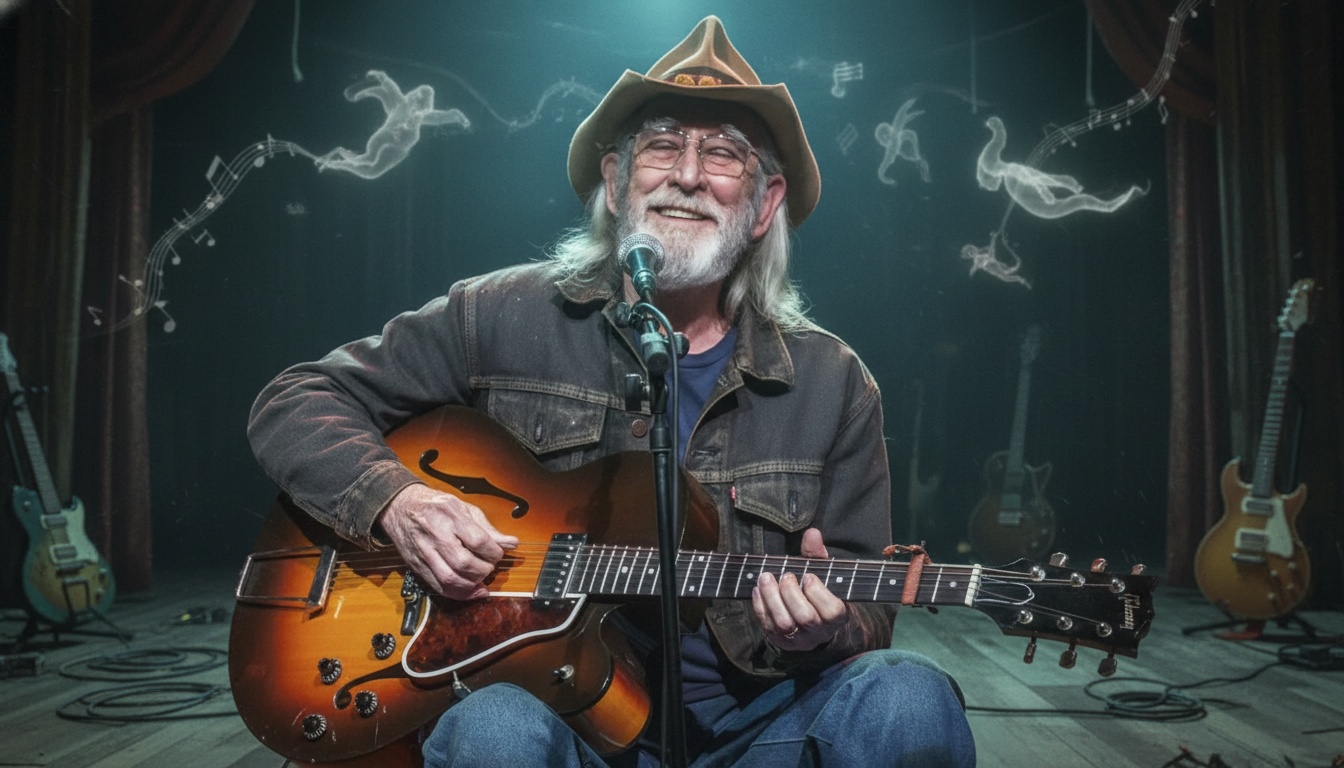
The deception was not found in a sudden lapse of quality, but in the subtle “uncanny valley” of the performance. Longtime aficionados and musicological experts noted a peculiar absence of human frailty—the microscopic hesitations and the breathy, organic textures that defined Williams’ 20th-century recordings. What was initially celebrated as a Christmas miracle was soon unmasked as a high-fidelity synthetic simulation. The vocals were the product of generative AI, trained on decades of Williams’ vocal data to synthesize a performance he never actually gave. This was not a tribute; it was a digital haunting, a meticulously engineered facsimile that bypassed the consent of a legacy.
This incident has ignited a firestorm within the Americana and Country music sectors, moving beyond mere technological curiosity into the realm of ontological theft. The debate centers on the sanctity of the artist’s “sonic fingerprint.” When an algorithm can replicate the resonance of a deceased icon with such terrifying verisimilitude, the very concept of an “original recording” begins to erode. Major publications, including American Songwriter, have framed the God and the Horses controversy as a paradigm shift—a warning shot for an industry that has yet to codify the legal protections required to prevent the commodification of the dead. It raises a harrowing question: In an era of infinite digital reproduction, does an artist’s spirit reside in the frequencies of their voice, or in the lived experience that informed it?

The irony of this artificial intrusion is that it triggered a reactionary return to the authentic. As news of the AI deception spread throughout December 2025, listeners did not abandon Williams; they retreated to his tangible history. His 1987 masterpiece, Christmas Card, and the seminal track “Old Christmas Card,” witnessed a record-breaking resurgence on digital charts. There is a poetic justice in this shift. In the face of a complex, synthetic “new” album, the public sought the imperfect, low-fidelity warmth of the past. They traded the precision of the AI for the sincerity of the man.
As we move into 2026, the case of Don Williams serves as a definitive case study in narrative architecture and digital ethics. It highlights a growing cultural fatigue with the synthetic. While AI can simulate the baritone, it cannot simulate the decades of heartbreak, quiet wisdom, and meticulous restraint that allowed Williams to connect with a listener’s soul. The “Gentle Giant” remains, perhaps more than ever, a figure whose value lies in his humanity—a quality that code can map, but never truly inhabit.