 By admin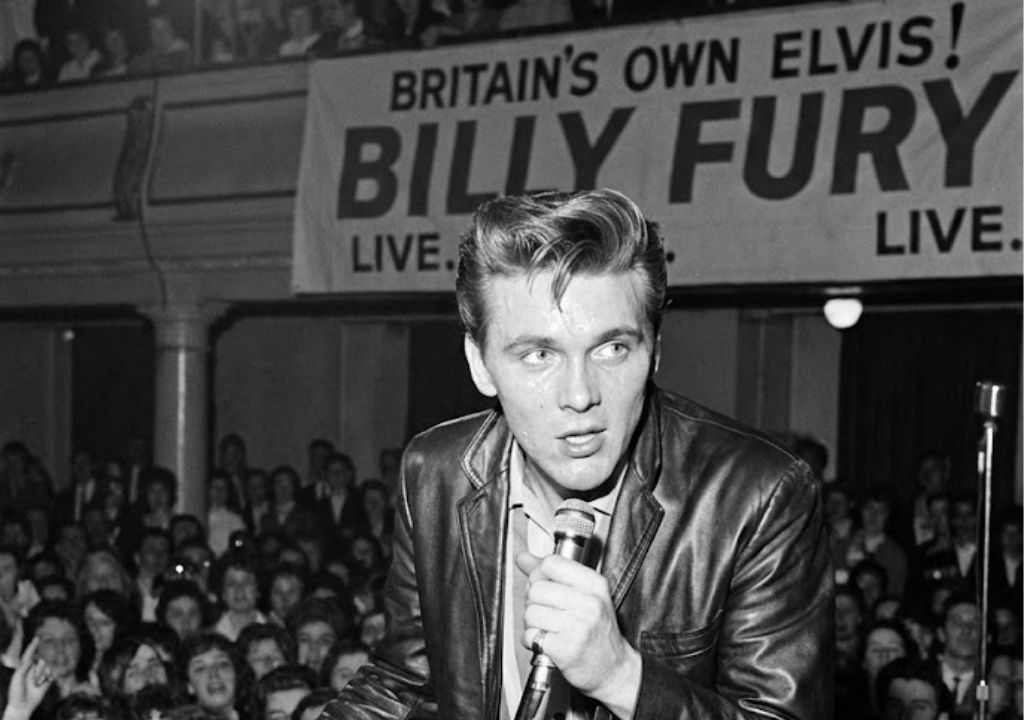
Introduction
History remembers the 1950s rock and roll explosion in technicolor: the screaming girls, the flashing cameras, the suits that shimmered under the stage lights. But if you scratch the gold plating off that era, you find rot. You find a system of exploitation so brutal it borders on indentured servitude. And at the center of this tragedy stands Ronald Wycherley—known to the world as Billy Fury—a boy with the voice of an angel and a heart that was slowly failing him, trapped in a machine designed to grind him into dust.
Forget the private jets and luxury trailers of today. The reality of a 1950s “Package Tour” was a horror story.

Picture a freezing winter night in 1959. The vehicle isn’t a tour bus; it is a battered, unheated Bedford van. Inside, huddled together for warmth like livestock, are some of the most famous faces in Britain. There is no hotel waiting for them. There is no catering. There is only the smell of stale cigarette smoke, diesel fumes, and unwashed bodies. Billy Fury, the man who made thousands of girls faint with a single hip swivel, is trying to sleep upright, wrapped in a thin coat, shivering as the icy wind whips through the rusted metal frame of the van.
This was the “Stable of Stars,” run by the infamous impresario Larry Parnes. Parnes was a genius, but he was also a ruthless operator who treated his artists less like talent and more like racehorses. The economics were shocking. While Parnes raked in fortunes, the stars themselves were often on a “fixed wage” that amounted to pocket change.
Billy Fury was earning a pittance while generating an empire. But for Billy, the stakes were higher than just money. He had been sickly since childhood, his heart damaged by rheumatic fever. Every night spent freezing in that van, every meal skipped because the per diem was too low, every exhausting 400-mile drive between gigs was literally shaving time off his life.
The tragedy is the contrast. On stage, Billy was sex, danger, and gold lamé. He was a deity. But the moment the curtain fell, he was a laborer in a traveling sweatshop, denied the basic comforts of a warm bed. The industry didn’t just exploit his talent; it gambled with his biology. They drove him into the ground because, in the ruthless calculus of 1950s pop culture, a star was only valuable as long as they could stand up. If they fell, there was always another kid in a gold suit waiting to take their place.