 By admin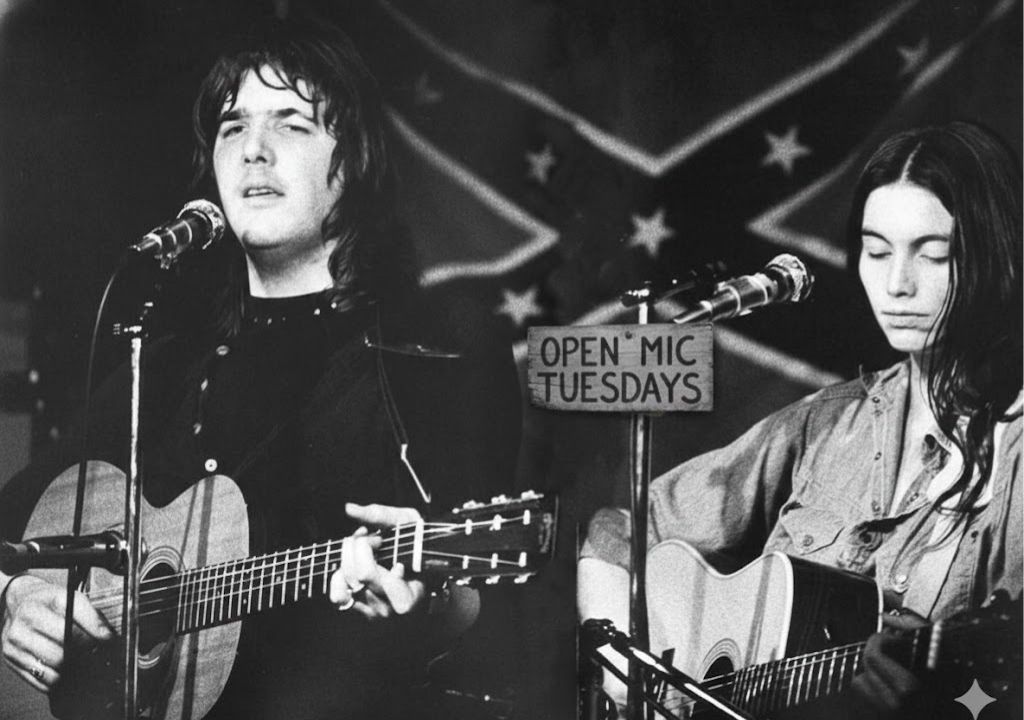

INTRODUCTION
The humidity of 1971 hung heavy in Bethesda, Maryland, as a young woman with an acoustic guitar and a toddler balanced the precarious scales of artistic ambition and financial survival. Emmylou Harris, then an obscure folk singer performing for meager tips in the Washington D.C. circuit, occupied a world far removed from the burgeoning country-rock scene of Los Angeles. She was a single mother, focused more on the immediate necessity of providing for her daughter than on the prospect of musical immortality. Yet, within the cramped confines of The Red Fox Inn, the atmosphere was about to undergo a permanent shift, catalyzed by the arrival of a man searching for a voice that existed only in his imagination.
THE DETAILED STORY
Gram Parsons was a visionary haunted by the concept of “Cosmic American Music”—a seamless, soulful synthesis of country, rock, and rhythm and blues. Having already left an indelible mark on the genre through his work with The Byrds and The Flying Burrito Brothers, Parsons found himself at a creative crossroads, seeking a female counterpart whose vocal resonance could match his own fragile, emotive delivery. Upon the recommendation of musician Rick Roberts, Parsons traveled to the D.C. area to witness Harris perform. The encounter was not characterized by the flash of Hollywood artifice, but by the raw, undeniable technical precision of Harris’s soprano, which cut through the clatter of the bar with a haunting, crystalline clarity.

The partnership that followed was built on a foundation of mutual discovery. Harris, initially skeptical of the long-haired figure from the West Coast, found herself drawn into a rigorous education in the nuances of traditional country music. Under Parsons’ tutelage, she moved beyond the folk standards of the era to embrace the works of George Jones and the Louvin Brothers. When their voices finally merged during the recording sessions for the albums GP and Grievous Angel, the result was a paradigm shift. Their harmonies were not merely complementary; they were a singular, unified instrument that expressed a profound sense of yearning and existential grace.
This fortuitous meeting rescued Harris from professional obscurity and provided Parsons with the essential collaborator needed to complete his magnum opus. Though their professional union was tragically severed by Parsons’ untimely passing in September 1973, the influence of their brief collaboration remains the gold standard for the Americana genre. Harris emerged from the shadow of this partnership as a meticulous curator of song and a formidable bandleader, carrying the torch of their shared vision into a multi-decade career that has garnered fourteen Grammy Awards.
The architecture of their meeting serves as a poignant reminder of the thin margin between anonymity and legacy. It suggests that the most transformative movements in cultural history often rely on the precision of timing and the courage to recognize a kindred spirit in the most unpromising of environments. The legacy of that night in Maryland continues to resonate, proving that when the right voices converge, the impact is inevitable and everlasting.