 By admin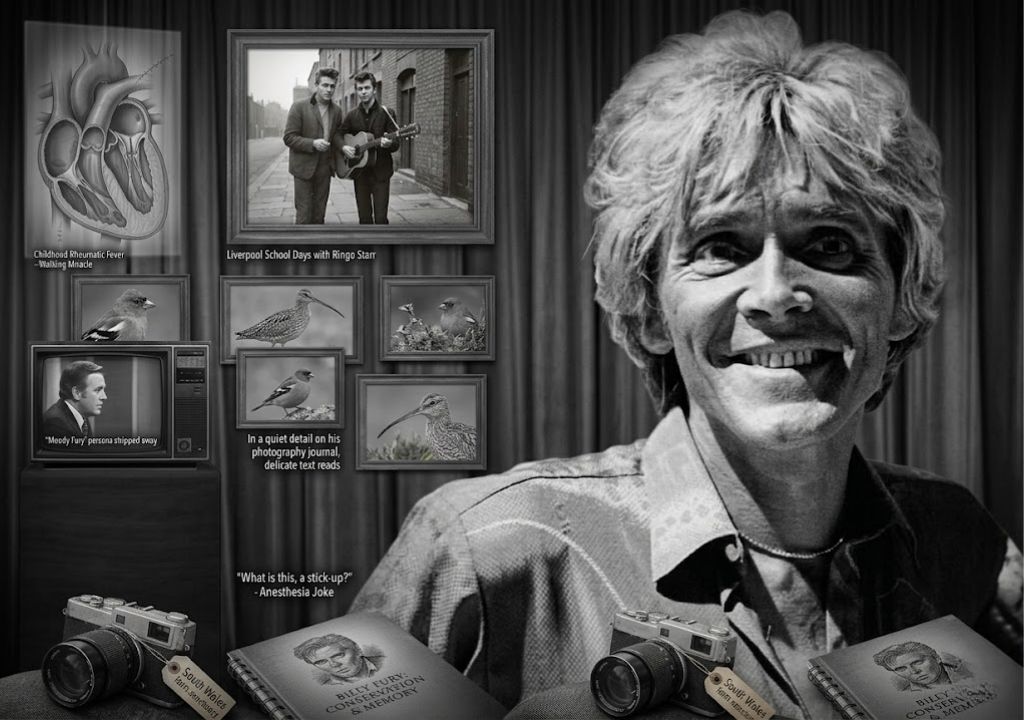
Introduction
The Resurrection of a Rockstar: The Hauntingly Beautiful Survival of Billy Fury
In 1976, when Billy Fury walked onto the set of The Russell Harty Show, the audience wasn’t just looking at a pop icon; they were witnessing a walking miracle. Billed in the 1950s as the “British Elvis,” Fury had spent decades defined by his smoldering looks and a voice that could make an entire generation of girls scream. But behind the quiff and the leather jacket lay a devastating secret: a heart ravaged by childhood rheumatic fever that had essentially marked him for an early grave.
“By rights, he should be dead,” Russell Harty told the cameras. It wasn’t hyperbole. Fury had just emerged from a grueling, five-and-a-half-hour open-heart surgery—his second major operation—to replace a failing valve.
In this rare, vulnerable 1976 encounter, the man known as “Moody” Fury finally stripped away the myth. He addressed the “moody” persona that had followed him for years, revealing it was never about arrogance. “When I first came down south, I had a really thick Liverpool accent… I was very, very shy,” he confessed. “I thought it’d be easier if I didn’t say anything.”
The interview took a chilling turn as Fury described his brush with the afterlife. He spoke of the terrifying moment he went under the knife, fighting the anesthesia like a trapped animal. “I really did think I was going to die,” he admitted. In a moment of surreal humor that only a Scouser could deliver, he recalled looking at the masked surgeons surrounding his trolley and asking, “What is this, a stick-up?” before finally drifting into the abyss.
But the Billy Fury that returned was different. He spoke of a “beautiful smile” he gave the nurse upon waking—a profound gratitude for simply being alive. Yet, with the sharp eye of a seasoned journalist, Harty pushed further, and Fury admitted that the “glow” of surviving wears thin when the cold realities of the music industry return. He spoke of being “bounced for money” by agents just weeks after having 50 stitches removed from his chest.
Beyond the surgery, the segment captured a fascinating connection to music royalty. Fury reminisced about his school days in Liverpool with a young Richard Starkey—later known as Ringo Starr. He painted a picture of two kids with “greased-back hair” in the days before the Teddy Boy explosion, long before they would both conquer the world.
Perhaps most surprising was Fury’s evolution from stage performer to dedicated conservationist. The man who once incited riots in concert halls now found peace on a farm in South Wales, turned into a sanctuary for injured wildlife. He showed Harty his own photography—stunning, intimate shots of Chaffinches and Curlews—revealing a gentle soul who had traded the spotlight for a zoom lens and a bird hide.
Billy Fury’s 1976 appearance remains a masterclass in celebrity vulnerability. It wasn’t just a comeback performance; it was a raw look at a man who had stared into the void and decided to spend his remaining time protecting the fragile beauty of the natural world. He was a “fragile genius” who proved that even when your heart is literally breaking, there is still music to be made and lives to be saved.