 By admin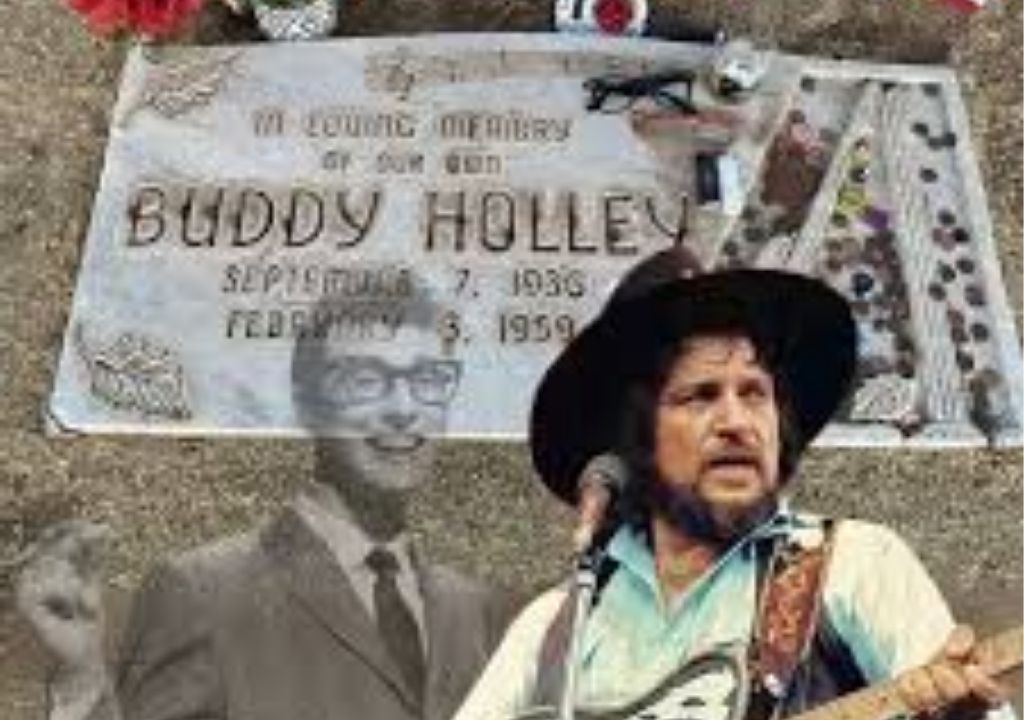

Introduction
Waylon Jennings Recalls the Tragic Night Buddy Holly Died
Before his rise to country-music legend, Waylon Jennings was just a young radio DJ who had recently relocated from his hometown to Lubbock, Texas. It was there that he rekindled a friendship that would change his life: his bond with local hero and rising rock-and-roll pioneer Buddy Holly. Buddy saw something special in Waylon early on. He encouraged him, made him laugh, and even paid to take him to Clovis, New Mexico, covering the cost of Jennings’ first recording session. To Waylon, Buddy wasn’t just a superstar—he was the big brother he never had.
In 1959, Buddy Holly signed on for the grueling Winter Dance Party Tour. After a dispute with his manager left him without his band, The Crickets, he hired two replacements: guitarist Tommy Allsup and a young, inexperienced bass player—Waylon Jennings. Buddy handed him a bass, telling him he had two weeks to learn it. Jennings memorized the parts as best he could; being on the road with Buddy Holly was the opportunity of a lifetime.

But the excitement quickly faded. The tour buses were unheated, filthy, and constantly breaking down in the brutal Midwest winter. The musicians couldn’t sleep, couldn’t stay warm, and had no way to clean their clothes. Desperate for relief, Buddy chartered a small plane to fly ahead after the Clear Lake, Iowa show so he and two others could rest and do laundry before the next performance.
The plane was supposed to carry Buddy Holly, Tommy Allsup, and Waylon Jennings.
But moments before departure, fate intervened. The Big Bopper—J.P. Richardson—was sick with the flu and begged Waylon for his seat so he could travel ahead and get rest. Waylon agreed, telling him, “If it’s okay with Buddy, it’s okay with me.” Tommy Allsup also gave up his seat, losing a coin toss to Ritchie Valens.
The plane took off shortly after midnight on February 3, 1959. It crashed within minutes.
Back in Texas, Waylon’s brother heard the news on the radio: Buddy Holly and his band had been killed. The Jennings family collapsed in grief, convinced Waylon had died. Hours later, Waylon called home to tell them he was alive.

But he carried a burden that haunted him for years.
Just before they parted, Buddy had jokingly told Waylon, “I hope your ass freezes on that bus.” Waylon laughed and shot back, “Yeah? Well, I hope your ol’ plane crashes.” After the tragedy, the joke tormented him. For a long time, he believed he had somehow caused it.
The trauma changed him profoundly. Only 20 years old, Jennings returned to Texas lost, confused, and devastated. Buddy had believed in him when no one else did. Without his mentor, Waylon abandoned music entirely for a time—refusing to touch a guitar.
Eventually, in search of a fresh start, he moved to Arizona. There, he rebuilt himself, formed Waylon and the Waylors, and slowly crafted the raw, genre-blending sound that later made him an icon. His career may have moved forward, but the memory of Buddy Holly—and the night the music died—never left him.