 By admin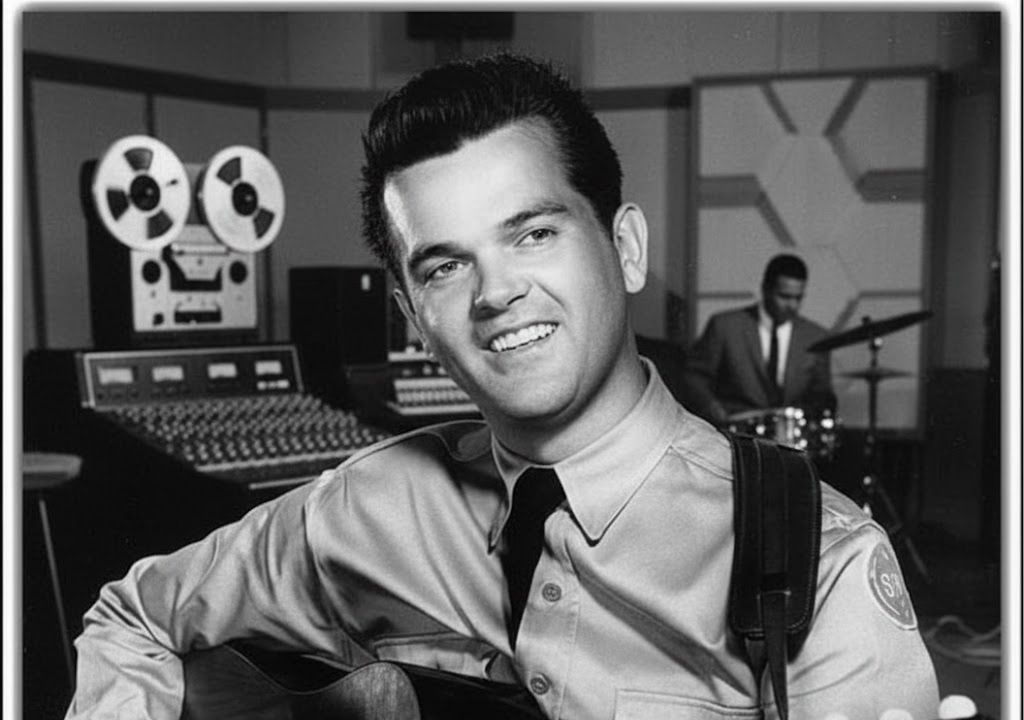

Introduction
Long before the world knew him as Conway Twitty, the velvet-voiced king of country romance, he was simply Harold Lloyd Jenkins, a boy born into the deep rhythms, hardships, and spiritual heat of the American South. But behind the polished superstar image lies an early life packed with twists so unlikely, so cinematic, and so quietly intense that even lifelong fans have never fully understood how they shaped the man who would one day dominate both rock & roll and country charts.
He was born on September 1, 1933, in the tiny Mississippi river town of Friars Point, a place where the blues bled out of the soil and hardship was as common as humidity. His family, Welsh in descent and modest in means, worked hard to build a stable life. But even in those earliest days, his great-uncle saw something different—something extraordinary. He named the infant after his favorite silent film star, Harold Lloyd, as though predicting an entertainer’s destiny long before the child could walk or speak.

When the family moved to Helena, Arkansas, the next chapter of the Conway legend began. Most children at age ten are learning to ride bikes—Harold was already singing on local radio, filling the airwaves with a voice that startled adults and fascinated young listeners. By twelve, he’d formed his own band, The Phillips County Ramblers, and secured a weekly radio show on KFFA, making him one of the youngest semi-professional performers in the region. Helena wasn’t just a hometown—it was an incubator, a forge, a proving ground.
But music wasn’t the only direction he might have taken. In one of the most dramatic “what-ifs” in entertainment history, Harold Jenkins almost never became Conway Twitty at all. His raw athletic talent propelled him to a .450 batting average in high school—good enough to earn a contract offer from the Philadelphia Phillies. For a brief moment, baseball seemed like destiny. He took a job at International Harvester while preparing for a professional athletic career. Everything was lined up. The path was clear.
Then life intervened.
Drafted into the U.S. Army, everything changed. Instead of stadiums, he found himself serving in the Far East. Instead of baseball bats, he picked up a microphone again—this time forming The Cimmarons, a band created to entertain troops. Under war’s shadow, surrounded by uncertainty and isolation, Harold rediscovered the one force stronger than baseball, stronger than fear, and stronger than fate: music.
So when he returned home and the Phillies renewed their offer, he shocked everyone. He said no.

He wasn’t Harold Jenkins anymore. He was becoming something else. Something the music world wasn’t ready for—
but desperately needed.
The child radio prodigy.
The near-miss baseball star.
The soldier who found his voice under foreign skies.
This was the crucible that forged Conway Twitty.