 By admin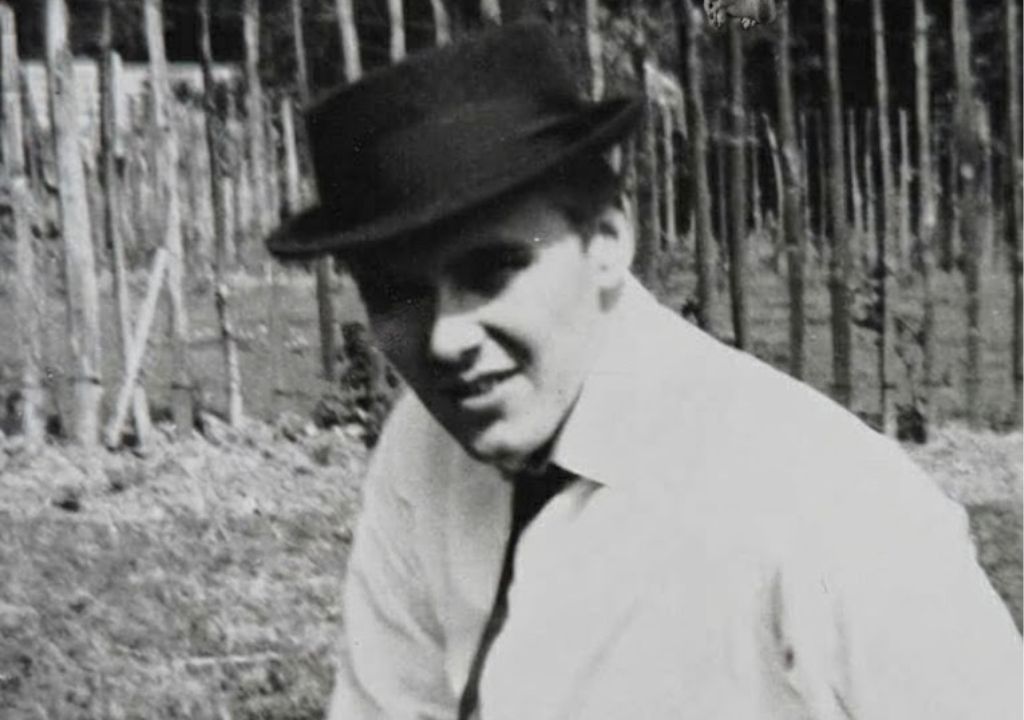
INTRODUCTION
The incandescent glow of a mid-century television studio served as an unintended laboratory for the study of human vulnerability when Ronald Wycherley occupied the chair. To the millions of viewers tuned into the BBC or ITV, the figure known as Billy Fury was a master of rhythmic seduction, a performer whose pelvic movements and vocal growls suggested an unshakeable confidence. However, the moment the music ceased and the interview commenced, a visible transformation occurred. The shoulders would rotate inward, the chin would drop toward the sternum, and his hands would begin a restless, intricate dance of displacement. This was not the calculated “cool” of a James Dean acolyte, but a genuine somatic manifestation of pathological shyness—a physical retreating from the very fame he had meticulously constructed.
THE DETAILED STORY

An investigative analysis of Fury’s interview footage reveals a consistent pattern of non-verbal cues that psychologists categorize as “avoidance behavior.” His most prominent trait—the perpetually bowed head—served a dual purpose. Biologically, it shielded the eyes and the neck, the most vulnerable areas in a social confrontation, effectively creating a private perimeter within a public space. While his contemporaries like Marty Wilde or Cliff Richard engaged the camera with direct, horizontal eye contact, Fury’s gaze was almost exclusively vertical, anchored to the floorboards. This downward tilt was not an affectation of humility but a protective mechanism against the overstimulating “gaze” of the audience, a phenomenon that suggests a deep-seated disconnect between his private self and his public avatar.
Perhaps more revealing was the constant manipulation of his hands. Fury rarely allowed his digits to remain still; he would meticulously pick at his cuticles, adjust his cuffs, or wring his fingers in a display of kinetic anxiety. In the lexicon of body language, these are “self-soothing” or “adapter” behaviors, utilized by the individual to manage internal emotional spikes through tactile stimulation. For a man who lived under the constant shadow of a compromised heart, these tremors were perhaps the most honest expression of his reality. Every fidget was a testament to the internal pressure of maintaining the “Billy Fury” brand while the man underneath remained a quiet naturalist from the Liverpool docks.

This tension between the electric performer and the shy recluse created a narrative architecture that was irresistible to the British public. The vulnerability he displayed off-camera humanized his on-stage aggression, making him appear as a “tragic hero” rather than a mere pop idol. By the time of his later interviews in the 1970s and early 1980s, this shyness had evolved into a dignified, albeit distant, presence. He never truly conquered his somatic reticence; instead, he integrated it into his persona, proving that authenticity in the entertainment industry is often found in the moments where an artist tries most desperately to hide. He remained a man who communicated most clearly when he wasn’t speaking at all, leaving a legacy defined by the eloquent silence of a bowed head.