 By admin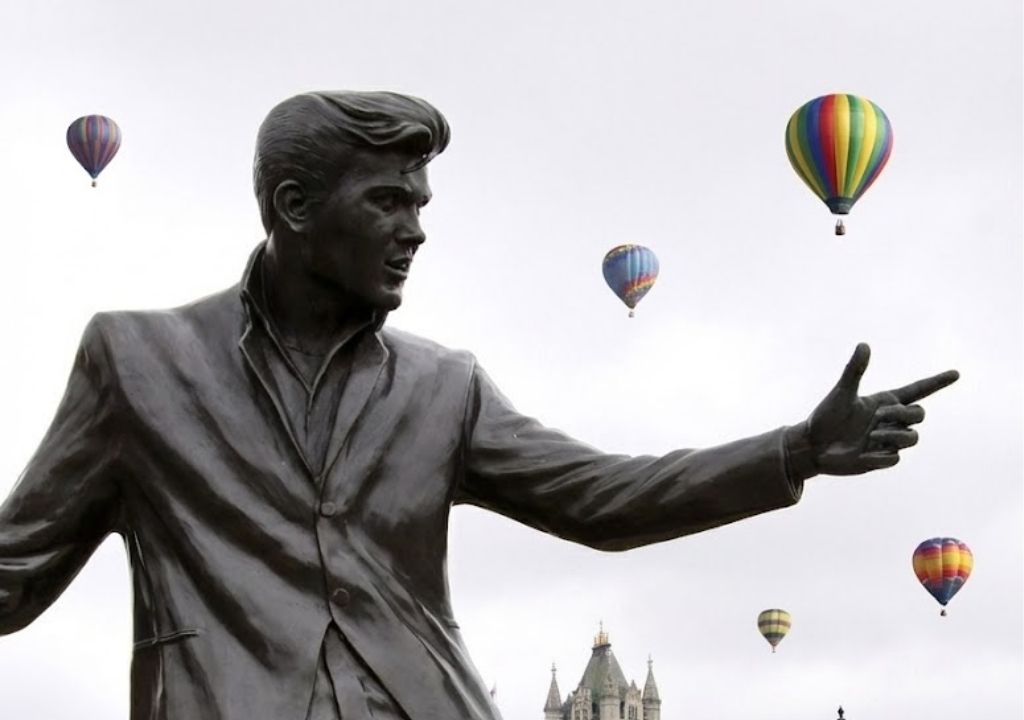

Introduction
If you walk along the windswept Albert Dock in Liverpool, past the tourists and the cafes, you will encounter a presence that defies the logic of time. It is not a monument to a war hero or a king. It is a six-foot-tall bronze figure of a man in tight trousers and a draped jacket, his body contorted in a permanent, silent shimmy. This is Billy Fury, and he is the only ghost in Britain you can touch.
The statue itself is a masterclass in irony. Decades ago, before the fame, the screaming girls, and the gold suits, a young Ronald Wycherley worked right here on this river. He was a deckhand on a tugboat, wrestling with ropes in the freezing Mersey fog, dreaming of a life that wasn’t grey. Today, his bronze likeness stands on the very ground where he used to sweat for a paycheck, looking out over the water that defined his childhood.
But the true shock isn’t the location; it’s the devotion.

Most statues are invisible. We walk past them without a glance. But the Billy Fury statue is different. It is alive. Rain or shine, winter or summer, you will almost always find fresh flowers laid at his bronze feet. Not plastic ones—fresh ones. Lilies, roses, carnations.
Who puts them there? It is a rotating army of the faithful—the “Sound of Fury” fan club, aging admirers, and new converts who have discovered his tragic discography. They treat this metal figure not as a piece of public art, but as a religious shrine. In a city dominated by The Beatles, where John and Paul are global brands, Billy represents something far more intimate. He is the “Lost Boy” of Liverpool. He is the one who didn’t conquer America, the one whose heart gave out too soon, the one who stayed vulnerable until the end.

The statue doesn’t just look at the river; it looks through it. It captures a specific moment of suspended animation—eternal youth frozen in metal. For the people of Liverpool, keeping his statue adorned with flowers is a way of apologizing for the hard life he led. It is a collective, city-wide refusal to let him die a second time. He may have left the stage in 1983, but on the banks of the Mersey, the show has never actually ended.