 By admin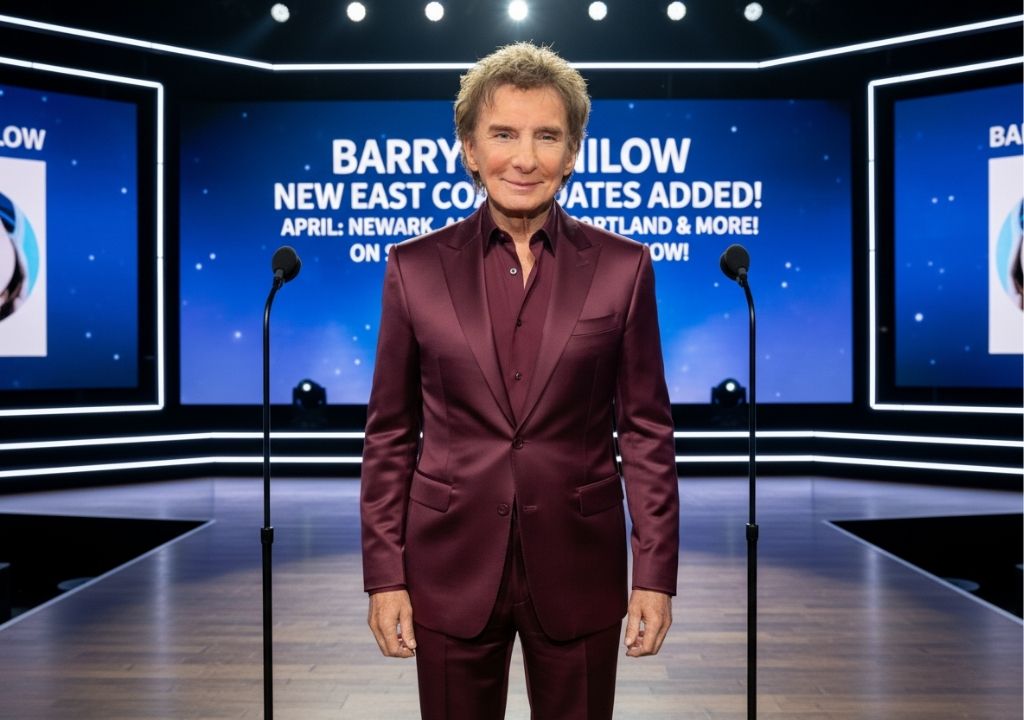

INTRODUCTION
The frost of a Northeastern spring will meet the warmth of a five-decade legacy on 04/13/2026, as the UBS Arena at Belmont Park hosts the first of seven newly minted “final” appearances. For an artist who has spent the better part of the last twenty years anchored to the velvet-lined stages of Las Vegas, the decision to venture back into the grueling climate of the Atlantic corridor is a calculated risk. This isn’t just another booking; it is a meticulous reclamation of territory by a man whose operatic pop defined the American center-stage for generations.
THE DETAILED STORY
The announcement of these April engagements—spanning Newark’s Prudential Center on 04/14 to the KeyBank Center in Buffalo on 04/22—comes at a moment of profound personal and professional renewal for the octogenarian icon. Following a successful medical intervention earlier this year, Manilow’s return to the road serves as a living dissertation on the endurance of the human spirit and the technical precision of the “Standard.” Each stop, including the Cross Insurance Arena in Portland and the MVP Arena in Albany, is framed not merely as a concert, but as a definitive historical marker: the final opportunity for these specific metropolitan regions to witness the architect of “Mandy” in his natural habitat.

Beyond the sheet music, the tour carries a philanthropic weight through the Manilow Music Project. In every city, from Wilkes-Barre to Reading, Manilow is leveraging his exit to fund the future, awarding $10,000 grants to local music educators. This creates a fascinating narrative symmetry; as the master prepares to vacate the arena, he is actively ensuring the tools remain for the next generation of composers. It is a gesture of legacy that transcends the transient nature of a pop performance, grounding the high-octane spectacle of his stage show in a concrete social contribution.
The aesthetic of these shows remains uncompromisingly sophisticated. Manilow has never been one for the “unplugged” minimalism of his peers; he demands the full sonic breadth of a symphony and the rhythmic complexity of a big band. In the Northeast—a region with a storied appreciation for the theatrical and the grand—these shows are expected to be the most emotionally charged of the entire 2026 circuit. As he navigates the complex logistics of an arena tour in his ninth decade, the nuance of his performance remains his greatest asset. He is not merely singing songs; he is conducting a mass exercise in collective memory, proving that in the economy of American entertainment, the most valuable currency is still a perfectly modulated crescendo.