 By admin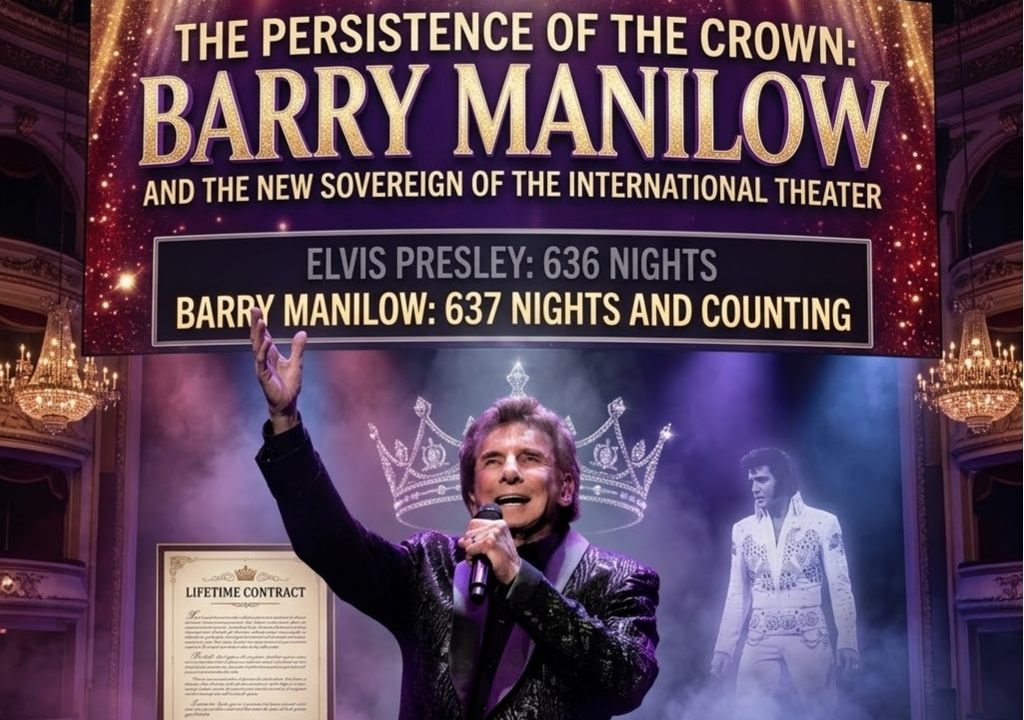
INTRODUCTION
The air within the International Theater at Westgate Las Vegas carries a specific, almost hallowed geometry, a space designed for the grandiosity of the 1960s that still dictates the rhythm of modern entertainment. It was here, between 1969 and 1976, that Elvis Presley defined the residency model, establishing a benchmark of 636 sold-out performances that many believed would remain an untouchable artifact of music history. However, the atmosphere shifted definitively when Barry Manilow performed his 637th show, a moment of statistical and cultural significance that recalibrated the venue’s legacy. By surpassing the King, Manilow did not just break a numerical record; he institutionalized a new era of professional endurance, proving that the ephemeral magic of a residency could be transformed into a permanent, lifelong tenure.
THE DETAILED STORY
The transition of the residency record from Presley to Manilow represents a profound evolution in the narrative architecture of Las Vegas itself. While Presley’s run was characterized by a frantic, meteoric intensity that eventually succumbed to the pressures of his own fame, Manilow’s ascent has been a masterclass in meticulous longevity. His achievement was marked by a sophisticated ceremony where he was presented with the key to the Las Vegas Strip, yet the true weight of the moment lay in the subtle shift of the room’s energy. Manilow, now operating under an unprecedented “Lifetime Residency” contract signed in late 2024, has turned the International Theater into a living archive of the American songbook, ensuring that his influence is woven into the very fabric of the building’s $300 million renovation.

This “Lifetime Residency” is a paradigm shift in the business of entertainment, a commitment that removes the traditional expiration date associated with headlining acts. It suggests an inevitable continuity, where the artist and the venue become a singular, inseparable entity. For Manilow, the record-breaking milestone was not an end but a renewal of his promise to his audience—a demographic that has followed him from the radio waves of the 1970s to the plush seats of the Westgate. The narrative tension now lies in the challenge of maintaining the high-stakes production value that the room demands; every performance must justify the displacement of a legend as towering as Presley.
Beyond the metrics of tickets sold and nights logged, there is the nuance of the performance itself. To celebrate the record, Manilow incorporated a respectful rendition of “Hound Dog” into his set, a nod to the predecessor whose shadow he finally stepped beyond. This gesture served to bridge the gap between two distinct eras of showmanship: the raw, rebellious energy of the rock-and-roll revolution and the polished, orchestrally driven precision of the contemporary pop standard. As Manilow prepares for his 03/26/2026 appearance, he does so not as a guest of the theater, but as its definitive owner. The question that remains is how this permanent residency will shape the future of the Strip—will other icons seek the security of a lifetime contract, or is this a singular feat of endurance that only Manilow could achieve?