 By admin
INTRODUCTION
Standing before a microphone in Nashville, Tennessee, Loretta Lynn did not possess the academic vocabulary of the burgeoning feminist movements in New York or Chicago, yet she occupied a more potent position: the living room of the American working class. Born in the Appalachian coal country of Kentucky, Lynn’s arrival in the 1960s signaled a tectonic shift in how the domestic lives of women were documented and validated. While her contemporaries often adhered to a paradigm of Victorian-era stoicism, Lynn utilized her guitar as a meticulous instrument of reportage, dismantling the silence surrounding reproductive agency, infidelity, and the economic constraints of the American matriarch.
THE DETAILED STORY
The gravity of Lynn’s influence lies in her refusal to utilize hyperbole; she simply spoke the truth with a precision that was, at the time, revolutionary. Before the 1966 release of “Don’t Come Home A-Drinkin’ (With Lovin’ on Your Mind),” country music—and by extension, much of American popular culture—often framed the female experience through the lens of patient endurance. Lynn inverted this narrative. By becoming the first woman in country music to reach number one on the Billboard charts with a song she wrote herself, she established a new precedent for creative and financial autonomy. She was not just a performer; she was a sovereign entity in an industry that previously viewed women as secondary ornaments.
This evolution reached a critical zenith with “The Pill.” While the song was recorded in 1972, its release was delayed until 1975 by Decca Records due to its controversial subject matter. The track did not merely discuss contraception; it reframed it as an inevitable tool for female liberation within the marital structure. The resulting radio ban across dozens of American markets only served to amplify its cultural resonance. Lynn’s narrative architecture bridged the gap between the radical activism of the coast and the pragmatic realities of the heartland. She provided a vernacular for women who did not identify as “liberated” in the political sense but felt the visceral weight of domestic inequity.
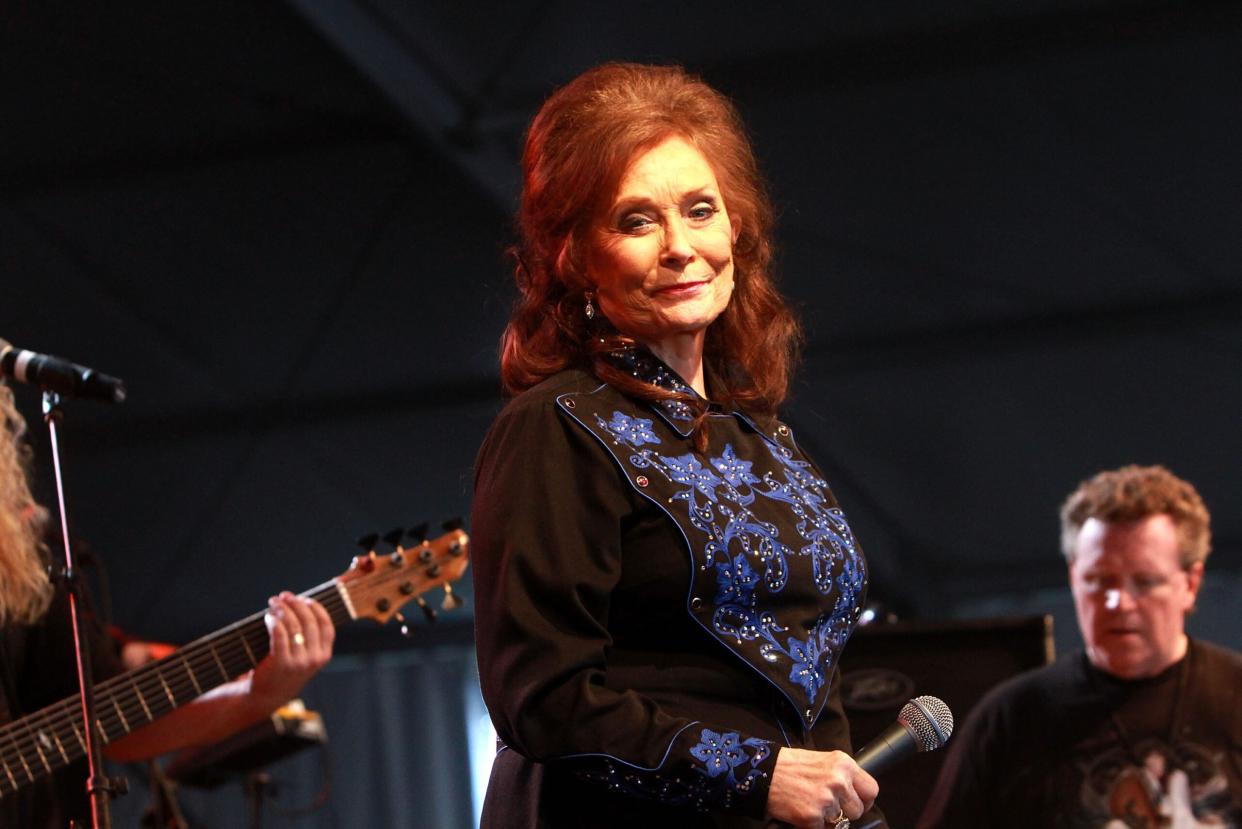
Beyond the lyrical content, Lynn’s legacy is defined by her meticulous ownership of her story. Her autobiography, Coal Miner’s Daughter, and the subsequent Academy Award-winning film, solidified a new American archetype: the woman who transcends systemic poverty through sheer intellectual and creative grit. She proved that the nuances of a woman’s life—from the struggle of raising children on a meager $100-a-week budget to the complexities of a long-term marriage—were worthy of high-art status.
Ultimately, Loretta Lynn did not just change music; she recalibrated the American social contract. By chronicling the unspoken, she gave millions of women the permission to demand respect in their own homes. Her career was a masterclass in the power of authenticity over artifice, leaving behind a legacy that remains an essential component of the American identity. If the measure of a journalist is the ability to reveal the world as it truly is, then Lynn was perhaps the most effective investigative reporter the American South ever produced.