 By admin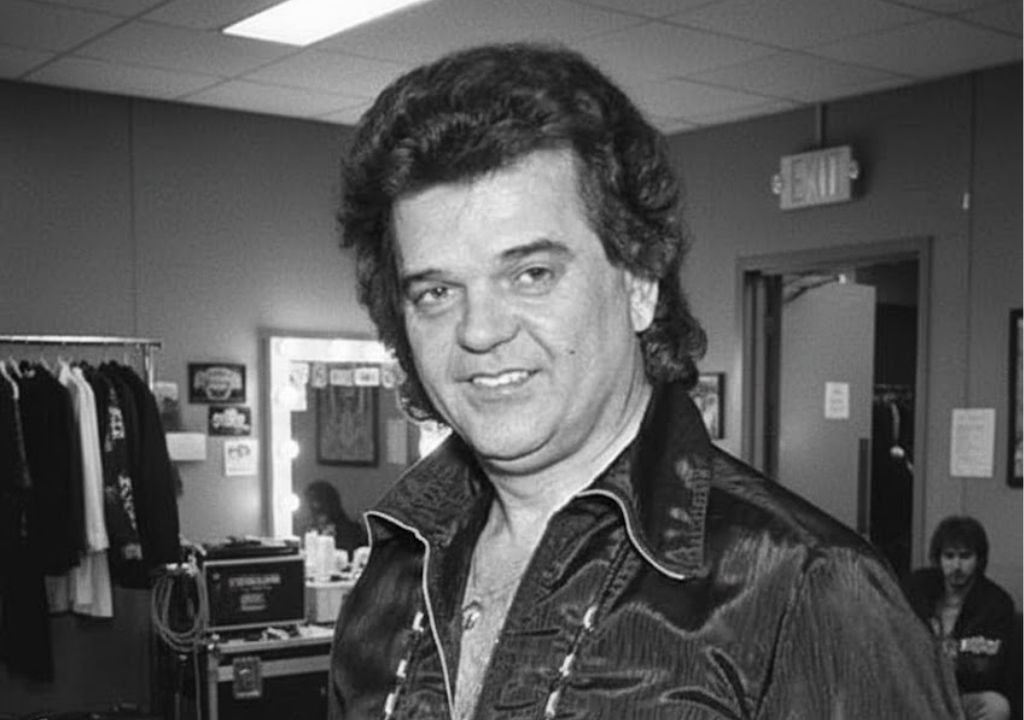

Introduction
For decades, the world knew Conway Twitty as the velvet-voiced gentleman of country music — the man who crooned Hello Darlin’ with such sincerity that even hardened hearts softened. His stage presence radiated calm confidence. His songs spoke of longing, loyalty, and love. But the life he lived offstage? It was a storm of collisions, fractures, and quiet tragedies that rewrote the man behind the name Harold Lloyd Jenkins.
To understand his personal life, you must first understand his geography. From 1963 to 1972, Oklahoma City wasn’t just a place where Twitty worked — it was the center of his world. He lived there, dreamed there, built there, and even opened his own fast-food chain, Twitty Burger, on South Western Avenue. He performed at the Diamond Ballroom, became a beloved local figure, and stitched himself into the city’s fabric. Fans saw the star. His family, however, lived with the man.

And that man changed dramatically after one brutal moment in 1981.
Twitty slipped while stepping off his tour bus, crashing headfirst onto the edge of the steps. His steel guitarist, John Hughey, found him unconscious. Those who knew him swear something in him shifted afterward — a fog, a sharpness, a new distance. Whether from trauma or timing, the change marked the beginning of emotional earthquakes that would ripple through every corner of his life.
Love, for Conway Twitty, did not come quietly.
He married four times — though only three different women — and nearly every marriage bore scars. His first union with Ellen Matthews lasted barely a year, created by urgency rather than romance, after she became pregnant with their son Michael. His second marriage, to Temple “Mickey” Medley, should have been the stable center of his private world. They had three children, Kathy, Joni Lee, and Jimmy. Yet the pressures of fame shattered them apart — twice. They divorced in early 1970, remarried quietly at the end of the same year, and after nearly three decades of togetherness marked by constant absences and relentless touring, they divorced again in 1984. Mickey died in 2021, long after the man she once loved was gone.
And then came Delores “Dee” Henry, his office secretary, 28 years his junior. She became his final wife — and eventually, the central figure in one of the most bitter inheritance disputes in country music history.
Money haunted Twitty as much as love did.
His failed Twitty Burger chain sparked a bizarre, landmark tax case that he eventually won, convincing the U.S. Tax Court that paying off his investors was an “ordinary and necessary” business expense — because his bond with fans mattered more than profit. It was one of the rare moments where the law bent to accommodate his enormous integrity.
But fate was not kind to him in the end.
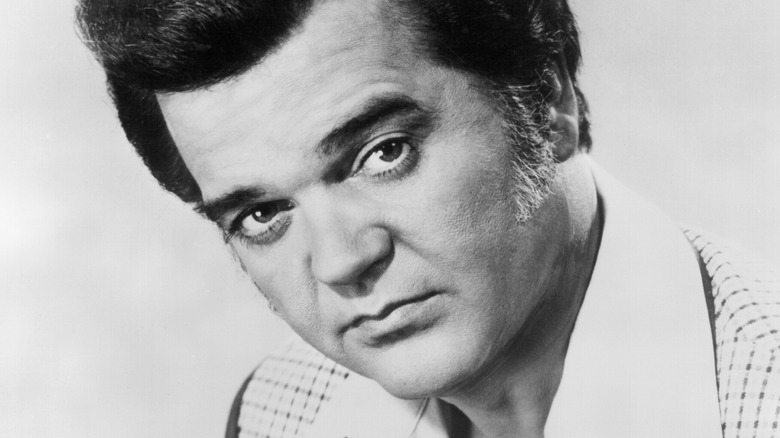
On June 4, 1993, while performing in Branson, Missouri, Twitty collapsed. Rushed into emergency surgery, he died hours later from an abdominal aortic aneurysm at age 59. Loretta Lynn — his legendary duet partner — saw him as he was wheeled into the hospital. Reba McEntire attended the memorial. He was buried as Harold L. Jenkins, not Conway Twitty, beneath a red granite vault.
Yet the real chaos erupted only after he was gone.
Court battles tore his family apart. His daughters were sued by his own estate. Employees claimed he had made verbal promises he never wrote down. His widow and children spiraled into a legal war over rights, royalties, and reputation. Property was auctioned off. Memorabilia scattered across the country. And in 2008, new litigation reopened wounds his death had never healed.
The world knew Conway Twitty the legend.
Almost no one knew Conway Twitty the man — fractured, flawed, loving, complicated, and endlessly misunderstood.