 By admin
INTRODUCTION
The history of British rock and roll is often written in the bold strokes of screaming fans and leather jackets, yet its most profound chapters frequently occur in the quiet corners of a contract. In May 1960, a twenty-year-old Ronald Wycherley—known to the world as the charismatic Billy Fury—released a ten-inch masterpiece titled The Sound of Fury. While the public saw a burgeoning teen idol, the fine print of the record sleeve revealed a deeper, more calculated narrative. Scattered across the tracklist were credits attributed to a mysterious Wilbur Wilberforce, a name that served as both a shield and a statement of artistic independence in a paradigm dominated by predatory management.
THE DETAILED STORY
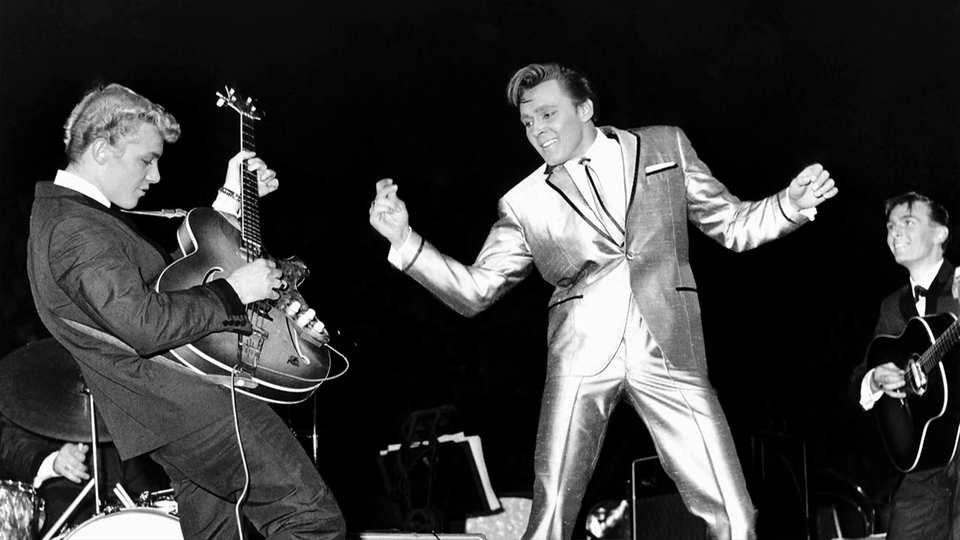
The emergence of Wilbur Wilberforce was not a product of artistic whim, but a meticulous response to the financial realities of the era. Billy Fury was managed by Larry Parnes, a legendary impresario famous for his “stable of stars” and his penchant for claiming a significant share of his artists’ earnings. Parnes’ influence was so pervasive that he often secured a portion of the songwriting royalties for any track released under an artist’s official stage name. To bypass this inevitable deduction, Fury orchestrated a silent rebellion. On his debut album, he split his creative identity: while four tracks were credited to “Billy Fury,” six pivotal songs—including “My Advice,” “Phone Call,” and “Alright, Goodbye”—were registered under the Wilberforce pseudonym.
This maneuver was historically significant because it highlighted Fury’s status as a rare anomaly in the pre-Beatles landscape. Most contemporary stars were merely vessels for professional songwriters, yet Fury arrived as a fully-formed composer. He had spent his youth as a deckhand on the River Mersey, documenting his inner world in a notebook that would later form the bedrock of British rockabilly. By using the Wilberforce mask, he ensured that the financial fruits of his labor remained within his own grasp, creating a secret ledger that allowed him to outmaneuver the very system that sought to commodify his image.

The irony of this narrative lies in the fact that many fans were entirely unaware that the brooding star and the obscure songwriter were the same person. This duality continued into the 1970s when Fury adopted yet another alias, Stormy Tempest, for his role in the film That’ll Be the Day. However, while Stormy was a theatrical parody of his own fame, Wilberforce remained a private guardian of his genius. Today, those six songs stand as a testament to a man who understood that in the high-stakes world of show business, the most valuable asset one can possess is the ownership of their own voice. As we revisit these recordings, we are forced to wonder: how many other masterpieces remain hidden behind the strategic masks of our most beloved icons?