 By admin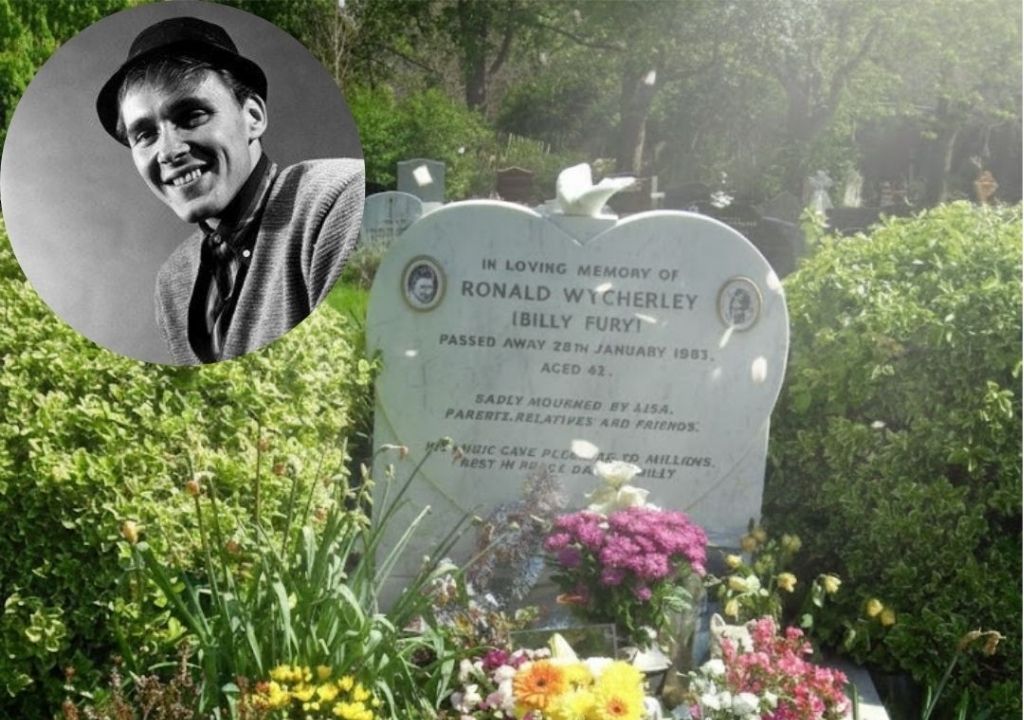

Introduction
Exploring Billy Fury’s Final Resting Place – Mill Hill Cemetery
Good morning, everyone! Paul here from Unusual Things. Today, we’re starting at Mill Hill Cemetery, where we’ve come to find the final resting place of the legendary Billy Fury. For those who may not remember him, Billy Fury was often called the British Elvis. Some even argue that in his early days, he rivaled—or even surpassed—the Beatles in popularity.
As I explored the cemetery, I noticed it was a Saturday, and the gates were locked. Unless someone knows the code, entry is impossible—but the visit itself was still fascinating. Mill Hill Cemetery is beautifully laid out, with countless graves to admire. Even after the rain, it’s a peaceful and impressive place.
Billy Fury: The Life Behind the Legend

Billy Fury was born Ronald Wycherley on April 17, 1940, at Smithdown Hospital in Liverpool. He began piano lessons before his teenage years and received his first guitar at age 14. By 1955, he had formed his own band while working full-time on a tugboat and later as a docker. A talent competition win in 1958 kickstarted his music career, and soon he was meeting pop manager Larry Parnes.
In a now-famous moment, Parnes pushed young Wycherley onto the stage during a performance, and he was an instant success. Parnes signed him, added him to his tour, and gave him the stage name Billy Fury. Early on, Fury’s provocative performances drew censorship and press criticism, but his talent was undeniable.
Fury released his first single, Maybe Tomorrow, in 1959, and gained further exposure through television appearances. By 1960, he had reached number nine on the UK Singles Chart with his own composition, Colette. His first album, The Sound of Fury, featured rising star Joe Brown on guitar, with backing vocals by the 4Js.
Career Highlights and Influence
Fury went on to score numerous hits, including Wondrous Place, Halfway to Paradise, and Jealousy. In the early 1960s, he was so influential that when Parnes held auditions for a new backing band, the Beatles—then known as the Silver Beetles—auditioned but ultimately declined. Other bands, such as The Tornados and The Puppets, backed him in subsequent tours.
In 1961, Fury began focusing more on mainstream ballads than rock and roll. He once told NME that he wanted to be recognized as a singer, not just a rock star, and that he hoped to broaden his artistic scope. His career spanned both music and film, with notable appearances in Play It Cool (1962) and That’ll Be the Day (1973).
After signing with Polydor Records in 1981-1982, Fury released a comeback album, The One and Only, though due to health issues, he did little touring. His last public appearance was at the Sunnyside Pub in Northampton on December 4, 1982. A few days later, he recorded a live performance for Channel 4’s Unforgettable, but only four of the six songs aired at his mother’s request.
Personal Life and Legacy
Fury was also a keen birdwatcher and had notable relationships, including with businesswoman Lee Everett Alkin (Lady Lee Middleton) and actress Amanda Barrie. He lived in London, famously on the same street as Paul McCartney, and later with partner Lisa Voice until his death.
Tragically, on January 28, 1983, at the age of 42, Billy Fury passed away from heart complications caused by rheumatic fever, which he had contracted as a child. His funeral service was held at St John’s Wood Church, and his body was embalmed by Desmond Henley.
Visiting Billy Fury’s Grave

Billy Fury’s grave is beautifully maintained, with flowers and tributes honoring his memory. It’s a poignant reminder of the incredible music and joy he gave to millions, and how his career was cut far too short. Seeing such care put into his final resting place is inspiring—it shows the lasting impact he had on fans and loved ones alike.
If you ever get a chance to visit Mill Hill Cemetery, it’s worth paying your respects and reflecting on a true icon of British rock and roll. Billy Fury may be gone, but his music and legacy continue to resonate.