 By admin

Introduction
Billy Fury’s Liverpool: The Early Life of Ronnie Wycherley
Billy Fury, born Ronald Wycherley on April 17, 1940, in Dingle, Liverpool, is remembered as one of the most iconic stars of British rock ’n’ roll. Before fame and record deals, Ronnie’s life was shaped by the vibrant, sometimes challenging streets of Liverpool. After leaving school, he worked as a deckhand on the Mersey tugboats, yet music was always his true passion. Teaching himself to play guitar and write songs, he transformed his childhood obsession into a lifelong pursuit.
At the age of 18, his potential was recognized by music agent Larry Parnes, who signed him and gave him the stage name Billy Fury. He went on to produce hits like Halfway to Paradise and Wondrous Place, with record sales rivaling Elvis Presley, The Beatles, and Cliff Richard. Yet behind the fame, Fury faced personal and health struggles, ultimately passing away from a heart attack in 1983 at the age of 42.
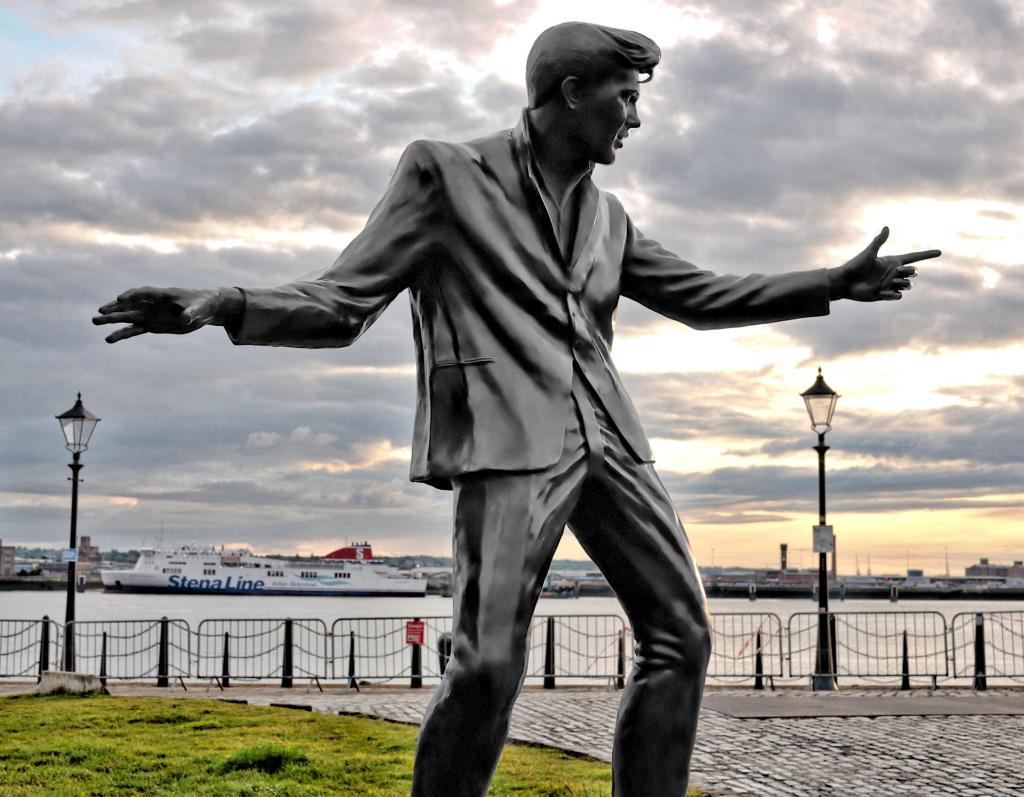
Liverpool holds many landmarks connected to Fury’s early life. The hospital where he was born, originally the Toxteth Workhouse built in 1859 and later the Smithdown Road Infirmary, is now the Smithdown Health Park. His parents, Jean and Albert Wycherley, brought him home to Sefton Square, in the heart of Toxteth, an area locals sometimes call the “Holy Land” because many streets there are named after prophets. Fury’s childhood coincided with World War II; the family’s early life was shaped by the Liverpool Blitz, which forced temporary relocations and left a lasting impression on young Ronnie.
He attended St. Silas Primary School, where one of his classmates was Richie Starkey—later famous as Ringo Starr. Another peer, Billy Hatton, would go on to join The Fourmost, signed to Beatles manager Brian Epstein. Ronnie suffered bouts of rheumatic fever as a child, leading to extended hospital stays and periods away from school. Despite these challenges, he developed a fascination with music that would drive his future career.
On his 14th birthday, Ronnie bought his first guitar from Frank Hessey’s music shop, marking the start of his journey as a musician. He left school at 15 and worked briefly at Elison’s Engineering before a stint on the Mersey tugboats, where he played in a small band called the Formby Sniffle Gloop. Early experiments with stage names included “Stean Wade” before settling on Billy Fury under Parnes’ guidance.

Fury’s Liverpool was a city alive with musical inspiration. In 1958, shortly after his 18th birthday, he recorded several songs at Percy Philips Recording Studios in Kensington, including Elvis covers and two original tracks, Baby and Loves A-Callin’. Interestingly, these recordings predated The Beatles’ first demo at the same studio, highlighting the shared creative roots of Liverpool’s future stars.
From hospital wards to tugboats, and from schoolyards to recording studios, the early life of Ronnie Wycherley shaped the man who would become Billy Fury—a rock ’n’ roll legend whose legacy is inseparable from the streets and studios of Liverpool.