 By admin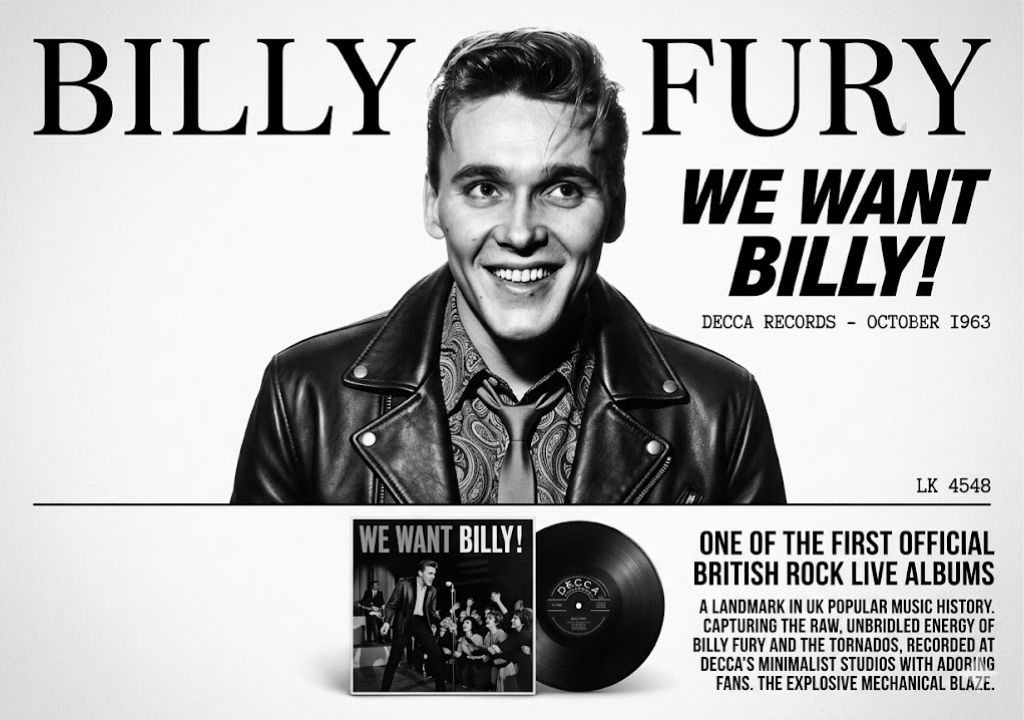
INTRODUCTION
In October 1963, inside the stripped-down, utilitarian walls of Decca Records’ West Hampstead studio in London, a select group of fervent fans gathered for an unprecedented experiment. They were there to witness history in the making, as captured on the landmark vinyl release cataloged as LK 4548. Amid the cool, autumn air, the atmosphere inside reached a fever pitch, defying the standard, sanitized recording practices of the era. The result was We Want Billy!, a monumental release that stood as one of the very first official live pop albums in British music history. This sonic document bypasses the safety nets of modern studio production, offering a visceral, unfiltered glimpse into the absolute vanguard of rock and roll. It caught a generational talent at the absolute peak of his performative power, forever altering how captured live performances would be experienced by global audiences.
THE DETAILED STORY
The release of We Want Billy! marked a revolutionary paradigm shift in the mid-twentieth-century music industry, establishing a blueprint for capturing the raw essence of rock and roll. Prior to this landmark recording session, the industry standard dictated a controlled, pristine studio environment where imperfections were systematically erased. Decca Records broke this mold completely by opening their doors to an intimate, ecstatic audience, transforming a technical recording space into an authentic arena of human emotion.
Backed by the formidable, precise instrumentation of The Tornados, Billy Fury delivered a performance that was both ferocious and technically masterful. His powerful, unvarnished tenor voice sliced through the ambient room noise, perfectly balanced against the thunderous screams of fans who were inches away from the microphone stands. The album captured the mechanical energy of a generation, preserving genuine, unpolished moments that digital filters would completely destroy today. Songs like “Like I’ve Never Been Gone” and “Sweet Little Sixteen” emerged not as clinical reproductions, but as living, breathing artifacts of British youth culture.
Music archivists and historians regularly cite this specific October 1963 catalog release as a vital turning point. It proved to commercial labels that audiences craved the honesty of a live setting over the artificial perfection of multitrack overdubbing. The sonic architecture of the album allows listeners to feel the physical room reflections and the kinetic energy shared between the performers and their public. Fury’s ability to maintain immaculate pitch while projecting such primal, rockabilly-fueled intensity cemented his status as a premier vocalist. By documenting the sweat, the high-frequency crowd reactions, and the driving rhythms of The Tornados without technical coloration, We Want Billy! preserved an era in its truest form. Decades later, the album remains a masterclass in musical authenticity, serving as an enduring reminder that the greatest rock and roll is forged in the fires of real, unedited human connection.