 By admin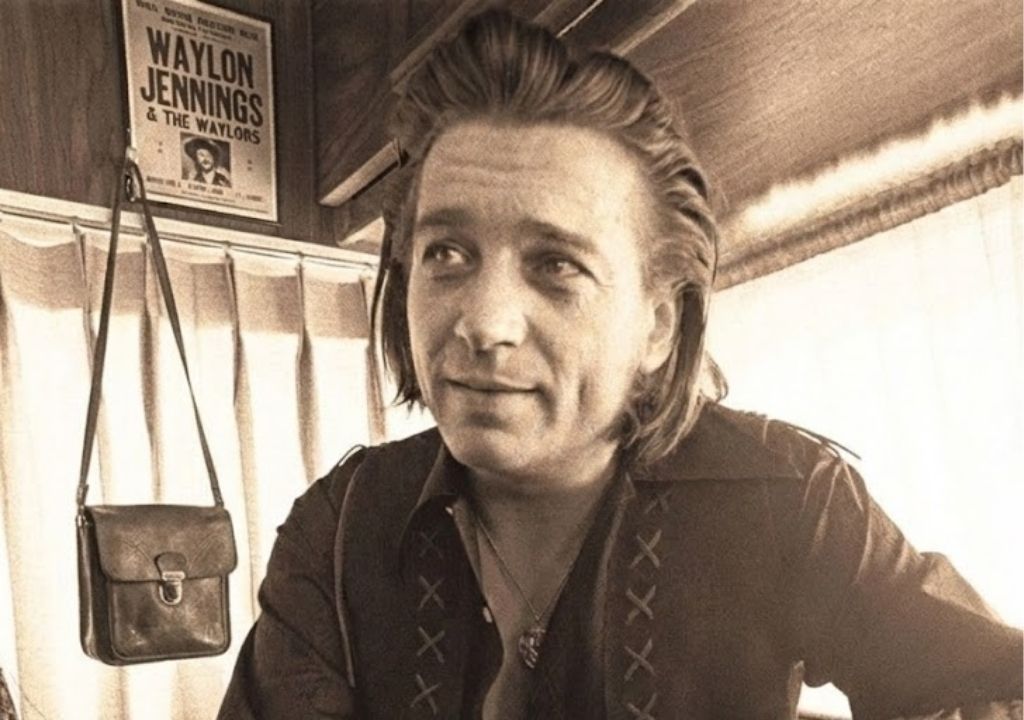

Introduction
“I Hope Your Ol’ Plane Crashes”: The Haunting Final Words That Tortured Waylon Jennings for Decades
In the annals of Rock ’n’ Roll, February 3, 1959, is immortalized as “The Day the Music Died.” We’ve all heard the songs, and we’ve all seen the black-and-white photos of the wreckage in a snowy Iowa cornfield. But there is a chilling, human side to this tragedy that only one man could tell—a man who was supposed to be on that plane, but instead, spent the rest of his life haunted by a joke that turned into a nightmare.
That man was the legendary Waylon Jennings.
Before he was the “Outlaw” of country music, Waylon was just a 21-year-old kid from Texas, playing bass for his mentor and “big brother,” Buddy Holly. To Waylon, Buddy wasn’t just a superstar; he was the man who paid for his first recording sessions and literally threw a bass guitar at him, giving him two weeks to learn it. They were inseparable, fueled by the raw energy of a new musical era.
But the “Winter Dance Party” tour of 1959 was anything but a party. It was a frozen hell. Traveling across the Midwest in broken-down, unheated buses, the musicians were miserable. “We smelled like billy goats,” Waylon later recalled. They were sick, exhausted, and freezing. Desperate for a night of real sleep and clean laundry, Buddy Holly decided to charter a small plane from Clear Lake, Iowa, to their next stop in Fargo.
The plan was for Buddy, Waylon, and guitarist Tommy Allsup to take the flight. But fate had other ideas.
J.P. Richardson, known as “The Big Bopper,” was suffering from a severe case of the flu. He approached Waylon, pleading for his seat so he could get to a doctor and some rest. With the casual generosity of youth, Waylon agreed. If it was okay with Buddy, it was okay with him.
But it’s what happened next that would shatter Waylon’s world forever.
As they prepared to part ways at the airport, Buddy Holly, in his typical playful manner, teased his young protégé about staying behind. “Well, I hope your ass freezes on the bus!” Buddy joked.
Waylon fired back with the line that would echo in his mind for the next forty years: “Yeah? Well, I hope your ol’ plane crashes.”
Hours later, the news hit the wires. The plane had gone down shortly after takeoff, killing everyone on board. In Texas, Waylon’s family heard the news and assumed he was among the dead. When Waylon finally reached his mother by phone to tell her he was alive, he wasn’t a hero who cheated death—he was a broken young man carrying a weight no one should bear.
“For years, I thought I caused it,” Waylon confessed. The guilt was so paralyzing that he quit music entirely for a time, refusing to even pick up a guitar. It took a move to Arizona and a complete reinvention of his soul to start over.
Waylon Jennings eventually became a titan of music, but he never truly left that Iowa airport. His story is a visceral reminder that life can turn on a single coin toss, a flu virus, or a sarcastic goodbye.