 By admin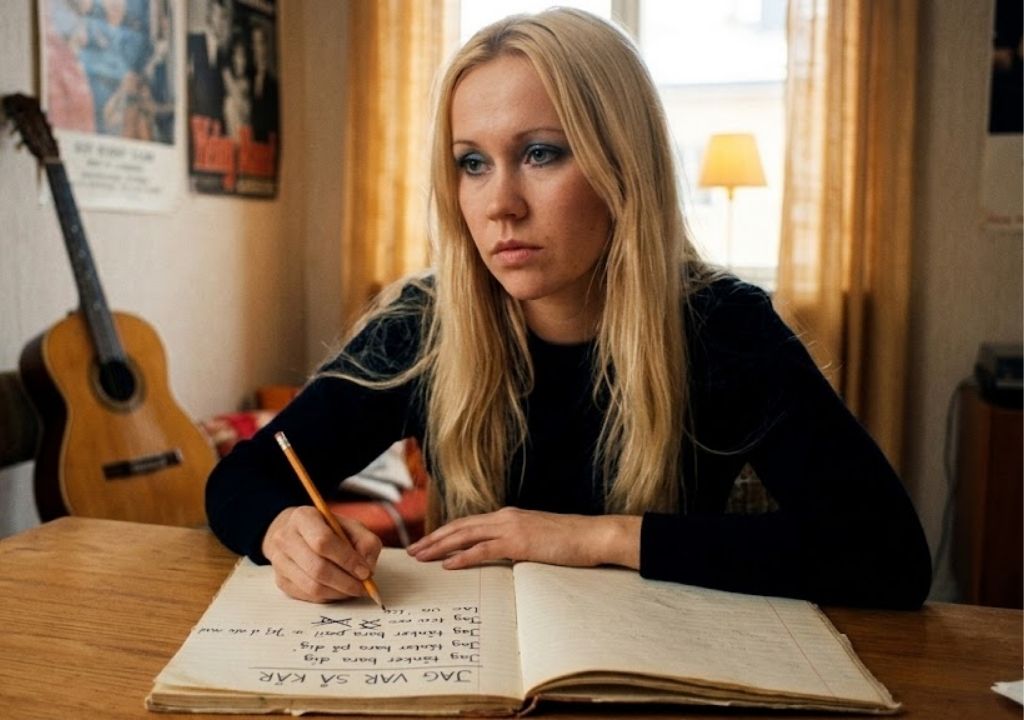
INTRODUCTION
In the biting winter of 1967, a seventeen-year-old telephone operator in Jönköping, Sweden, sat at a piano to process the crushing weight of a first love lost. Agnetha Fältskog was not yet the global icon of ABBA; she was a young woman grappling with the departure of Björn Lilja. The resulting composition, “Jag var så kär” (I Was So In Love), did more than mend her heart—it shattered the glass ceiling of the Swedish recording industry. When the track reached the summit of the Kvällstoppen chart on 01/28/1968, it announced the arrival of a melodic prodigy. This wasn’t merely a debut; it was an act of emotional alchemy that translated private devastation into a public anthem, setting the stage for a career that would eventually redefine the parameters of international pop music.
THE DETAILED STORY
The genesis of “Jag var så kär” serves as a definitive case study in the intersection of vulnerability and commercial triumph. At eighteen, Fältskog possessed a vocal purity that masked a sophisticated understanding of minor-key melancholy. While her contemporaries were often singing translations of British and American hits, Agnetha insisted on performing her own material—a radical stance for a young female artist in the late 1960s. The song’s ascent to number one was not an overnight fluke; it was driven by a resonance that felt startlingly authentic to a generation of Swedish listeners.
The narrative arc of the song reflects the specific tension of her youth. It captures the moment a teenage romance dissolves into the cold reality of adulthood. Despite the somber subject matter, the production was luminous, highlighting a crystalline soprano that would later sell millions of records and generate massive $USD revenue for the Swedish export industry. Industry archives, including retrospectives by Billboard, note that Fältskog’s ability to inject “pathos without artifice” was her greatest asset. This single record transformed her from a local singer with the Bernt Enghardt band into a national phenomenon, long before the lights of the Eurovision Song Contest or the global dominance of the 1970s.
Her heartbreak became her greatest professional currency. “Jag var så kär” remains a cornerstone of Swedish pop history because it proved that the most intimate experiences—when articulated with precision—could command the top of the charts. Fältskog’s refusal to shy away from her own sorrow established a template for the “sad disco” and emotive ballads that would later define the ABBA era. Today, the track stands as a testament to the power of the debut. It is the sound of an eighteen-year-old realizing that while love may be fleeting, a perfectly crafted melody is eternal. The record didn’t just top the charts in early 1968; it launched a global legacy.