 By admin
INTRODUCTION
The transition began not with a fanfare, but with the rhythmic rattling of a 1937 Ford crossing the Continental Divide in the winter of 1948. Loretta Lynn, then a pregnant teenager possessing only a sixth-grade education and a resolute spirit, was engaged in a quintessential American migration—fleeing the exhausted veins of the Kentucky coal mines for the untapped promise of Washington State. This was not a pursuit of stardom, but a desperate, meticulous maneuver for survival. The 2,500-mile journey from the insular security of Butcher Hollow to the damp, unfamiliar landscape of Custer represented a profound rupture in her personal geography, providing the necessary distance to eventually observe her own heritage with clinical clarity.
THE DETAILED STORY
In the evergreen shadows of Whatcom County, the Lynn family sought a paradigm shift. Her husband, Oliver “Doolittle” Lynn, found work in the grueling logging and agriculture sectors of the coast, while Loretta navigated the isolation of a stranger in a strange land. It was here, amidst the strawberry fields and the repetitive domestic labor of a young mother, that an artistic evolution commenced. The distance from Kentucky acted as a lens, sharpening her memories of the hollow into high-definition narratives. In 1953, Doolittle purchased a $17.00 Harmony guitar from Sears & Roebuck, an investment that would yield an astronomical cultural return.
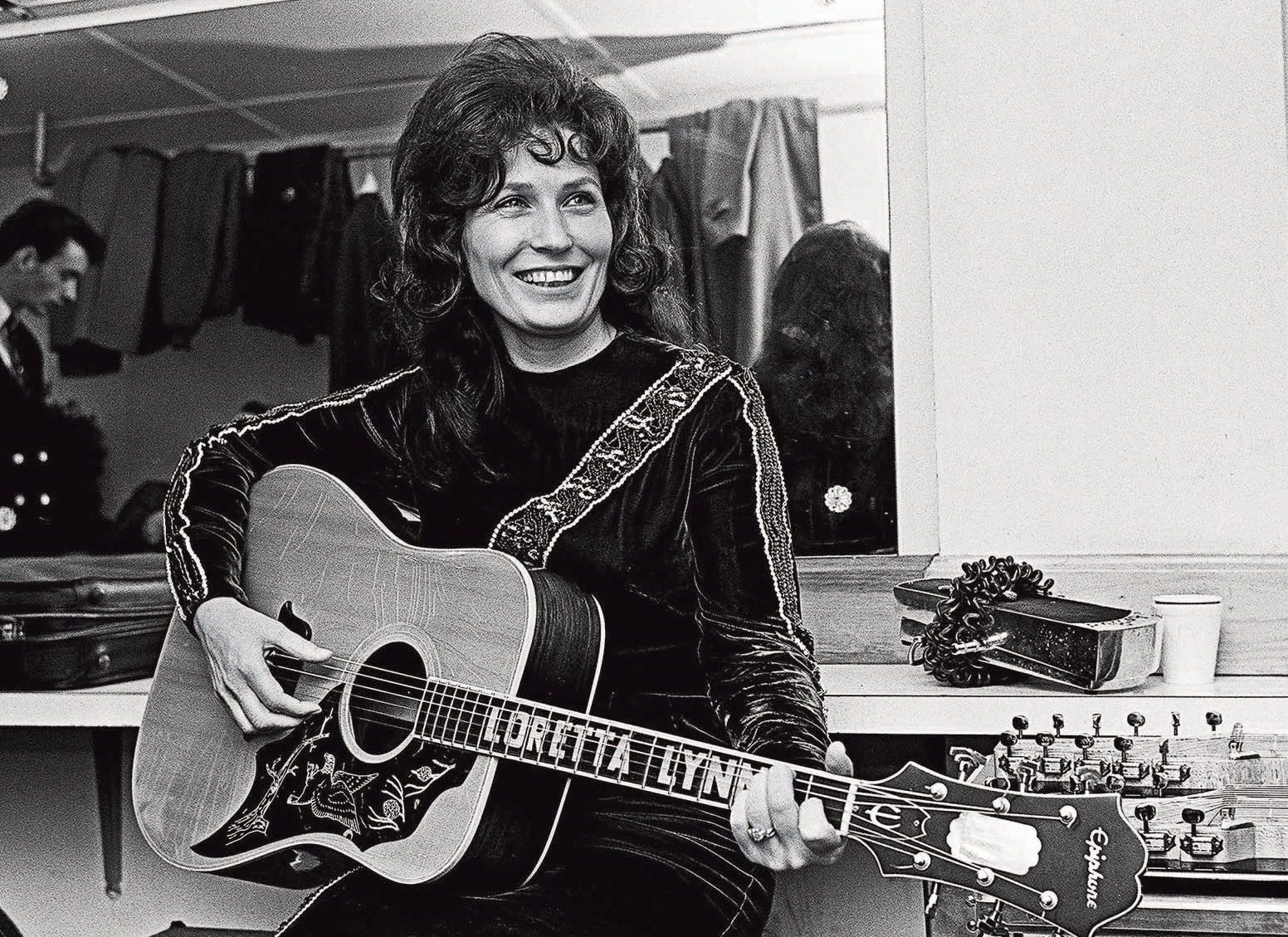
This period in Washington served as a vital crucible. Far from the immediate influence of the Nashville establishment or the Grand Ole Opry, Lynn developed a vocal style that remained untainted by industry expectations. Her initial performances at local venues, such as the Delta Grange Hall, were characterized by a raw, unvarnished honesty that resonated with the loggers and farmers of the Northwest. This geographic displacement allowed her to synthesize her Appalachian roots with a newfound western independence. The isolation of the Pacific Northwest effectively insulated her creative process, allowing her to write lyrics that were sophisticated in their simplicity and brutal in their truth.
By the time she signed her first contract with Zero Records in Vancouver, she was no longer merely a daughter of the mines; she had become a chronicler of the broader American experience. The migration was the inevitable catalyst that transformed a private struggle into a public masterpiece, proving that the most powerful narratives often require the protagonist to leave home to truly understand its value. Her journey from the coal mines to the coastline remains a definitive study in how displacement can refine, rather than dilute, an artist’s authentic voice.