 By admin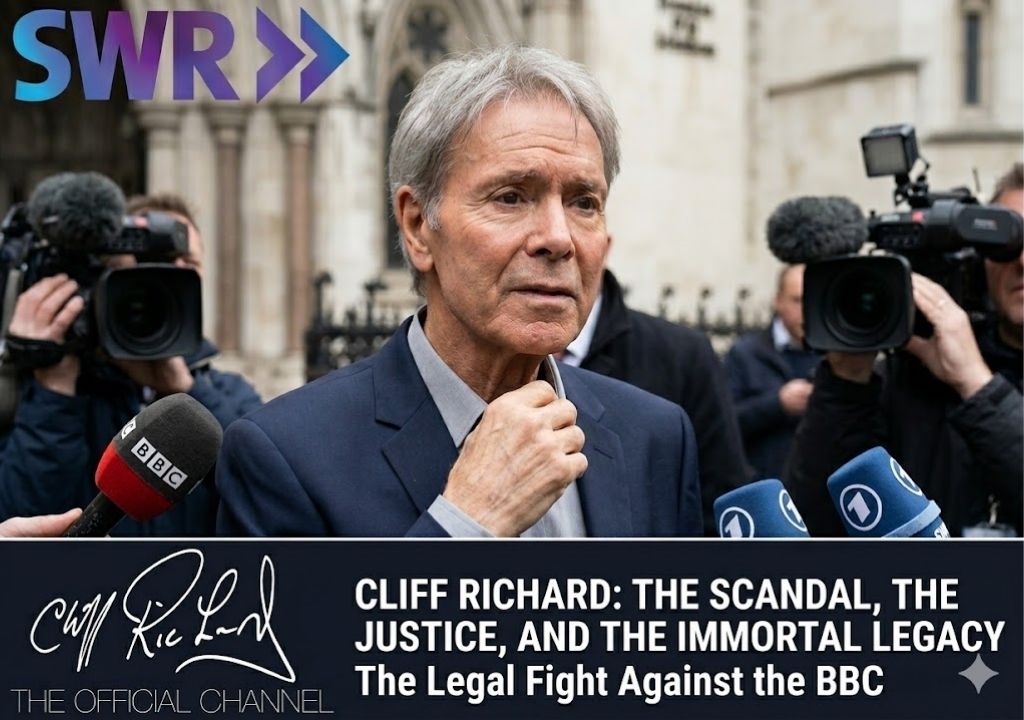
INTRODUCTION
On 07/18/2018, in the sterile, wood-paneled quiet of Court 14 at London’s Royal Courts of Justice, Sir Cliff Richard received more than just a legal victory; he reclaimed the narrative of his life. The High Court’s ruling against the British Broadcasting Corporation (BBC) marked the conclusion of a four-year crucible that began with a televised police raid on his Berkshire apartment. At 77, the legendary singer, who had provided the rhythmic heartbeat of British culture for six decades, stood as the unlikely architect of a seismic shift in media ethics. The judgment was not merely a financial settlement—though the initial $250,000 in general damages was significant—but a philosophical declaration. It established that a person’s reputation is a tangible asset, one that the state and the press cannot cavalierly dismantle before a single charge is ever laid.
THE DETAILED STORY
The genesis of this legal landmark was the 08/14/2014 raid, a moment of “breathtaking” intrusion where South Yorkshire Police collaborated with the BBC to broadcast the search of Richard’s home live via helicopter. While the investigation into historical allegations was eventually dropped in 2016 with no charges filed, the imagery of the raid remained etched in the public consciousness. Richard’s decision to sue for “misuse of private information” was a high-stakes gamble against the formidable “freedom of expression” defense traditionally wielded by the press. Mr. Justice Mann’s 122-page ruling dismantled that defense, stating that the BBC’s coverage was “serious and sensationalist.” The court found that a suspect under investigation has a “reasonable expectation of privacy” that outweighs the public’s right to know their identity before a formal charge.
This ruling fundamentally altered how the UK press handles criminal investigations. It effectively ended the era of naming high-profile suspects during the pre-charge phase, a change known colloquially as the “Cliff Richard Rule.” Beyond the courtroom, Richard’s resilience became his most enduring hit. He did not retreat into a quiet bitterness; instead, he returned to the pinnacle of the charts with “Music… The Air I Breathe,” proving that his artistic legacy remained impervious to the shadows of 2014. By the time he celebrated his 80th birthday, Richard had transitioned from a victim of media overreach to a triumphant guardian of civil liberties. His victory serves as a definitive case study for The Hollywood Reporter and Variety in the delicate balance of celebrity law. It underscores the reality that even in an age of instant digital transparency, the sanctity of an individual’s private life remains a pillar of a just society. Sir Cliff Richard’s journey is a testament to the fact that while scandal is fleeting, justice—when pursued with unwavering dignity—is immortal.